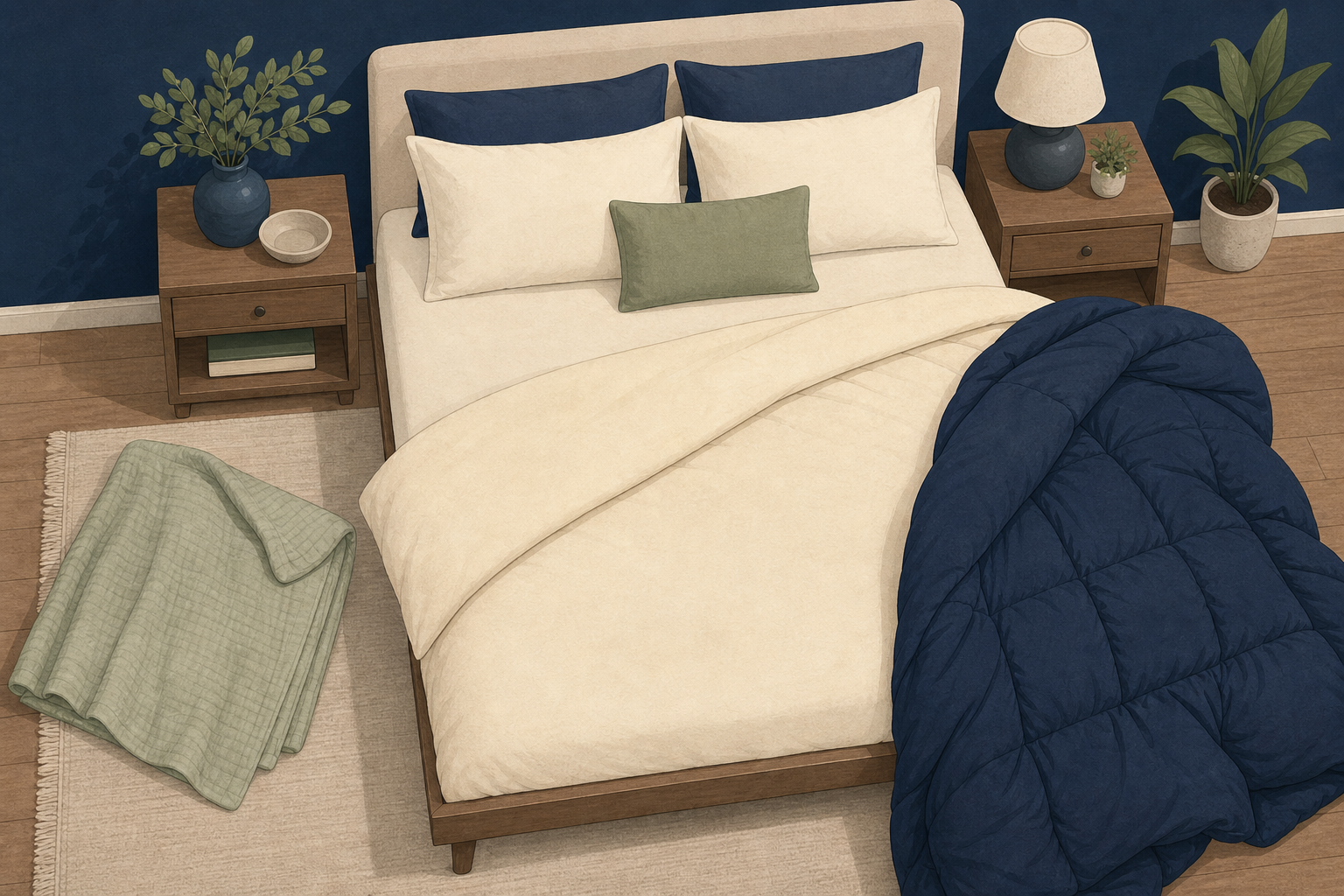
If you get too hot at night, choose the least insulating duvet that keeps you comfortable in your usual bedroom temperature. Start with a low warmth rating, then compare the fill amount, shell fabric, construction, and total weight. Do not assume that a thin-looking, natural, or “cooling” duvet will automatically sleep cool.
Quick answer: The best duvet for hot sleepers is usually a lightweight or summer-weight insert with a low tog rating, modest fill, a breathable shell, and enough flexibility to uncover a leg or remove a layer.
The right choice depends on more than the fill name. A lofty down duvet can be surprisingly warm despite feeling light, while a flatter cotton-filled duvet may feel physically heavier without trapping as much warmth. Your room temperature, duvet cover, sleepwear, mattress, and bed partner also affect the result.
Start With Warmth, Not Fluffiness
A duvet’s main job is insulation. The more effectively it slows heat loss, the warmer the small environment around your body becomes.
If a product lists a tog rating, use that as your first comparison. A higher tog indicates greater thermal insulation. Duvets around 2.5 to 4.5 tog are commonly presented as summer or light-warm options, but labels and seasonal recommendations can vary by manufacturer.
In the United States, many duvet inserts are labeled with terms such as:
- Lightweight
- Summer weight
- Light warm
- All season
- Medium warm
- Winter weight
For a consistently hot sleeper, “lightweight” or “summer weight” is usually the safer starting point. An all-season duvet may still be too insulating, especially in a warm bedroom or when paired with a substantial cover.
Compare warmth labels only within the same manufacturer when possible. There is no universal meaning for “all season,” and two inserts carrying that label can feel very different.
Compare Fill Type and Fill Amount
Fill material affects loft, weight, moisture handling, and feel, but it does not determine warmth by itself. The amount of fill and the duvet’s construction matter just as much.
Down
Down creates a great deal of loft and insulation without much physical weight. That can be appealing if you dislike a heavy cover, but a puffy down insert may retain more warmth than a hot sleeper wants.
Do not judge a down duvet using fill power alone. Fill power describes how much loft a given amount of down can produce, not the finished duvet’s total warmth. You also need to know the fill weight, warmth class, or tog rating.
A low-fill, summer-weight down duvet can work for some warm sleepers. A generously filled, high-loft version is more appropriate for a cooler room.
Wool
Wool-filled duvets tend to feel flatter and denser than down. Wool can manage moisture well, which may make the bed feel less clammy, but wool duvets are still available in different insulation levels.
Look for a lightweight or summer wool duvet rather than assuming all wool is temperature-neutral. Check the fill weight per square meter if the manufacturer provides it.
Silk
Silk-filled duvets are often relatively thin and drapey. Research comparing quilts suggests that fill material can change the comfortable temperature range even when insulation is similar, but there is no single material that feels coolest to everyone.
Silk may suit you if you want gentle coverage without a bulky, cloud-like feel. Check the care instructions carefully because some silk inserts have more restrictive cleaning requirements.
Cotton
Cotton-filled duvets are generally flatter and can feel heavier for their level of warmth. That may be comfortable if you want a little physical weight without high loft.
Cotton is not automatically cool, however. A thick cotton duvet can still hold too much heat, and drying a bulky cotton-filled insert may be difficult.
Synthetic fill
Synthetic duvets vary widely. A thin, lightly filled polyester or lyocell-blend insert may work well for a warm sleeper, while a thick down-alternative duvet can create substantial insulation.
Synthetic fill is often easier to wash, but check the complete specification rather than choosing it solely because it carries a cooling label.
Check the Shell and Duvet Cover
Your body does not interact with the fill directly. Heat and moisture must also move through the duvet’s shell and its removable cover.
For a lighter setup, look for a shell that is not unusually thick, stiff, or heavily coated. Cotton and cotton-lyocell shells are common options. Fabric weight and weave can matter as much as the fiber listed on the label.
Your duvet cover adds another layer. A crisp, lightweight cotton percale, linen, or similarly airy cover may feel less enclosing than a dense sateen, brushed fabric, or heavy decorative cover.
Thread count alone is not a cooling score. Very high thread counts can produce a denser fabric, while a moderate thread count in a suitable weave may allow easier airflow.
If your current insert seems reasonable but the complete bed feels hot, test it for a night with a lighter cover before replacing the duvet.
Notice Construction and Total Weight
Construction controls how the fill is distributed.
Baffle-box duvets contain internal fabric walls that give the fill room to loft. They can create an even, plush layer, but greater loft generally means more trapped air and insulation.
Sewn-through duvets are stitched directly from the top shell to the bottom shell. The compressed stitch lines reduce loft in those areas, so this construction is often used for lighter inserts. It may also produce small cooler zones.
Neither design guarantees a particular temperature. Treat construction as supporting information after checking the warmth rating and fill amount.
Also distinguish between thermal warmth and physical weight. Some people feel uncomfortable under a duvet because it is hot. Others dislike pressure or an enclosing sensation, even when the insert is not especially insulating. Check both the fill weight and total product weight if either issue applies to you.
Use Layers Instead of One All-Season Duvet
A flexible setup is often more useful than trying to find one duvet for every month.
You might use:
- A sheet or empty duvet cover on the warmest nights.
- A lightweight insert during mild weather.
- A separate thin blanket over the foot of the bed when temperatures drop.
This arrangement lets you add insulation without committing to a warm all-season duvet. It is also easier to uncover your feet, fold a layer down, or remove one item during the night.
If you share a bed with someone who sleeps cold, consider separate twin-size covers or a split-warmth duvet. Otherwise, the colder sleeper may keep adding bedding until the warmer sleeper is uncomfortable.
Use This Hot-Sleeper Buying Checklist
Before ordering, look for clear answers to these questions:
- Is it explicitly labeled lightweight, summer weight, or light warm?
- Is a tog rating or other insulation rating provided?
- What is the fill material and actual fill weight?
- Is the stated weight for your exact duvet size?
- Does the insert use lofty baffles or flatter sewn-through construction?
- What material and weave are used for the outer shell?
- Will your duvet cover add noticeable warmth?
- Can you wash and dry the insert using your available equipment?
- Is there a realistic return or trial policy if it sleeps too warm?
- Are current manufacturer care instructions practical for you?
Be cautious when a listing focuses heavily on “cooling technology” but does not state its warmth category, fill quantity, total weight, or construction. A cool-to-the-touch surface at bedtime does not necessarily prevent heat from accumulating under an insulating duvet later.
Test the Complete Bed Setup
Once the duvet arrives, evaluate it under normal conditions rather than on an unusually cold night.
Keep your bedroom setting, sleepwear, sheets, and duvet cover consistent for several nights. Notice whether you wake up warm, need to push the duvet away, or feel clammy beneath it. Also check whether the problem appears only after adding the cover.
If the duvet is slightly too warm, try lighter sleepwear or a thinner cover. If you repeatedly throw it off, switching to a lower-insulation insert is more practical than trying to make a warm duvet behave like a summer one.
Persistent drenching night sweats, fever, breathing concerns, prolonged daytime sleepiness, or ongoing sleep difficulty are not simply bedding preferences. Discuss those concerns with an appropriate qualified healthcare professional.
The Practical Takeaway
Choose a duvet for hot sleepers by prioritizing low insulation and flexible coverage. Begin with the warmth rating, verify the fill amount, and then compare the shell, construction, physical weight, and cover.
The material name can help narrow your options, but it cannot tell you the whole story. A modestly filled summer duvet that works with your actual room and bedding is a better choice than a heavily insulated insert carrying an impressive cooling label.