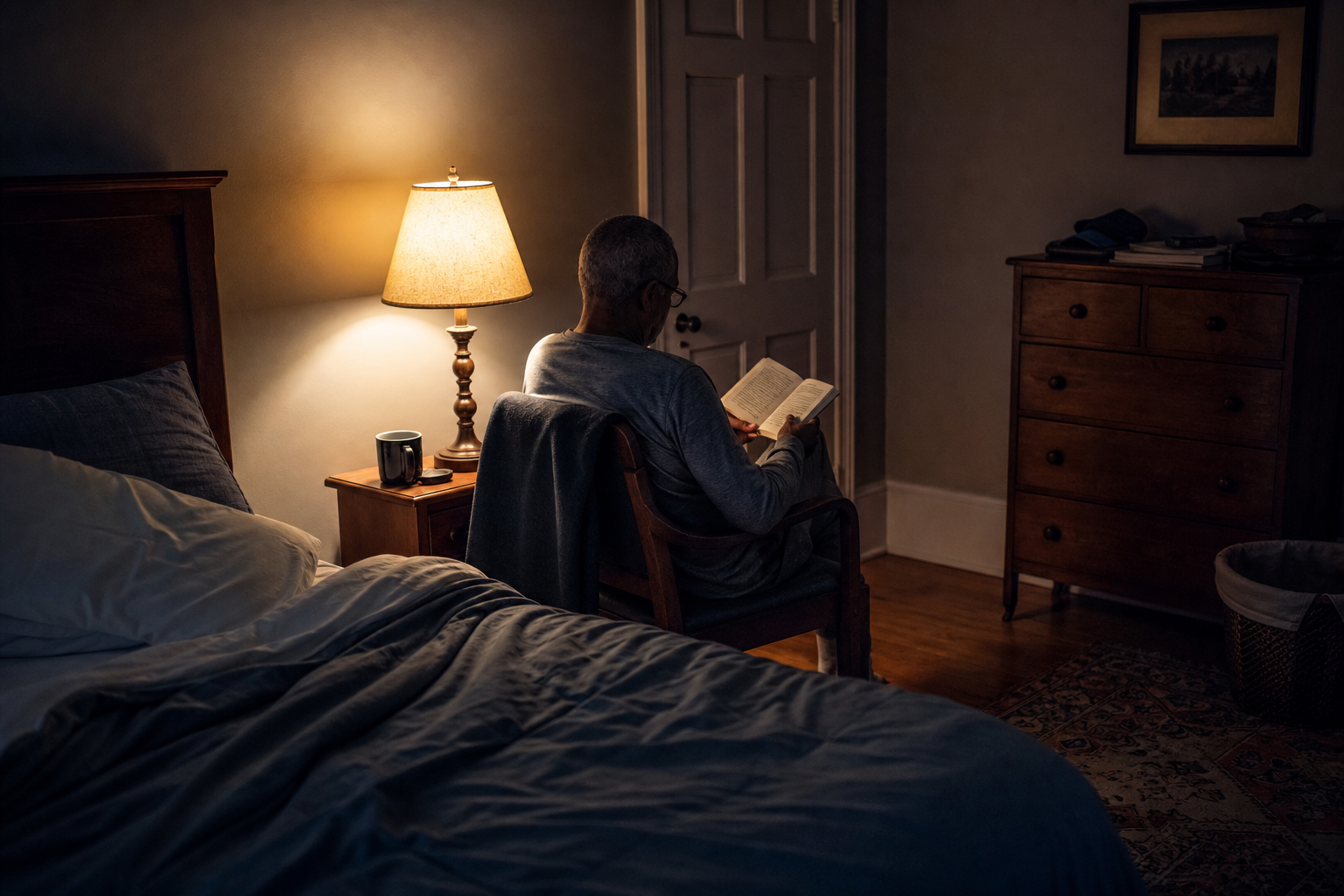
If you are wondering how to sleep better when stressed, start by creating a clear transition between problem-solving and bedtime. Spend 30 to 45 minutes lowering the lights, setting tomorrow’s tasks aside, choosing one quiet activity, and relaxing your body. The goal is not to make yourself fall asleep on command. It is to stop adding stimulation and give sleep a calmer opportunity to arrive.
Stress and sleep can reinforce each other when unfinished concerns keep you mentally active. Treat racing thoughts before bed as a cue to unload tomorrow's tasks and give your attention one quiet focus. A calm mind for sleep does not require an empty mind, only less pressure to solve everything tonight.
Quick answer: Write down unfinished thoughts, dim your surroundings, do one familiar quiet activity, and finish with slow breathing or gentle muscle relaxation.
How to Sleep Better When Stressed: A Simple Routine
You do not need to complete every possible sleep tip. On a difficult night, a short and repeatable sequence is usually more practical than an elaborate routine.
1. Close the day on paper
Stressful thoughts often become louder when you are trying not to think about them. Before getting into bed, take five minutes to write down:
- anything you are afraid you will forget
- your first task for tomorrow
- concerns that need attention later
- one issue you cannot resolve tonight
Keep this brief. You are not trying to solve your entire list. You are giving unfinished thoughts somewhere to wait until morning.
If journaling tends to pull you into more analysis, use a simple two-column list: tomorrow and not tonight.
2. Lower the evening’s intensity
About 30 minutes before bed, make the room feel different from the active part of your day. Dim bright overhead lighting, silence unnecessary notifications, and stop checking work, news, or emotionally charged conversations when possible.
You do not have to follow an all-or-nothing screen rule. If you need your phone for an alarm, music, or a relaxation recording, reduce the brightness and choose the content in advance. The useful distinction is between a quiet, intentional tool and open-ended scrolling.
Check the bedroom at the same time. Aim for a dark, quiet, comfortably cool space, adjusted for your preferences and household needs.
3. Choose one low-effort activity
Spend 10 to 20 minutes doing something familiar that does not require decisions or achievement. Options include:
- reading a few pages of a calm book
- listening to soft music or a quiet podcast
- taking a warm shower or bath
- preparing clothes or breakfast items for the morning
- doing gentle stretches that feel comfortable
Avoid turning this activity into another task to complete correctly. Pick one option and let it be enough.
If a book, show, or podcast makes you more alert, switch to something less absorbing. Your best wind-down activity is the one that leaves you quieter rather than entertained for another hour.
4. Release physical tension gently
Once you are settled, try five slow breaths. Let each breath remain comfortable rather than unusually deep. A simple pattern is to inhale softly, then allow the exhale to take a little longer without straining.
You can also scan from your face to your feet and notice where you are holding tension. Unclench your jaw, let your shoulders drop, soften your hands, and allow your legs to rest heavily.
For progressive muscle relaxation, gently tense one muscle group for a moment and then release it. Skip any area that cramps or hurts. This should feel easy, not like an exercise session.
5. Go to bed when you feel ready
Use your usual bedtime as a guide, but pay attention to whether you are becoming drowsy. Getting into bed much earlier than usual because you desperately want more sleep can create extra time for worrying and clock-watching.
Once in bed, make comfort adjustments, put the clock out of direct view, and return your attention to your breathing or the physical support beneath you. You are preparing for rest, not testing whether the routine “worked.”
If You Still Feel Wide Awake
A wind-down routine cannot guarantee sleep, especially after an unusually demanding day. If you are lying awake and becoming frustrated, get out of bed for a little while if it is safe and practical.
Keep the lighting low and repeat a quiet activity, such as reading or listening to calm audio. Return to bed when you feel sleepier. Avoid starting work, cleaning the house, eating a heavy meal, or scrolling for an unknown length of time.
Try to keep your normal wake time the next morning rather than completely rebuilding your schedule around one difficult night.
Keep the Routine Small Enough to Repeat
Your stressful-night routine can be as simple as:
- Write tomorrow’s first task.
- Dim the lights and put away stimulating content.
- Read or listen quietly for 15 minutes.
- Take five slow breaths.
- Go to bed when drowsy.
Consistency matters more than complexity. Test the same basic routine for several nights, then adjust the timing or activity based on what actually helps you feel less activated.
If sleep difficulty continues, regularly affects your daytime functioning, or comes with prolonged sleepiness, breathing concerns, or significant distress, speak with a qualified healthcare professional. A wind-down routine can support healthy sleep habits, but it is not a substitute for individualized care.