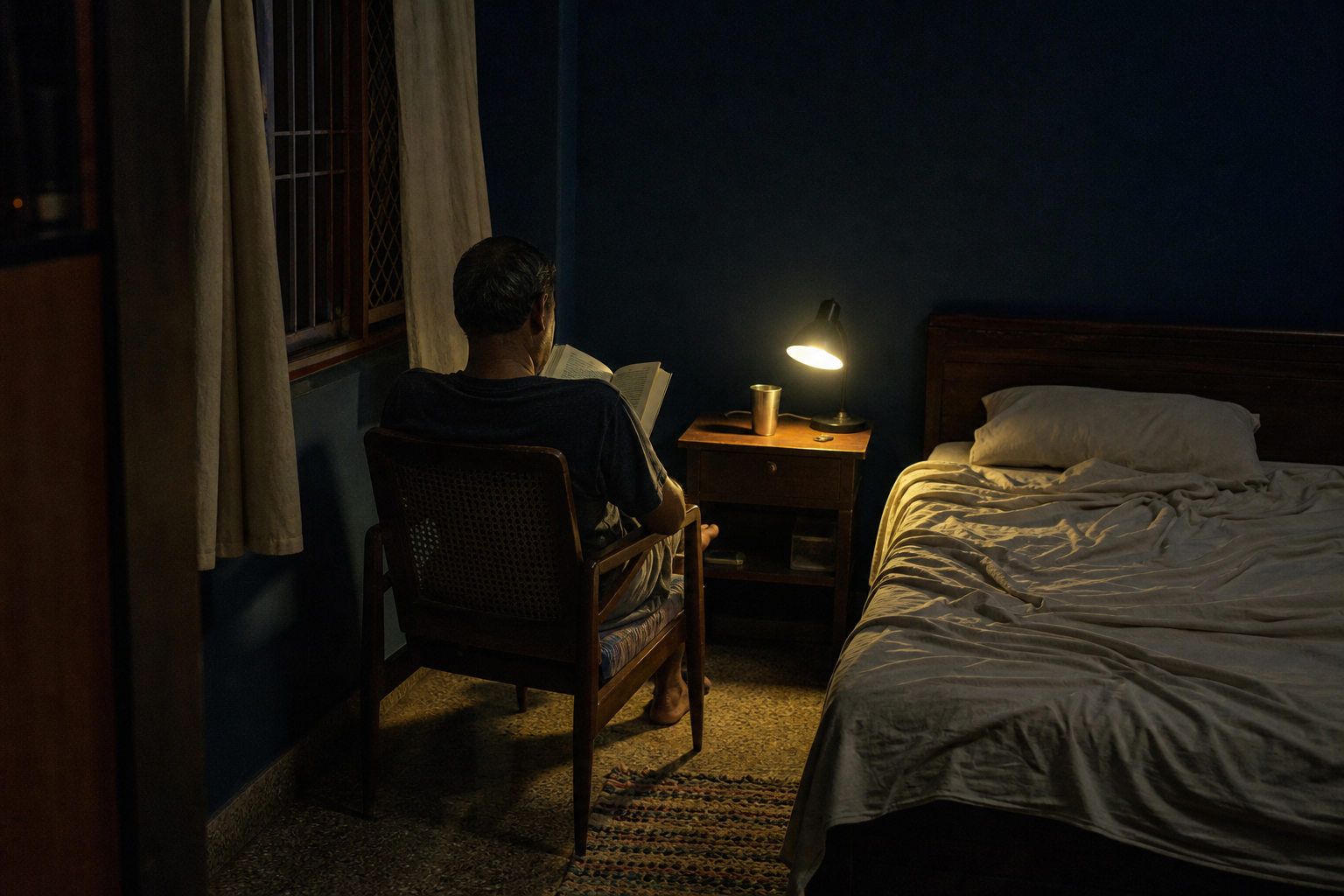
When you cannot fall asleep, stop trying to force it. Lower the lights, put away anything stimulating, and give your body a chance to settle. If you remain awake or become frustrated, leave the bed for a quiet activity and return only when you feel sleepy.
If trying to sleep, this approach to how to get to sleep reduces pressure without promising instant results.
Quick answer: Keep the room dim, release physical tension, and avoid checking the time. If lying awake starts to feel like work, move to a comfortable place outside the bed and do something calm until drowsiness returns.
The goal is not to make sleep happen on command. It is to reduce the effort, light, noise, and mental activity that can keep an occasional restless night going.
A Simple Wind-Down When You Cannot Fall Asleep
1. Stop checking whether sleep is happening
Repeatedly asking yourself whether you are falling asleep keeps your attention fixed on the problem. Turn the clock face away, place your phone out of reach, and stop calculating how many hours remain before morning.
You do not need to know the exact time to decide what to do next. Notice how you feel instead. A tense jaw, racing thoughts, repeated position changes, or growing irritation are signs that you may need a reset.
2. Make one quick comfort check
Before changing your whole setup, correct any obvious source of discomfort:
- Adjust a pillow that feels bunched, hot, or awkward.
- Loosen restrictive sleepwear.
- Pull back a heavy blanket if you feel too warm.
- Reduce a distracting sound or small light.
- Use the bathroom if that need is keeping you alert.
Keep this check brief. Rebuilding the bed, testing several positions, or searching online for the perfect setup can make you more awake.
3. Leave the bed if wakefulness becomes frustrating
If you have been awake for roughly 20 minutes, or you feel yourself struggling to force sleep, get out of bed. You do not need to watch the clock closely. The rise in frustration is enough of a cue.
Move to a safe, comfortable place with low lighting. Choose something quiet and mildly engaging, such as:
- reading a familiar or undemanding book
- listening to calm audio at a low volume
- writing down a thought you do not want to forget
- folding a small amount of laundry
- doing a simple puzzle on paper
- sitting quietly with slow breathing
Avoid work, upsetting news, online shopping, active conversations, and exciting entertainment. The activity should give your mind somewhere gentle to rest without becoming a reason to stay awake.
4. Return when you feel sleepy, not merely tired
Sleepiness has recognizable cues. Your eyelids may feel heavy, your attention may wander, or you may read the same sentence twice without absorbing it.
That is the time to return to bed.
Being tired is not always the same as being sleepy. You can feel exhausted while your mind remains alert. Waiting for clearer drowsiness can make the return to bed feel less like another attempt you must succeed at.
5. Repeat the reset if necessary
If you return to bed and become fully alert again, repeat the process. Keep the lights low and choose the same calm activity rather than searching for a stronger tactic.
This may feel inconvenient, but it prevents the bed from becoming the place where you scroll, worry, plan tomorrow, and monitor the clock.
Try a Short Physical Unclenching Exercise
When your thoughts are busy, start with the body instead of trying to empty your mind.
Take a comfortable breath without making it unusually deep. As you exhale, soften your forehead, jaw, shoulders, hands, stomach, and legs in sequence. You can lightly tense each area first, then release it, but skip any movement that causes discomfort.
Repeat the sequence once or twice. Let your breathing find its own easy pace. The exercise is meant to reduce effort, not become another performance test.
If counting breaths makes you more alert, do not count. Simply notice the feeling of each exhale.
What Not to Use as a Quick Fix
An occasional difficult night can make almost any shortcut seem appealing. Try not to respond by:
- drinking alcohol to become drowsy
- having late caffeine because the night already feels lost
- eating a large or heavy meal
- turning on bright overhead lights
- taking extra sleep medication or supplements beyond current label or prescriber instructions
- staying in bed while scrolling for ways to fall asleep
These choices may add stimulation, discomfort, or safety concerns without resolving the reason you are awake.
Reset Gently the Next Morning
Get up near your usual time rather than trying to compensate with a major schedule change. Morning light, normal meals, and daytime movement can help preserve your regular rhythm.
If you are very sleepy, use extra caution with driving, machinery, or other tasks that require alertness.
One restless night is different from an ongoing sleep problem. Consider speaking with a qualified healthcare professional if difficulty falling or staying asleep becomes persistent, affects daytime functioning, or occurs with breathing concerns, severe discomfort, weakness, numbness, or prolonged daytime sleepiness.
Tonight’s Takeaway
When sleep does not arrive, make the night quieter rather than trying harder. Reduce stimulation, leave the bed when frustration builds, do something calm, and return when genuine sleepiness appears.