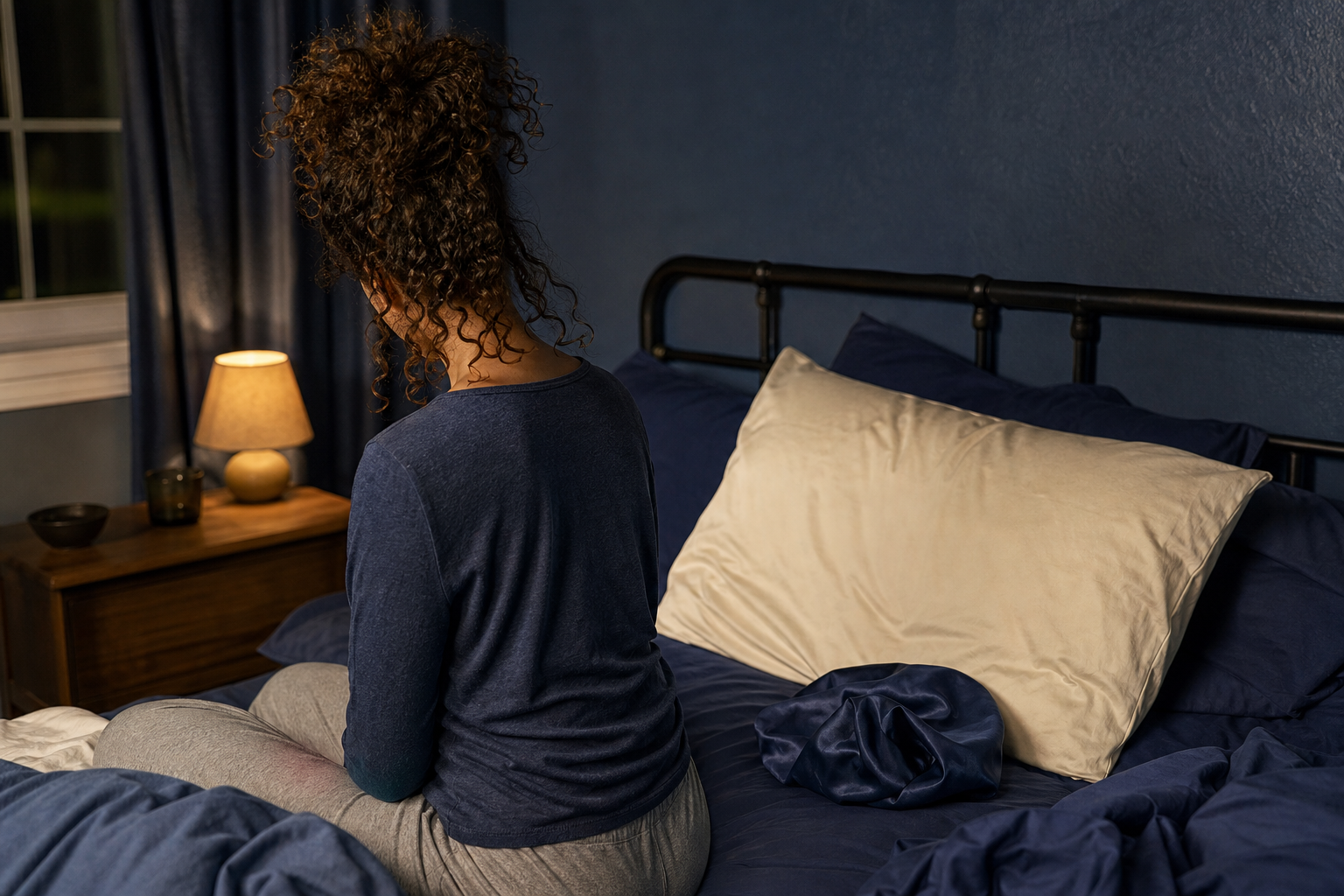
The simplest way to sleep with curly hair is to make sure it is dry, gather it loosely above the main pressure points, and reduce friction with a bonnet or smooth pillowcase. A high “pineapple” works well for many medium-to-long curls, while shorter hair may fit more comfortably inside a roomy bonnet. The right method depends on your curl length, density, nighttime movement, and whether a style stretches your natural pattern.
Quick answer: Start with dry hair, secure it loosely without pulling, use a satin or silk bonnet or pillowcase, and reshape only the flattened sections in the morning.
How to sleep with curly hair step by step
1. Let your hair dry before bed
Whenever your schedule allows, go to bed with dry or nearly dry curls. Hair is more vulnerable to stretching and breakage while wet, and damp curls pressed against a pillow may dry into an unpredictable shape.
If you wash your hair at night, allow enough time for the roots and inner layers to dry. A thick section can feel dry on the outside while remaining damp underneath.
Avoid piling wet hair into a tight bun. This can hold moisture near the scalp, pull on fragile strands, and leave dents in the curl pattern.
2. Choose a loose overnight shape
Your goal is to move the curls away from the areas pressed most firmly against the pillow without creating tension.
Try one of these options:
- Pineapple: Gather medium or long curls into a very loose ponytail near the top of your head. Use a fabric-covered scrunchie and loop it only as much as needed to keep the hair together.
- Loose twists or braids: Divide long hair into one to four sections. This contains the hair, although it may create a slightly different wave or curl pattern by morning.
- Roomy bonnet: Place short, layered, or dense curls inside without twisting them into a compact bundle. The bonnet should have enough space for the hair to move.
- Loose hair above the pillow: If ties leave dents, gently place your curls above your head and rely on a smooth pillowcase to limit friction.
A pineapple is not universal. It can stretch shorter layers, loosen curls at the nape, or feel uncomfortable if the ponytail sits under your head. If you notice pulling around your hairline or scalp, reposition or remove it.
3. Reduce rubbing against the pillow
Cotton bedding can absorb moisture and create noticeable friction as you move. A satin or silk bonnet, scarf, or pillowcase creates a smoother contact surface, which may help limit tangling, frizz, and disruption of curl clumps.
A bonnet should stay on without feeling tight. Check that the band does not leave a deep mark, pull at the edges of your hair, or press uncomfortably behind your ears. If it slips off, a better-fitting shape may work more reliably than a tighter band.
A smooth pillowcase is a useful alternative if you dislike head coverings. It also provides backup protection when a bonnet comes off during the night. Follow the current care instructions for the particular fabric because washing and drying requirements vary.
4. Check the setup from your sleeping position
Lie down in your usual position before deciding that the arrangement works.
Ask yourself:
- Is the ponytail, knot, or bonnet seam underneath my head?
- Does anything pull when I turn from side to side?
- Are my curls spread out rather than packed into a hard lump?
- Can I rest normally without changing my neck position to protect my hair?
- Is the bonnet secure but comfortable?
Do not sacrifice a comfortable sleeping position to keep every curl untouched. Moving the hair or adjusting the bonnet is more practical than forcing yourself to remain still all night.
Avoid these common flattening mistakes
Securing curls too tightly: Tight elastics and repeated tension can leave dents and put unnecessary stress on the hairline. Choose soft accessories and the loosest hold that remains secure.
Compressing hair into a small cap: A bonnet that is too shallow may squash dense or long curls instead of containing them.
Sleeping with a heavy product layer: Adding a large amount of water or styling product immediately before bed can leave curls damp and more easily reshaped by the pillow. Save most refreshing for the morning.
Brushing dry curls after waking: Brushing can separate established curl clumps and increase visible frizz. Detangle according to your usual wash-day routine instead.
Refresh curls without restarting wash day
Remove your bonnet or tie and give your hair several minutes to settle. Then gently shake the roots with your fingertips rather than pulling through the lengths.
If a few areas remain flat, lightly mist those sections with water or apply a small amount of your usual curl refresher. Smooth or scrunch each section into shape and let it dry before handling it again. Concentrating on the affected curls helps avoid weighing down the rest of your hair.
No overnight method keeps every curl identical. Start with dry hair, low tension, and a smooth sleep surface, then adjust one part of the setup at a time until it protects your curls without interfering with comfortable sleep.