If you are wondering how to sleep faster, start by taking pressure off the attempt. Go to bed when you feel sleepy, keep clocks out of view, and leave the bed for a quiet activity if you become alert or frustrated. Return when sleepiness comes back. This approach does not force sleep on command, but it can keep an occasional wakeful period from turning into a nightly struggle.
Quick answer: Follow sleepiness rather than the clock, make wakefulness boring, and stop measuring every minute you are still awake.
The details matter. Your wake time, evening light, time spent awake in bed, and response to a difficult night can all influence whether bedtime feels natural or like a performance.
Why trying harder can keep you awake
Sleep is not a task you can complete through effort. Thoughts such as “I must fall asleep now” encourage monitoring: checking your body, calculating remaining sleep, and wondering whether each technique is working.
That monitoring can make you feel more alert. Even relaxation exercises become another source of pressure if you treat them as tests you must pass.
A more useful target is quiet rest without a deadline. You can prepare favorable conditions for sleep, then allow sleepiness to do the rest.
How to sleep faster with less effort
Try this sequence for several nights rather than judging it after one attempt.
1. Keep a steady morning anchor.
Get up at roughly the same time each day, including after a disappointing night. A consistent wake time helps establish a repeatable rhythm. Avoid sleeping very late solely to compensate, since that may make you less sleepy the following evening.
2. Wait for recognizable sleepiness.
Go to bed when your eyelids feel heavy, you are yawning, or you are having trouble following what you are reading. Feeling tired, worried, or ready to stop working is not always the same as feeling sleepy.
3. Remove visible time checks.
Turn the clock away and keep your phone out of reach. You still need an alarm if required, but you do not need a running calculation of how many hours remain.
4. Choose one low-pressure settling practice.
You might breathe gently with a slightly longer exhale, release tension through different muscle groups, or picture a familiar neutral place. Do it for comfort, not as a demand that sleep arrive within a set number of breaths.
5. Leave the bed if wakefulness takes over.
If you feel clearly awake, restless, or frustrated, move to another safe, dimly lit place. Do not watch the clock to enforce an exact minute limit. The change in your state is the useful signal.
6. Do something quiet and unexciting.
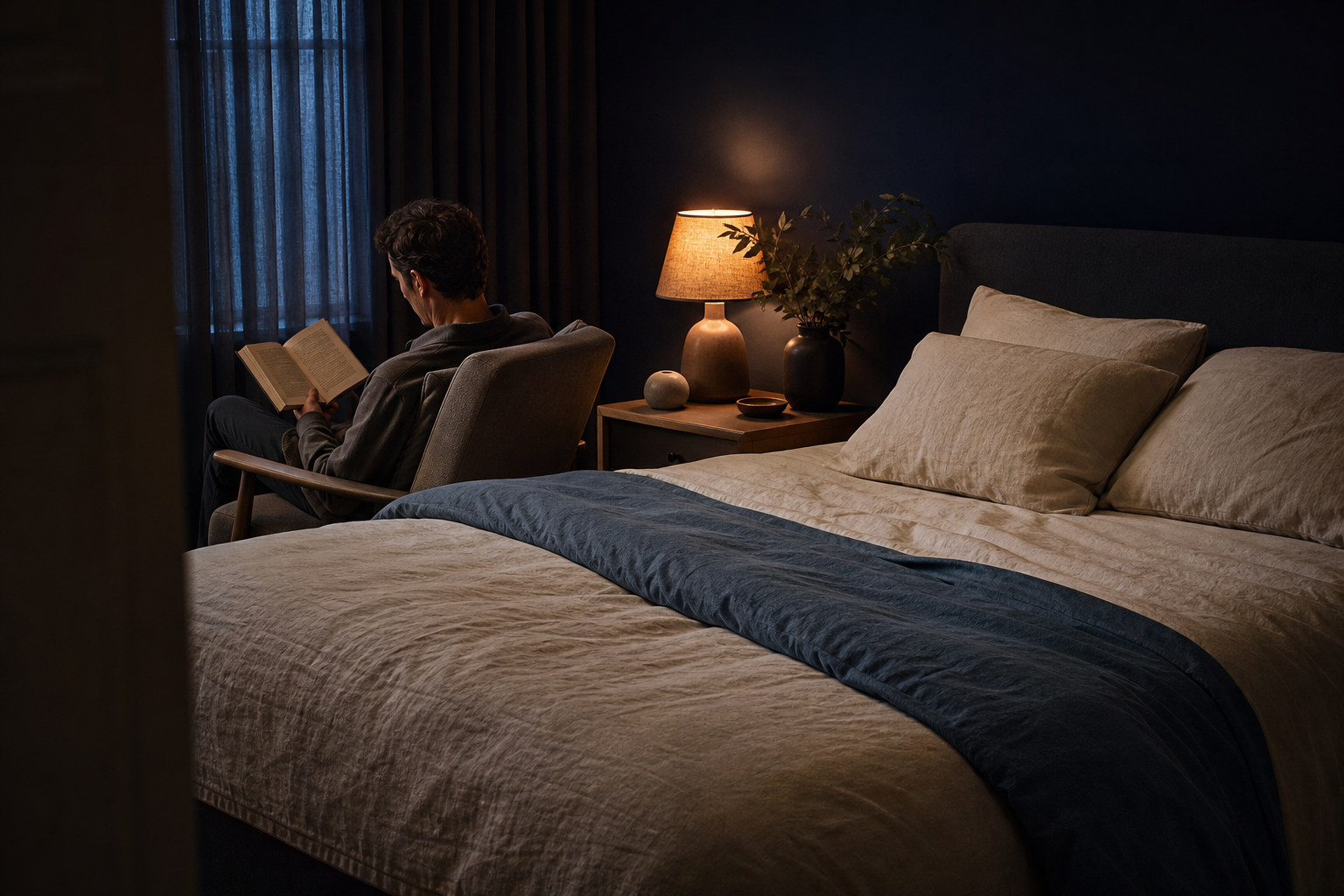
Read a calm paper book, listen to gentle audio at low volume, or sit comfortably. Avoid work, upsetting conversations, bright light, and highly engaging videos. Return to bed when sleepiness reappears, repeating the process if necessary.
The aim is not to punish yourself by getting out of bed. It is to keep the bed connected with sleep and comfortable rest rather than prolonged effort.
Make tomorrow night easier during the day
Your nighttime response works better when the rest of your schedule supports it.
- Seek daylight after waking. Morning light gives your body a strong time cue.
- Move during the day. Choose activity appropriate for your health and ability, but avoid relying on an intense late workout to exhaust yourself.
- Review caffeine timing. Caffeine can remain active for hours, so an afternoon cutoff may suit you better than waiting until evening.
- Keep naps deliberate. If naps make it harder to feel sleepy at bedtime, shorten them, take them earlier, or skip them.
- Create a short transition. Dim lights and switch from problem-solving to familiar, quiet activities before bed.
Your ideal timing will depend on your schedule, natural rhythm, medications, health, and sensitivity to light or caffeine. Look for patterns instead of expecting one universal bedtime formula.
Avoid turning sleep tips into new rules
A routine should reduce decisions, not create a checklist that makes you anxious. You do not need perfect silence, a precise breathing ratio, or an elaborate ritual.
If a technique leaves you more alert, drop it for the night. Likewise, do not stay in bed simply because you believe resting there is mandatory. Quietly resetting elsewhere can be more comfortable than wrestling with sleep.
When difficulty falling asleep keeps happening
An occasional slow night is common. Speak with a qualified healthcare professional if trouble falling asleep continues, substantially affects your days, or comes with prolonged daytime sleepiness. Cognitive behavioral therapy for insomnia is a structured option a professional may discuss for ongoing insomnia.
Seek appropriate medical guidance for breathing concerns during sleep, severe or persistent pain, weakness, or numbness. If you feel dangerously sleepy, do not drive or operate machinery.
The bedtime takeaway
Set an alarm, hide the clock, wait for genuine sleepiness, and make wakeful periods quiet rather than urgent. The goal is not to chase sleep faster. It is to stop giving wakefulness such an interesting fight.