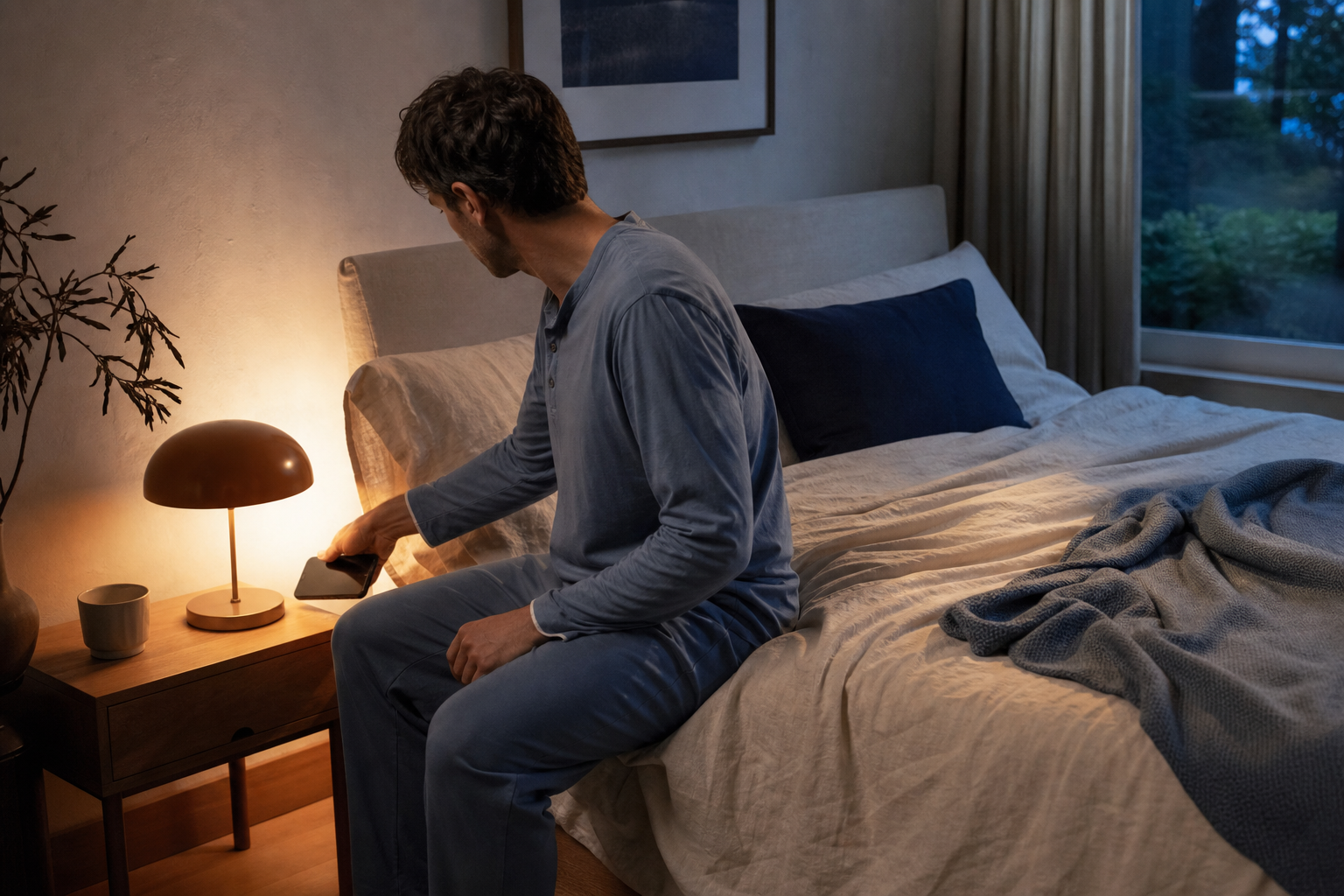
If you want to know how to fall asleep quickly, start by lowering stimulation before bed, wait until you feel sleepy, relax your body, and give your mind one quiet task. If you remain awake and frustrated, briefly leave bed and return when sleepiness comes back. This approach cannot guarantee instant sleep, but it removes several common obstacles.
Quick answer: Dim the lights, put away stimulating content, make the room comfortable, relax each part of your body, breathe gently, and focus on a neutral mental task. Do not force sleep or keep checking the time.
The exact timing will vary from night to night. Focus on repeating the same calm sequence rather than trying to meet a strict deadline.
How to fall asleep quickly, step by step
1. Lower stimulation before getting into bed
Give yourself a short transition between daytime activity and sleep. During the last 30 to 60 minutes before bed, dim bright lights and pause work, upsetting conversations, games, and fast-moving content.
You do not have to avoid every screen. The more useful question is whether the activity keeps you alert. If it does, replace it with reading, quiet music, simple stretching, or preparing for the next morning.
2. Make the room easy to sleep in
Check the factors you can change quickly:
- Reduce unwanted light.
- Silence notifications.
- Lower disruptive noise or use a steady background sound.
- Adjust the temperature, bedding, and sleepwear so you are not noticeably hot or cold.
- Set your alarm, then turn the clock face away.
A comfortable room will not force sleep, but discomfort and repeated clock-checking can keep your attention active.
3. Wait for sleepiness
Go to bed when you notice signs such as heavy eyelids, repeated yawning, drifting attention, or difficulty following what you are reading.
Feeling drained is not always the same as feeling sleepy. If your body is tired but your mind remains alert, continue a quiet activity in dim light for a little longer.
4. Release physical tension
Once in bed, let your preferred sleep position and pillow support you comfortably. Then scan slowly from your forehead to your feet.
At each area, notice tension and allow it to soften:
- Unclench your jaw.
- Let your tongue rest.
- Drop your shoulders away from your ears.
- Loosen your hands and stomach.
- Let your legs feel heavy against the mattress.
Do not strain to become completely relaxed. Simply reducing unnecessary effort gives your body a consistent wind-down cue.
5. Slow your breathing gently
Breathe at an easy pace without forcing a very deep breath. Let the exhale become slightly longer than the inhale if that feels comfortable.
You can quietly count each exhale from one to ten, then begin again. If counting makes you more alert, stop and return to natural breathing. Avoid uncomfortable breath-holding, and discontinue any exercise that causes dizziness or shortness of breath.
6. Give your mind a neutral task
Trying to eliminate every thought often creates more effort. Instead, choose one low-stakes focus:
- Picture walking through a familiar, peaceful place.
- Mentally list ordinary objects in a category.
- Repeat a short, neutral word with each exhale.
- Imagine simple scenes without building a story.
When planning or worrying returns, notice it and redirect your attention. You are not trying to win an argument with your thoughts.
7. Leave bed if frustration takes over
If you feel fully awake or increasingly annoyed, get out of bed rather than continuing to struggle. Sit somewhere safe in dim light and do something quiet, such as reading a few pages of an undemanding book.
Avoid watching the clock. Return to bed when your eyelids feel heavy or your attention begins to drift. Repeating this step helps keep the bed associated with sleep rather than prolonged wakefulness.
Check what may be delaying sleep
If the method is not helping, review the hours before bedtime:
- Was caffeine too close to bed for your sensitivity?
- Did a late nap reduce your sleepiness?
- Were you in bed much earlier than usual?
- Did alcohol make you drowsy initially but leave your sleep unsettled?
- Are light, noise, temperature, hunger, or physical discomfort demanding attention?
Change one factor at a time for several nights. A consistent wake time can also make your pattern easier to evaluate than repeatedly moving bedtime.
Keep the goal realistic
Some nights naturally take longer than others. Treat the sequence as a way to create favorable conditions, not a test you must pass.
If sleep difficulty continues, substantially affects your days, or comes with prolonged daytime sleepiness, persistent pain, or breathing concerns during sleep, speak with an appropriate qualified healthcare professional. For tonight, begin with one simple aim: lower stimulation and let sleepiness, rather than the clock, guide you to bed.