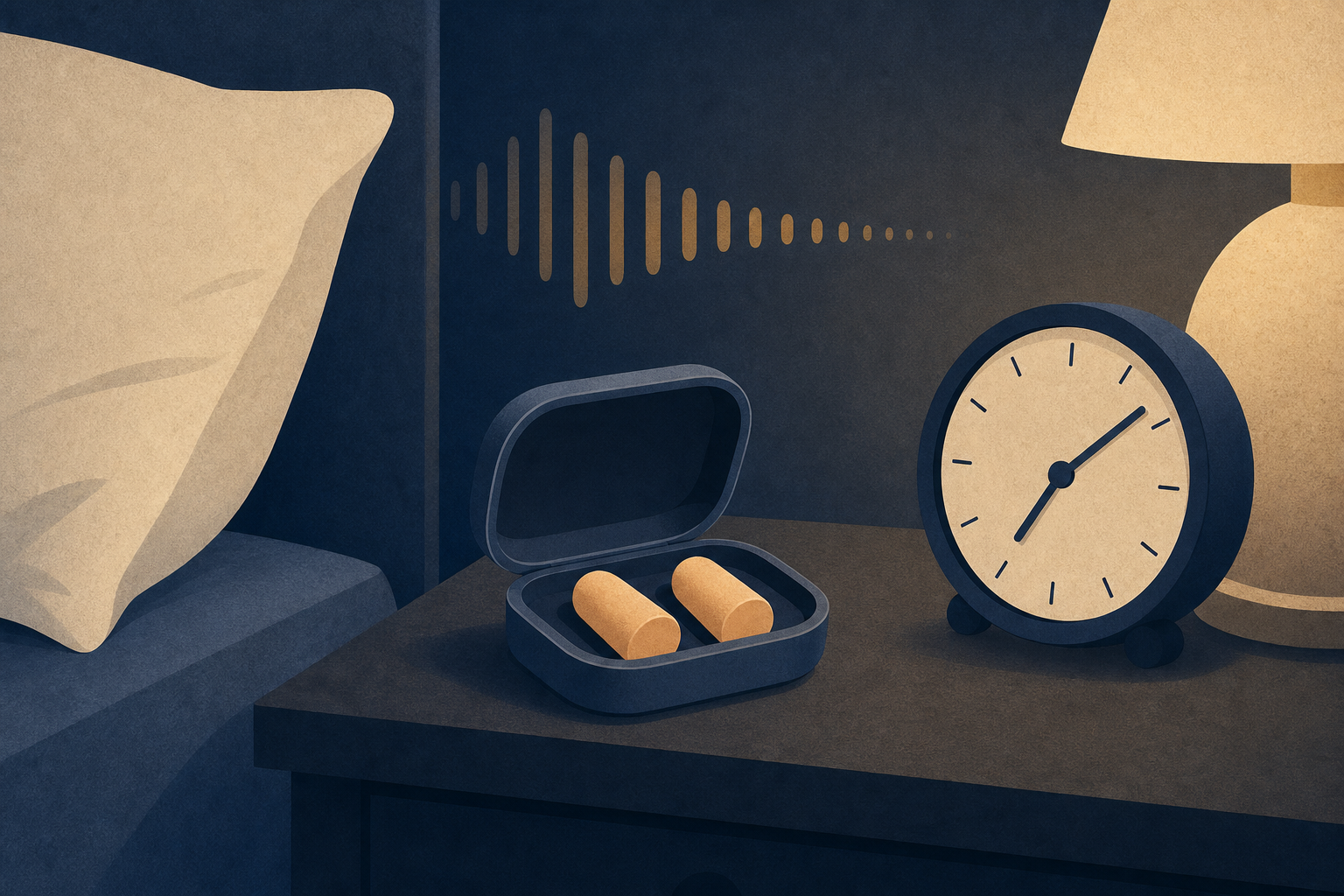
The best earplugs for sleeping are comfortable enough to wear for hours, fit your ears securely, and reduce disruptive sound without preventing you from hearing essential alerts. Start by choosing a material and size suited to your ear canals and sleeping position. Then test the earplugs while awake before relying on them overnight.
Quick answer: Choose soft, low-profile earplugs that seal without creating pressure. Compare foam, moldable silicone or wax, and reusable pre-molded designs, but treat the advertised noise rating as a comparison point rather than a guarantee.
Start With the Noise You Want to Reduce
Earplugs reduce sound rather than creating complete silence. The right amount of reduction depends on what is disturbing you and what you still need to hear.
Steady background sounds, such as traffic hum, ventilation systems, or distant conversation, may become less noticeable with a moderate seal. Nearby voices, alarms, doors, and irregular impact noises may remain audible because earplugs do not reduce every frequency equally.
Before shopping, identify your main problem:
- Low, steady noise: You may not need the highest available noise rating.
- A snoring partner or nearby voices: A secure, consistent seal becomes especially important.
- Occasional sharp sounds: Earplugs may soften them without removing them completely.
- A noisy workplace or hazardous sound exposure: Use hearing protection selected for that environment, not ordinary sleep comfort alone.
If the bedroom itself can be made quieter, try closing windows, sealing obvious gaps, moving a ticking clock, or placing a fan or sound machine between you and the noise source. This may let you use less isolating earplugs.
Compare Earplug Materials
Material affects softness, pressure, maintenance, and how the plug sits against a pillow.
Foam earplugs
Soft foam plugs are compressed before insertion and then expand inside the ear canal. They are widely available and often carry relatively high noise reduction ratings.
Foam can work well when:
- You want substantial noise reduction
- You are comfortable inserting a plug into the ear canal
- You can find a diameter that expands without painful pressure
- You do not mind replacing the plugs regularly
Foam that is too large can feel increasingly tight as it expands. A smaller or slimmer version may be more comfortable for narrow ear canals. For side sleepers, look for a short, low-profile shape that does not stick out far enough for the pillow to push against it.
Moldable silicone or wax earplugs
Many moldable plugs are shaped over the entrance to the ear rather than inserted into the canal. This can reduce the feeling of internal pressure and may be more comfortable when your ear rests against a pillow.
These plugs may suit you if:
- Expanding foam feels too tight or itchy
- You sleep mainly on your side
- You prefer a plug that conforms to the outer ear
- You want less material protruding from the ear
Follow the current package instructions carefully. Some moldable products are intended to cover the canal opening and should never be pushed into the canal, divided into smaller pieces, or reshaped into an insertable plug.
Reusable pre-molded earplugs
Reusable earplugs may use flexible tips, flanges, or another pre-shaped design. They can be easier to handle consistently and may create less waste than disposable foam.
However, a stem, loop, or firm outer section may press against the pillow. Check both the softness of the tip and the profile of everything that remains outside your ear.
Custom-fitted earplugs
Custom earplugs are made to match an impression of your ears. They may be worth discussing with a qualified hearing professional if standard sizes repeatedly leak, fall out, or cause pressure.
A custom shape is not automatically the quietest or most comfortable option for every sleeper. Construction, intended use, and how the plug contacts the pillow still matter.
Understand Noise Reduction Ratings
In the United States, hearing protectors are commonly labeled with a Noise Reduction Rating, or NRR. A higher number indicates greater potential sound reduction under standardized testing conditions.
It does not mean that every user will experience that exact reduction.
Actual performance depends heavily on:
- Ear canal size and shape
- Correct insertion or placement
- Whether the plug maintains a complete seal
- Movement during the night
- Wear, dirt, or damage
- Differences among sound frequencies
Use the rating to compare products, but do not choose by the largest number alone. A highly rated plug that loosens, hurts, or is removed halfway through the night may be less useful than a slightly less isolating option that fits consistently.
For ordinary bedroom noise, the goal is usually enough reduction to make sounds less disruptive, not maximum isolation at any cost.
Check Fit Before Sleeping in New Earplugs
A suitable earplug should feel secure without sharp pressure, throbbing, itching, or pain.
Use this simple test:
- Read the fitting instructions. Foam, flanged, and moldable plugs are not inserted in the same way.
- Wash and dry your hands. This is particularly important when rolling foam or handling a moldable material.
- Fit one ear at a time. Your ears may need different sizes or slightly different placement.
- Listen for a clear reduction in surrounding sound. A large left-to-right difference can indicate that one plug has not sealed.
- Wear the plugs while awake for 20 to 30 minutes. Notice whether pressure builds as foam expands.
- Lie in your usual sleeping position. Turn your head and check whether the pillow pushes the plug deeper, breaks its seal, or presses on the outer ear.
- Remove each plug slowly and gently. Follow the product instructions rather than pulling abruptly against a tight seal.
If a plug repeatedly works loose, do not compensate by forcing it deeper than directed. Try a different size, shape, or material.
Give Side-Sleeping Comfort Extra Attention
Side sleepers need to consider the part of the earplug that remains outside the canal. Even a soft plug can become uncomfortable when body weight presses the ear into the pillow for several hours.
Look for:
- A flush or low-profile outer surface
- No rigid stem pressing into the ear
- Soft material around the outer ear
- A secure seal that survives turning over
- A size that does not expand painfully
Test both sides, even if you usually favor one. Pillow firmness and loft also change how much pressure reaches the ear. A deeply conforming pillow may create less direct pressure than a firm, flat surface, but the result depends on your head position and the plug’s shape.
Make Sure You Can Hear Essential Alerts
Noise reduction has a safety tradeoff. Earplugs may make it harder to hear a phone, alarm clock, smoke alarm, security alert, child, dependent adult, or another person asking for help.
Before using new earplugs overnight:
- Test your normal wake-up alarm while wearing them and while awake
- Confirm that household safety alarms are functioning
- Do not assume a phone placed across the room will remain audible
- Consider a suitable vibrating or visual alert if sound alone is unreliable
- Avoid heavy isolation when you are responsible for monitoring someone overnight
Do not conduct a smoke-alarm test by exposing yourself to smoke or disabling safety equipment. Use the alarm’s test procedure and follow its manufacturer instructions.
Keep Earplugs Clean and Replace Them as Directed
Earplugs can collect earwax, skin oils, moisture, and debris. Poor hygiene or repeated irritation may contribute to a blocked feeling, soreness, or problems in the outer ear canal.
For safer routine use:
- Insert earplugs with clean, dry hands
- Let wet ears dry before use
- Do not share earplugs
- Store reusable plugs in a clean, ventilated case
- Clean reusable plugs only as directed by the manufacturer
- Replace disposable foam when it is dirty, damaged, stiff, or no longer expands properly
- Discard moldable plugs according to their package directions
- Never use sharp objects or cotton swabs to push wax deeper into the ear
Stop using the earplugs if you develop pain, drainage, swelling, a persistent blocked sensation, sudden hearing changes, or significant irritation. A qualified healthcare professional can check for earwax buildup, infection, skin injury, or another cause.
A Practical Final Choice
Choose two or three plausible styles rather than expecting the first pair to fit perfectly. Compare them for seal, overnight pressure, pillow contact, alert awareness, and cleanliness.
The best earplugs for sleeping are not necessarily the ones with the highest rating. They are the ones you can fit correctly, wear without discomfort, maintain properly, and use without compromising the sounds you genuinely need to hear.