
What to Do When You Wake Up at Night
A practical, low-stimulation routine for responding to occasional nighttime waking without turning the clock, phone, or frustration into a bigger disruption.
A practical, low-stimulation routine for responding to occasional nighttime waking without turning the clock, phone, or frustration into a bigger disruption.

Create a repeatable bedtime routine that protects the essentials, adapts to busy evenings, and still works when you only have ten minutes.

A practical, low-pressure plan for closing the gap between the bedtime you intend and the bedtime that actually happens.

Your mattress changes how much space a pillow must fill. Use these practical checks to reassess pillow height, compression, and comfort.

Five practical signs can help you decide whether your pillow needs cleaning, adjustment, or replacement.
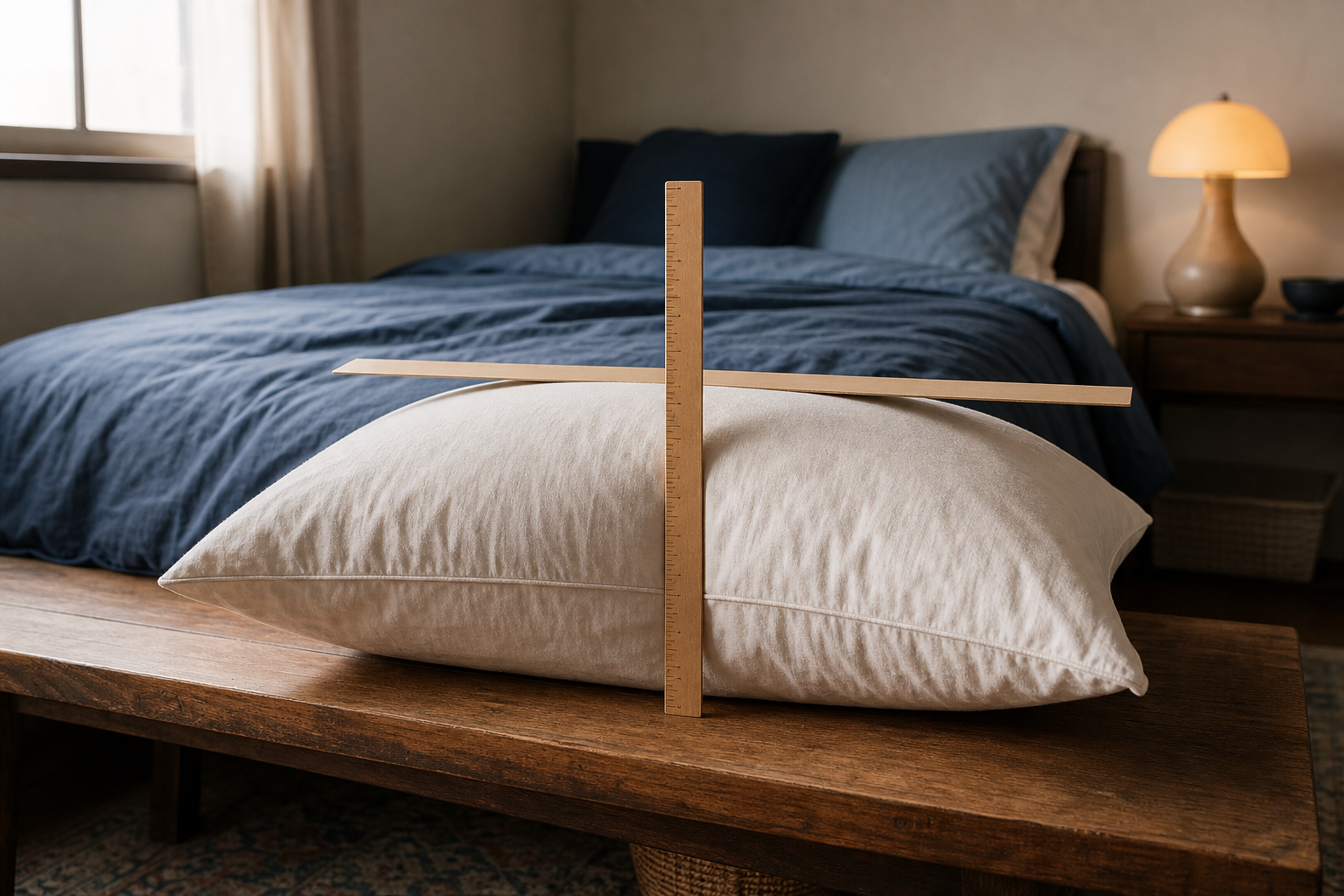
A simple ruler measurement tells you a pillow’s uncompressed loft, but its height under your head is what determines how it fits on your bed.

Side and stomach sleeping require different pillow heights. Use practical fit checks to find a compressible, adjustable middle ground without assuming one loft works for everyone.

Stomach sleepers usually need a lower pillow, but the right working height depends on how the pillow compresses and how deeply the mattress lets the body sink.

A practical guide to checking whether a back-sleeping pillow is too high, too low, or close to the right fit after compression.

A soft mattress can reduce the space a side-sleeper pillow needs to fill. Use these practical checks to judge the pillow’s compressed height in your normal sleep setup.