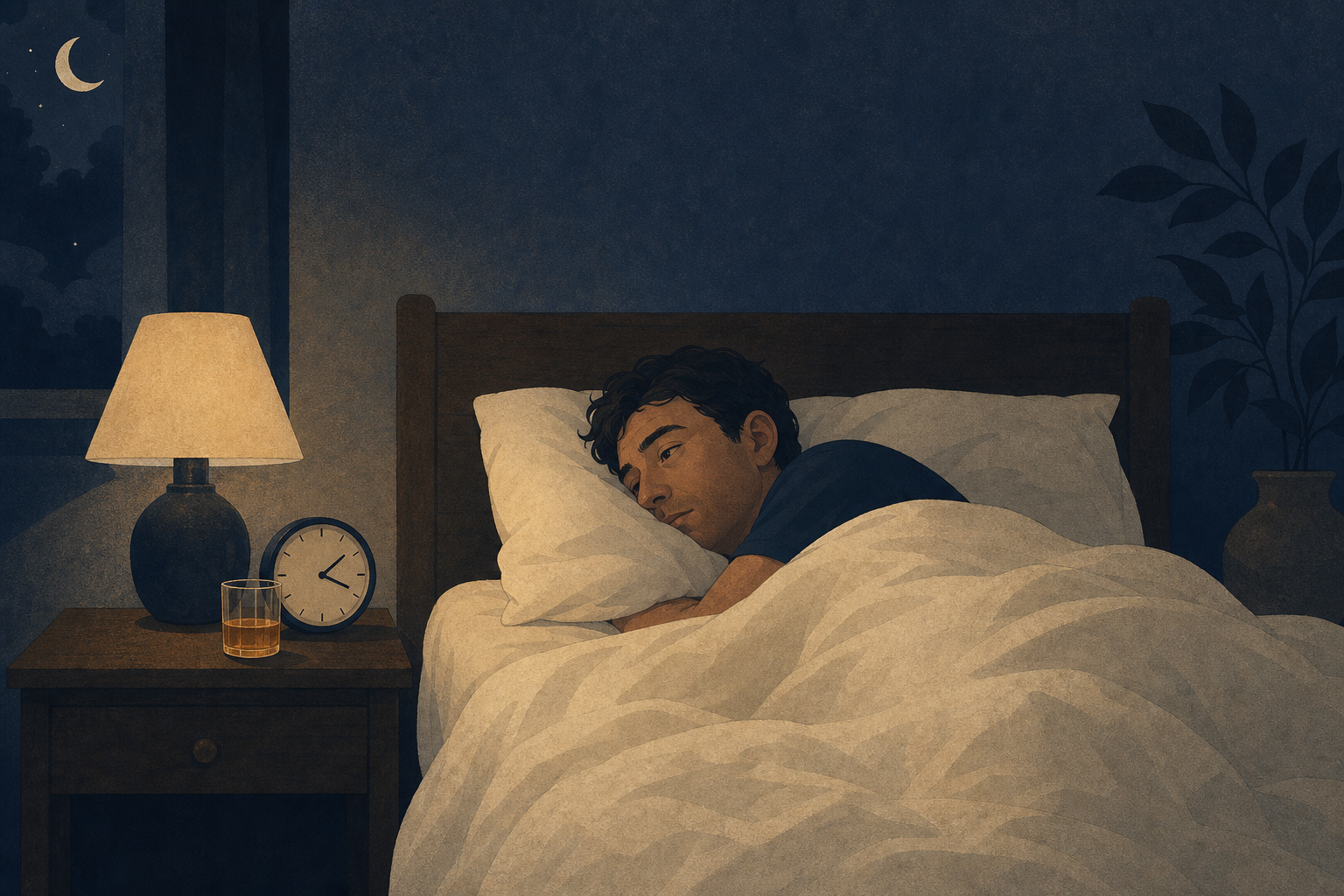
Alcohol can make you feel drowsy and may shorten the time it takes to fall asleep, especially at higher amounts. That initial sedation does not mean you will sleep well. As your body processes the alcohol, sleep can become lighter and more fragmented, with more awakenings and changes to normal sleep stages.
In other words, alcohol may help with the feeling of drifting off while working against your ability to stay asleep and wake feeling refreshed.
Quick answer: Alcohol is not a reliable sleep aid. It may make you fall asleep faster, but it can disrupt REM sleep, increase second-half-of-the-night awakenings, and worsen breathing or snoring in some people.
Why Alcohol Can Make You Fall Asleep Faster
Alcohol depresses activity in the central nervous system. Soon after drinking, you may feel calmer, less alert, and physically heavy. If you drink near bedtime, those sedating effects can make falling asleep seem easier.
The effect is not equally strong at every amount. Recent research suggests that lower amounts can alter REM sleep even when they do not noticeably shorten the time needed to fall asleep. More alcohol may produce stronger initial sedation, but it also tends to cause greater disruption later.
This distinction matters because sedation is not the same as healthy sleep. Passing quickly from wakefulness into unconsciousness does not tell you whether your normal sleep cycles will continue smoothly.
What Happens Later in the Night
The relationship between alcohol and sleep often changes as the night progresses.
During the first part of the night, while alcohol levels remain elevated, sleep may feel deep or unusually heavy. Alcohol can delay the first period of rapid eye movement, or REM, sleep and reduce the amount of REM sleep you get.
As alcohol is metabolized and its sedating effect wears off, you may experience:
- lighter sleep
- more frequent or longer awakenings
- restlessness
- sweating or a faster heartbeat
- vivid dreams later in the night
- more trips to the bathroom
- difficulty returning to sleep after waking
REM sleep naturally becomes more prominent later in the night. Because alcohol can interfere with the timing and amount of REM sleep, the effect may be especially noticeable during those early-morning hours.
The result can be a familiar pattern: you fall asleep quickly, wake at 2 or 3 a.m., and spend the rest of the night sleeping lightly or checking the clock.
Does Alcohol Reduce Sleep Quality?
It can, even if you believe you slept for a normal number of hours.
Sleep quality involves more than total time in bed. It also includes how continuously you sleep and how your brain moves through different sleep stages. Alcohol can change that structure, sometimes called sleep architecture.
You may not remember every brief awakening. Still, fragmented sleep can leave you feeling unrefreshed, foggy, irritable, or unusually tired the next day.
Alcohol can also contribute to sleep disruption in several practical ways:
- More urination: Alcohol can increase urine production, making bathroom trips more likely.
- Reflux or stomach discomfort: Drinking, especially with a large or late meal, may make nighttime digestive discomfort more noticeable.
- Temperature changes: You may feel warm at first but later wake sweaty, chilled, or uncomfortable.
- Next-day effects: Headache, thirst, nausea, or a hangover can make the morning feel worse even if your sleep duration looked adequate.
The effects vary with the amount consumed, timing, food intake, medications, individual metabolism, and existing sleep problems.
Alcohol, Snoring, and Sleep Apnea
Alcohol relaxes muscles, including tissues around the upper airway. For some people, that can make snoring louder or breathing interruptions more likely.
This is particularly important if you have diagnosed or suspected obstructive sleep apnea. Alcohol may worsen airway obstruction and drops in oxygen during sleep. It should not be used to make sleeping with apnea feel easier.
Talk with a qualified healthcare professional if you regularly experience:
- loud, persistent snoring
- gasping, choking, or pauses in breathing during sleep
- morning headaches
- dry mouth on waking
- ongoing daytime sleepiness despite enough time in bed
- difficulty concentrating or staying awake during routine activities
These signs deserve proper evaluation rather than an attempt to manage them with a bedtime drink or a change in sleeping position.
Will Drinking Earlier Prevent Sleep Disruption?
Timing can make a difference, but there is no universal cutoff that guarantees alcohol will not affect your sleep.
Finishing a drink several hours before bed generally gives your body more time to process it than drinking immediately before lying down. However, the time needed varies. The type and size of the drink, how quickly you drink it, your body composition, food intake, health, and medications can all affect how long alcohol remains in your system.
A large glass of wine or a strong mixed drink may also contain more alcohol than you assume. Counting glasses does not always reveal the actual amount consumed.
If sleep quality is your priority, the most useful principle is simple: do not treat alcohol as part of your wind-down routine. If you choose to drink, having it earlier rather than as a nightcap may reduce some bedtime overlap, but it does not guarantee unaffected sleep.
A Simple Way to Notice Your Own Pattern
You do not need a sleep tracker to identify whether alcohol is affecting your nights. Compare evenings when you naturally drink with evenings when you naturally do not, and record a few basic observations the next morning.
Check:
- How long did it seem to take you to fall asleep?
- How many times do you remember waking?
- Did you wake earlier than planned?
- Did you have trouble returning to sleep?
- Did you notice snoring, dry mouth, sweating, or bathroom trips?
- How alert did you feel during the first few hours of the day?
Look for patterns over multiple nights rather than judging one isolated evening. Stress, caffeine, illness, room temperature, and schedule changes can also affect sleep.
If you use alcohol frequently or feel that you need it to sleep, discuss that pattern with a healthcare professional. Do not rely on a sleep experiment as a substitute for individualized medical guidance.
Do Not Mix Alcohol With Sleep Medicines
Combining alcohol with prescription sleep medicines, anti-anxiety drugs, opioids, sedating antihistamines, or over-the-counter nighttime products can be dangerous. The combination may intensify drowsiness, impaired coordination, unusual sleep behaviors, breathing problems, and overdose risk.
Read current medication labels and ask a pharmacist or prescriber about possible interactions. Alcohol and a medicine can sometimes interact even if they are not taken at precisely the same time.
Adding a sleep product does not cancel out alcohol’s effect on sleep quality. It may instead create additional safety concerns.
What to Use Instead of a Nightcap
If the drink is mainly a signal that the day is over, replace the signal rather than searching for another sedative.
Try a short, repeatable sequence:
- Dim the room. Lowering bright light can help create a clearer transition into nighttime.
- Choose a nonalcoholic drink. Water or a caffeine-free option can preserve the ritual without adding alcohol near bed.
- Do one quiet activity. Read, listen to calm audio, stretch gently, or prepare tomorrow’s essentials.
- Keep a consistent wake time. A regular morning anchor can support a steadier sleep schedule.
- Go to bed when sleepy. Do not use alcohol to force sleep before your body feels ready.
These steps are not treatments for persistent insomnia, but they can create a more dependable wind-down routine.
When to Get Help
Speak with a qualified healthcare professional if difficulty falling asleep or staying asleep is ongoing, affects daytime functioning, or repeatedly leads you to use alcohol at bedtime. Help is also appropriate if you are concerned about your drinking or find it difficult to control.
If someone who has been drinking cannot be awakened, is vomiting repeatedly, has a seizure, or has slow or irregular breathing, call 911 immediately. Do not assume the person can safely “sleep it off.”
The Practical Takeaway
Alcohol can produce drowsiness, but drowsiness is only the beginning of the night. Its later effects can include disrupted REM sleep, lighter sleep, more awakenings, and worse breathing in susceptible people.
If you fall asleep quickly after drinking but wake repeatedly or feel unrefreshed, the alcohol may be part of the pattern. Treat it as a possible source of sleep disruption, not as a dependable way to sleep better.