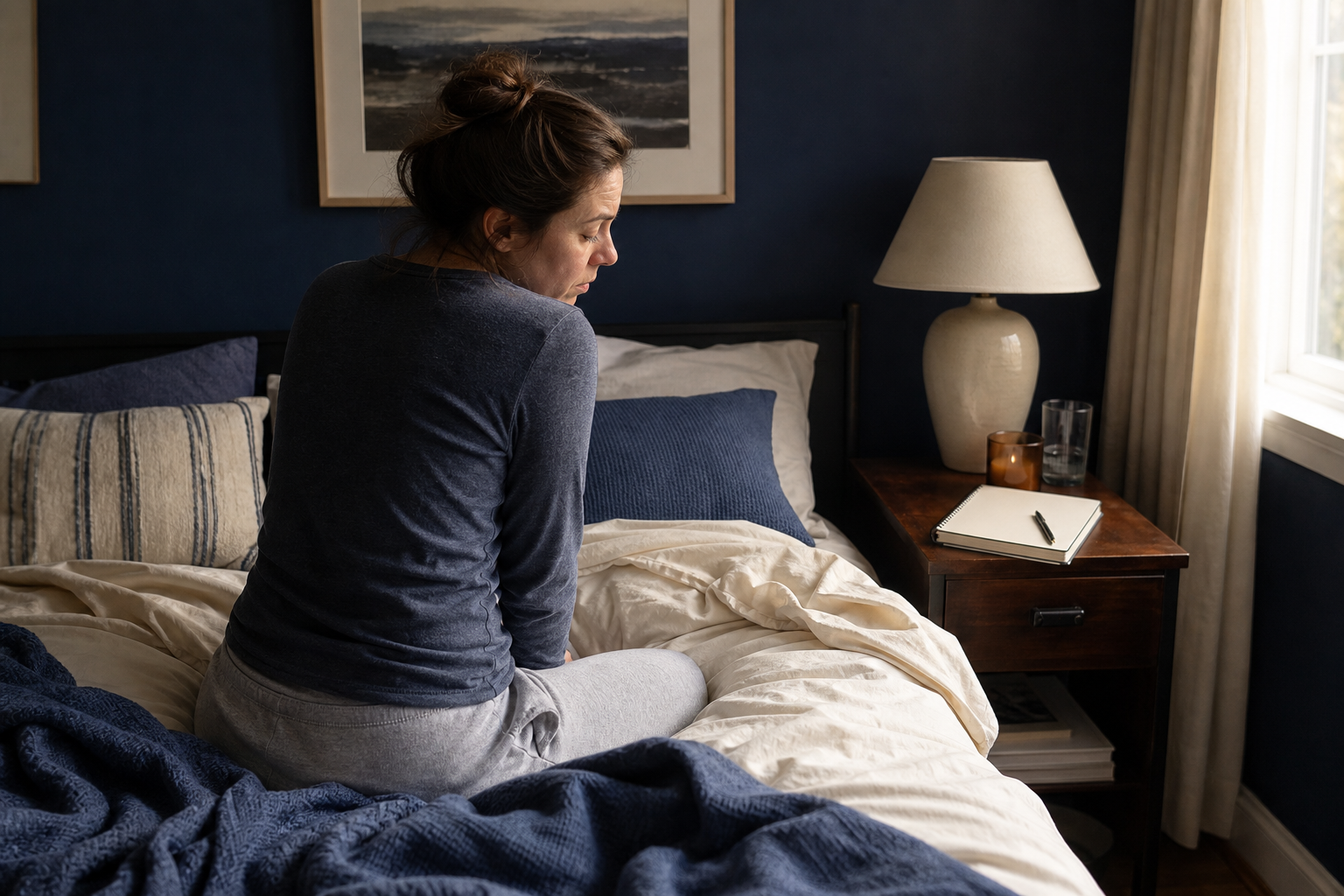
If you sleep 8 hours but still feel tired, the number alone does not tell the whole story. Eight hours is within the usual adult range, but time in bed can include time spent falling asleep, nighttime awakenings, and early-morning wakefulness. Sleep timing, regularity, habits, and health factors can also affect how alert you feel. Even a night that seems like restful sleep is worth comparing with your daytime alertness over several days.
Instead of changing your entire routine tonight, track nine practical clues for one week. You need only a notebook or phone note.
Quick answer: Waking up tired after 8 hours does not automatically mean you need more sleep. First compare your time in bed with estimated time asleep, then look for repeated awakenings, schedule changes, poorly timed naps or substances, bedroom disruptions, and persistent daytime symptoms.
If you are struggling to stay awake while driving, do not wait for a week of observations. Stop driving and get off the road safely. Sleepiness can impair driving, and trying to push through it is not a safe experiment.
Why an 8 hours sleep total does not settle the question
Healthy sleep involves more than duration. It also includes quality, appropriate timing, regularity, and the absence of major disturbances. That is the practical difference between sleep quality vs sleep duration.
For example, going to bed at 11 p.m. and getting out of bed at 7 a.m. creates an eight-hour sleep opportunity. If you took 45 minutes to fall asleep and spent another hour awake during the night, you did not actually sleep for eight hours.
Your estimate does not have to be exact. The goal is not to monitor every minute or achieve a perfect sleep score. It is to replace a vague impression with enough detail to see whether the same pattern keeps appearing.
Eight hours also is not a universal requirement. The NHLBI notes that individual sleep needs vary, even though eight hours falls within the general range commonly recommended for adults.
Start a one-week sleep diary before changing everything
A diary helps you compare your nights with your mornings and daytime alertness. The NHLBI sleep diary includes sleep quantity and quality, medicines, caffeine, alcohol, and daytime sleepiness.
During your tracking week, keep your routine reasonably normal unless something presents an immediate safety concern. Changing your bedtime, caffeine, naps, screens, and bedroom setup all at once makes it harder to tell which observation matters.
A wearable is optional. Consumer sleep totals and sleep-stage reports are estimates, so a simple written record is enough for this exercise.
1. Sleep opportunity versus estimated time asleep
Each morning, record:
- When you went to bed
- When you turned out the light or tried to sleep
- Roughly when you fell asleep
- Your final wake time
- When you got out of bed
These details distinguish time in bed from estimated sleep time. Keep the estimates broad, such as “about 20 minutes,” rather than repeatedly checking the clock at night.
After a week, look for a pattern. If an eight-hour window regularly produces much less estimated sleep, your initial “I get eight hours” assumption needs more context.
2. Awakenings and total awake time
Record how many awakenings you remember and approximately how long you were awake in total. Add a possible reason when one is obvious:
- Bathroom trip
- Noise, light, or temperature
- Pain or physical discomfort
- Reflux
- A child, partner, or pet
- No known reason
One restless night does not establish a problem. Repeated fragmentation is more useful information, especially if your least-restful mornings follow nights with several or prolonged awakenings.
Not feeling rested after sleep can be a sign that the apparent duration did not reflect continuous, good-quality sleep.
3. Bedtime and wake-time regularity
Write down how much your schedule moves from day to day. Pay particular attention to differences between workdays and weekends.
A two-hour later bedtime may be obvious, but a changing wake time matters too. Sleeping late after a difficult night can temporarily help you feel better while making the broader schedule pattern harder to see.
Do not assume that a late schedule is automatically unhealthy. The useful question is whether your timing is consistent and compatible with your required wake time.
4. Whether your sleep timing fits your life
Record anything that forces sleep into an unusual window, including:
- Rotating or overnight shifts
- Very early alarms
- Recent travel or time-zone changes
- Late work, caregiving, or study hours
- The time you naturally become sleepy
You can obtain a reasonable numerical amount of sleep while sleeping at a time that conflicts with your work demands or sleep-wake rhythm. This can contribute to difficulty waking and daytime sleepiness.
A preference for late nights does not by itself indicate a circadian rhythm disorder. Treat timing as one clue, not a diagnosis.
5. Planned and unplanned naps
Log each nap’s start time and approximate duration. Include accidental dozing on the couch, not just naps you planned.
Then compare the nap with:
- How easily you fell asleep that night
- Whether you woke during the night
- How alert you felt the following morning
Naps are not automatically bad. A short nap can temporarily improve alertness for some people, while a late or long nap can make nighttime sleep more difficult. Your diary should show context rather than assign a moral score.
Frequent unplanned dozing is different from choosing an occasional nap. Record it clearly and discuss it with a healthcare professional if it continues.
6. Caffeine, nicotine, and other alerting substances
Instead of writing “had coffee,” record the item, approximate amount, and time. Include relevant sources such as:
- Coffee and tea
- Soda or energy drinks
- Pre-workout products
- Chocolate
- Nicotine
Timing often provides more useful information than the simple presence of caffeine. Its effects can persist for hours, although sensitivity varies from person to person.
Do not draw a firm conclusion from one afternoon coffee followed by one bad night. Look for repeated pairings between later use, difficulty falling asleep, and worse morning alertness.
7. Alcohol, meals, fluids, medicines, and supplements
Record when you consume alcohol, eat a heavy meal, drink substantial fluids, or take medicines and supplements. Note whether these coincide with morning grogginess, reflux, bathroom trips, or awakenings.
This log is observational. It is not a reason to stop, skip, or change prescription or over-the-counter medicine. Some medicines can contribute to drowsiness or fatigue, but medication questions belong with a pharmacist or clinician.
If you bring your diary to an appointment, include doses when known. That gives the professional reviewing it more useful information than a general statement that you take medicine “at night.”
8. Light, activity, wind-down, and bedroom disruptions
Track a few features of your day and final hour before bed:
- Outdoor light exposure during the day
- Physical activity
- Bright screens or lighting near bedtime
- Whether your wind-down felt calm or stimulating
- Bedroom light, noise, and temperature
- Partner or pet disruptions
- Physical discomfort or repeated position changes
Do not blame screens alone. They are one possible part of a larger routine, alongside light exposure, activity, timing, and what you are doing on the screen.
An uncomfortable pillow or mattress may contribute to position changes or awakenings. It should not be treated as an explanation for unexplained daytime sleepiness or as a substitute for medical evaluation.
9. How the tiredness feels and what comes with it
“Feeling tired” can describe different experiences. At consistent times each day, rate your morning restfulness and daytime alertness from 1 to 5. Then describe the feeling more precisely.
Daytime sleepiness is an urge or tendency to fall asleep. Fatigue is more like low energy, reduced motivation, or physical exhaustion. They can overlap, but distinguishing daytime sleepiness vs fatigue makes your notes more useful.
Also record:
- Difficulty concentrating
- Unplanned dozing
- Loud, frequent snoring reported by someone else
- Gasping or witnessed breathing pauses
- Dry mouth or morning headaches
- Restless sensations
- Pain
- Frequent nighttime urination
These observations do not diagnose sleep apnea or another condition. Loud snoring with gasping or witnessed breathing pauses does, however, deserve prompt discussion with a healthcare provider.
A compact morning and evening template
Copy this into a notebook or phone note for each day.
Morning
- Bedtime and lights-out time:
- Estimated time I fell asleep:
- Awakenings and approximate awake time:
- Final wake time and out-of-bed time:
- Morning restfulness, 1 to 5:
- Notable symptoms or disruptions:
Evening
- Daytime sleepiness, 1 to 5:
- Fatigue or low energy, 1 to 5:
- Naps or unplanned dozing:
- Caffeine, nicotine, and timing:
- Alcohol, meals, fluids, medicines, and timing:
- Activity, outdoor light, and wind-down:
- Schedule changes, shifts, or travel:
How to review your week
At the end of seven days, do not total everything into one score. Compare the details instead.
- Circle repeated patterns. Look for several nights with long awakenings, shifting wake times, late naps, late caffeine, or recurring bedroom disruptions.
- Compare better and worse mornings. Ask what differed the night before without assuming that one factor caused the result.
- Choose one low-risk variable to test. For example, you might make your wake time more consistent or move late caffeine earlier, then continue tracking.
- Keep the record. If no clear pattern appears, your diary can help a healthcare professional understand your sleep opportunity, symptoms, and daytime functioning.
One week can reveal associations, but it cannot prove a cause or rule out a health issue.
When not to rely on routine tracking alone
Arrange a healthcare appointment if you are routinely waking unrefreshed, if tiredness or sleepiness persists for weeks, or if it interferes with work, daily activities, or your ability to function safely.
Seek help sooner for frequent unplanned dozing, recurring breathing concerns, or loud snoring accompanied by gasping or witnessed pauses. Persistent fatigue can also have sleep-related, medication-related, mental-health, and physical causes that a diary cannot evaluate.
The goal is not to prove that you slept exactly eight hours. It is to build a clearer picture of when you slept, how continuously you slept, what surrounded the night, and how safely and alertly you functioned the next day.