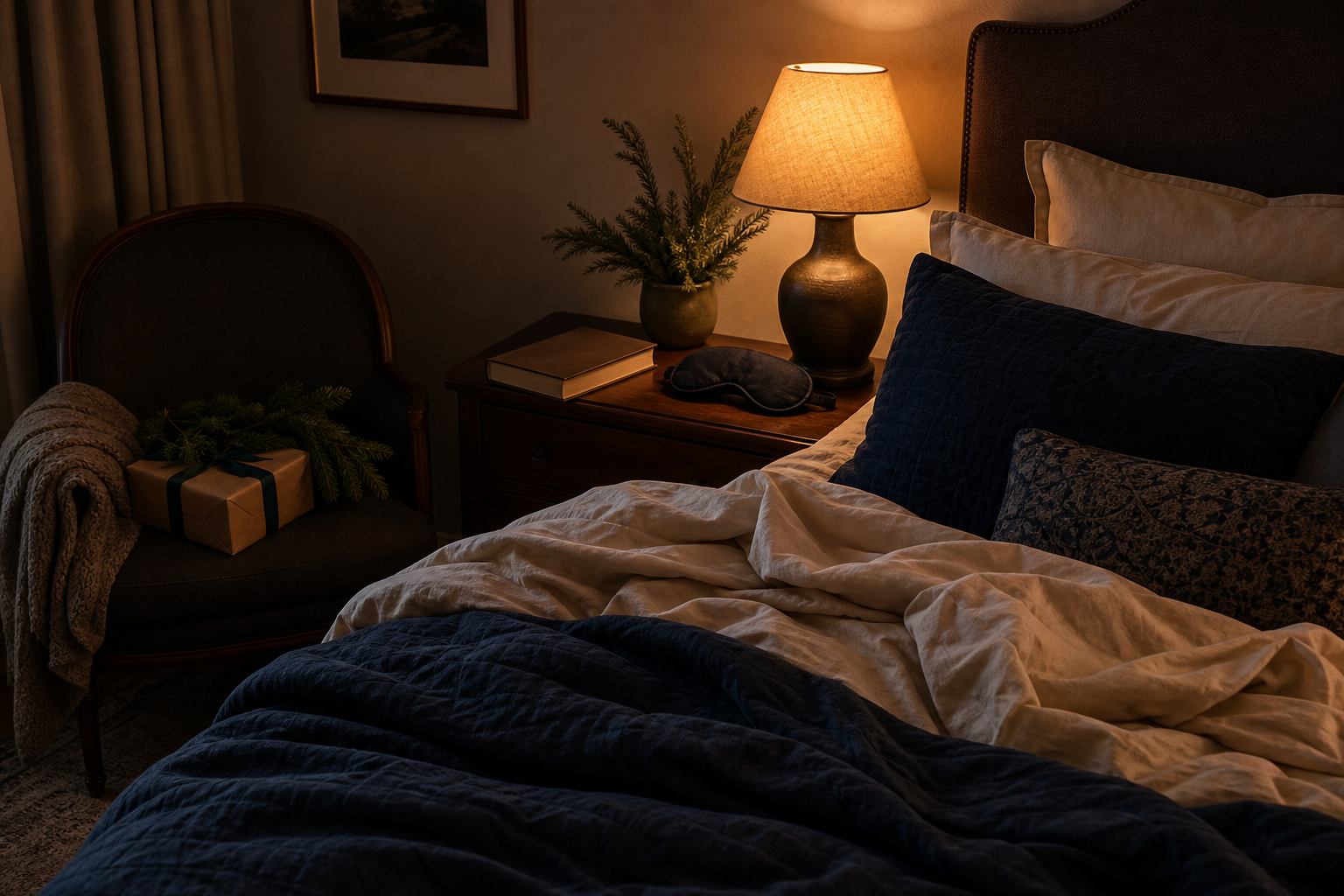
Learning how to sleep on Christmas Eve is less about forcing yourself to drift off and more about removing the things keeping you alert. Stop holiday preparations before bedtime, put tomorrow’s tasks on paper, lower the lights, preserve familiar sleep cues, and make the bedroom as quiet and comfortable as possible.
A slightly later bedtime or one imperfect night will not ruin Christmas Day. Your goal is simply to give sleep a fair chance to arrive.
Quick answer: Set a firm stopping time for preparations, write down anything you still need to do, and follow the calmest parts of your normal bedtime routine. If you become frustrated in bed, move to a dim, quiet place until you feel sleepy rather than continuing to struggle.
Christmas Eve combines several sleep disruptors at once. You may have positive anticipation, a later meal, unfinished wrapping, visiting relatives, excited children, extra noise, or an unfamiliar bed. The following tactics address those specific obstacles without turning bedtime into another holiday performance.
How to Sleep on Christmas Eve: 12 Practical Ways
1. Keep your schedule reasonably close to normal
You do not need to follow your usual schedule to the exact minute. However, going to bed several hours early in an attempt to secure extra sleep can backfire if you are not sleepy yet.
Aim for a bedtime and wake time reasonably close to normal. If celebrations run a little late, complete your familiar wind-down afterward rather than skipping directly from socializing to trying to sleep.
Ask yourself whether you feel physically sleepy or whether you are in bed only because you think you should already be asleep. If you are still alert, choose a quiet activity and wait for clearer signs of sleepiness.
2. Get daylight and movement during the day
Daylight helps reinforce the difference between daytime and nighttime, while regular activity can support healthy sleep habits. Take a walk, play outside with the family, or complete errands on foot if that suits your plans.
Try not to compensate for expected sleep loss with a long, late nap. That can leave you with less sleep pressure at bedtime. If you are tired, a quieter afternoon is reasonable, but save the bed for nighttime when possible.
3. Stop caffeine early enough for your sensitivity
Coffee, tea, energy drinks, cola, and chocolate can become more plentiful during holiday gatherings. Caffeine’s effects can last for hours, although the amount that affects sleep varies between people.
Use your normal response as a guide. If an afternoon coffee often keeps you alert, Christmas Eve is not the best day to make an exception. Once evening arrives, switch to a familiar caffeine-free drink rather than trying to offset tiredness from a busy day.
4. Give heavier food time to settle
A large meal immediately before bed can make it harder to get comfortable. When possible, finish the heaviest part of dinner earlier and choose a modest snack later if you are genuinely hungry.
Do not use alcohol as a sleep aid. It can make you feel drowsy initially while contributing to lighter or more disrupted sleep later. If you have already eaten or had more to drink than usual, focus on stopping further stimulation and allowing time to pass rather than looking for a quick remedy.
5. Set a firm deadline for Christmas preparations
Wrapping one more present easily becomes an extra hour of cleaning, messaging, or rearranging decorations. Choose a realistic cutoff for tasks and decide in advance what can remain unfinished.
At the deadline:
- Put supplies away so they are not visible from bed.
- Delegate anything another adult can reasonably handle.
- Move noisy preparation away from sleeping areas.
- Decide which nonessential jobs can wait.
This is especially useful when figuring out how to sleep when excited. Excitement becomes harder to settle when your surroundings continue signaling that the event is still in progress.
6. Write a short Christmas morning plan
If you want to know how to calm a racing mind before bed, start by giving it somewhere to store unfinished thoughts. Write a brief list of tomorrow’s essential tasks, including when you will handle each one.
Separate the list into three categories:
- Must happen: Turn on the oven, pack the car, or place a gift downstairs.
- Can be delegated: Setting the table or preparing drinks.
- Can wait: Extra cleaning, optional decorations, or nonurgent messages.
Keep the list short. The purpose is not to create a perfect schedule but to stop mentally rehearsing the same reminders in bed. Close the notebook when you finish to create a clear signal that planning is over.
7. Agree on quiet hours and a morning plan
A shared plan can prevent repeated questions, slamming doors, late conversations, and children checking whether Christmas has started.
If you are trying to help kids sleep on Christmas Eve, retain the most recognizable parts of their usual routine. Keep explanations calm and avoid repeatedly building excitement by discussing presents at bedtime.
Adjust expectations by age:
- Younger children: Follow the familiar washing, pajamas, story, and lights-out sequence.
- School-age children: Agree on when morning begins and what they can do quietly if they wake early.
- Teenagers: Set expectations for devices, conversation volume, and the morning schedule.
- Adults and guests: Decide when socializing ends and which rooms should remain quiet.
A small timing shift is usually less disruptive than turning bedtime into a conflict.
8. Repeat the familiar parts of your bedtime routine
Your holiday bedtime routine does not need to be elaborate. Use the ordinary actions you already associate with sleep, such as washing your face, changing into familiar sleepwear, reading, or preparing the room.
When you are staying elsewhere, bring a few practical cues from home if possible. Familiar pajamas, your usual toiletries, or the pillow you normally use can make a guest room feel less unfamiliar.
Keep the sequence recognizable even if dinner and celebrations have changed the timing. Familiarity helps create a transition between Christmas activity and rest.
9. Lower evening stimulation
Dim bright lights as the evening winds down and move away from highly engaging conversations, work, games, or social media. Light and stimulating content can both encourage alertness when you are trying to settle.
This does not mean that one glance at a screen ruins sleep. Focus on what the device is encouraging you to do. Repeatedly checking messages, watching exciting videos, or monitoring the time is more activating than setting an alarm and putting the phone aside.
Choose something deliberately uneventful, such as reading a familiar book, doing a simple puzzle, or listening to quiet audio at a low volume.
10. Prepare for houseguests and holiday noise
Knowing how to sleep with houseguests or holiday noise starts with fixing avoidable disruptions before you get into bed.
Check that:
- The room is comfortably cool and dark enough.
- Hallway or decorative lights are not shining toward the bed.
- Doors are closed gently and televisions are turned down.
- Guests know which bathroom to use during the night.
- Gift wrapping and kitchen cleanup happen away from bedrooms.
Earplugs or familiar neutral sound can reduce noise, but only use them when you can still hear alarms and any children or dependent people for whom you are responsible.
11. Use one simple relaxation method
Choose one uncomplicated method rather than testing several tricks while wondering which will make you sleep fastest.
For slow breathing, let your breathing become gentle and unforced. Breathe in comfortably, then allow the exhale to last slightly longer. Continue without counting if counting makes you more alert.
Alternatively, try progressive muscle relaxation. Gently tense and release one area at a time, beginning with your hands, shoulders, or feet. Stop if the exercise causes discomfort.
These methods can help lower physical tension, but they are settling tools rather than guaranteed sleep treatments. You do not need to perform them perfectly.
12. Leave bed if you become wide awake and frustrated
If you are clearly awake, increasingly irritated, or planning the entire morning in bed, get up for a quiet reset. Go somewhere dim and do a calm activity until sleepiness returns.
Avoid restarting chores, opening presents, or checking the clock repeatedly. Those activities can make the reset more stimulating and turn the bedroom into a place for frustration or planning.
Return to bed when your eyelids feel heavy, your attention starts wandering, or staying awake requires effort. Use those signs instead of watching a stopwatch.
If You Still Cannot Sleep
Try not to calculate how many hours remain before morning. Clock monitoring adds pressure without creating sleep. Turn the clock away, rest quietly, and remember that a difficult Christmas Eve is not automatically a sign of a lasting sleep problem.
Avoid chasing sleep with unfamiliar supplements, borrowed medication, or alcohol. Resume your usual schedule after the holiday rather than making drastic changes to compensate for one night.
If sleep difficulty keeps happening, causes significant daytime impairment, or occurs alongside breathing concerns or other ongoing symptoms, speak with a qualified healthcare professional.
For tonight, focus on three priorities: stop preparing, preserve familiar bedtime cues, and make the household quieter. Sleep cannot be commanded, but it has a better chance when Christmas Eve is no longer asking for your attention.