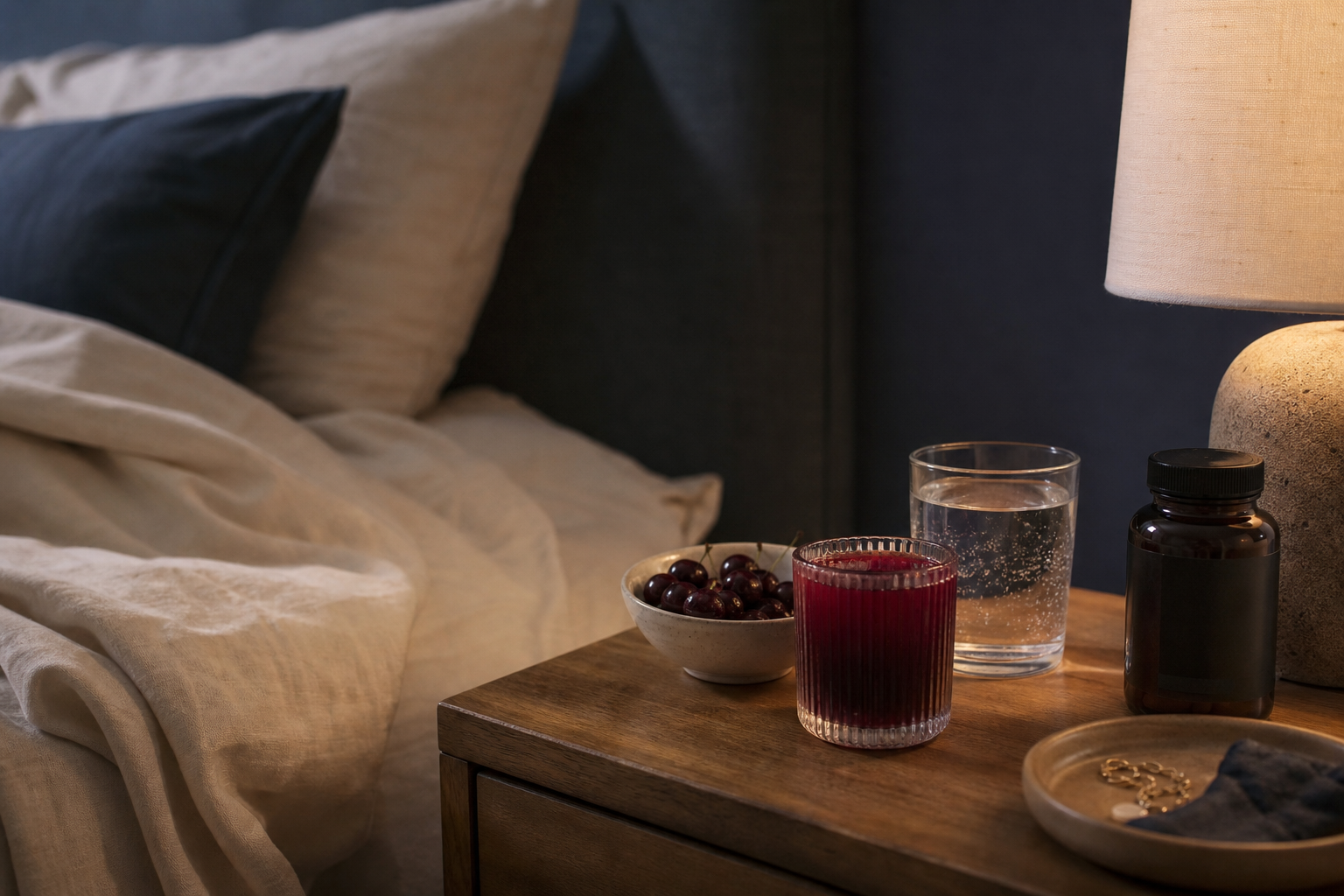
The viral sleep cocktail is usually a nonalcoholic drink made with tart cherry juice, magnesium powder, and sparkling water or prebiotic soda. Although some individual ingredients have been studied, the combined drink has not been established as an effective treatment for insomnia.
The bigger issue is that there is no standard recipe. One social-media version may be a simple juice spritzer, while another combines magnesium, fermentable fiber, sweeteners, melatonin, and additional sleep supplements.
Quick answer: Keep the drink simple, measure what you use, and read both the Nutrition Facts and Supplement Facts panels. Tart cherry and magnesium have limited or inconsistent sleep evidence. The mixer and sweeteners mainly change taste, fluid volume, and digestive comfort.
Before copying a scoop or splash from a video, inspect these six ingredient categories.
What is actually in the sleepy girl mocktail?
The most common sleepy girl mocktail ingredients are:
- Tart cherry juice or concentrate
- Magnesium powder
- Plain sparkling water or prebiotic soda
Some versions add honey, agave, flavored syrup, melatonin drops, or a multi-ingredient sleep powder. Those additions can turn a food-style mocktail into a stack of supplements.
The Cleveland Clinic’s overview of the trend confirms that recipes and ratios vary. That variation matters because a tablespoon of one magnesium powder can provide a very different amount of elemental magnesium from the same spoonful of another product.
Here is what to check in each part of the drink.
1. Tart cherry juice for sleep: promising, but not proven
If you make a tart cherry juice mocktail for sleep, note the serving and added sugar so you can compare it with your usual evening routine.
Tart cherries contain compounds that have led researchers to study their possible effects on sleep. Some small studies have reported improvements in selected sleep outcomes or changes in melatonin measurements.
However, the overall evidence is still limited. A 2025 systematic review of tart cherry and sleep found substantial variation in the products, amounts, study durations, and groups of people studied. Positive findings from a particular product used repeatedly in a trial do not prove that one serving in a viral cocktail will improve your sleep that night.
Tart cherry juice is not a standardized natural sleeping pill. Its naturally occurring melatonin also should not be treated as equivalent to a known dose of a melatonin supplement.
Check the type of cherry product
Look at the front label and ingredient list. These are not automatically interchangeable:
- 100% tart cherry juice
- Tart cherry concentrate
- A cherry juice blend
- Black cherry juice
- A sweetened cherry-flavored drink
If it is a concentrate, check whether the label instructs you to dilute it. Also review the serving size, total sugar, and added sugar. A juice blend may contain only a portion of tart cherry juice, while a flavored drink may contain added sweeteners.
There is no universal, evidence-based tart cherry amount for a sleep cocktail. Measure the product you choose rather than pouring an unknown quantity, but do not assume that a study protocol can be converted into a one-night home recipe.
Acidic juice can also be uncomfortable for some people with nighttime reflux. It is not a universal trigger, but if you notice burning, regurgitation, or discomfort after drinking it close to bed, the timing or ingredient may not suit you.
2. Magnesium powder: read the elemental amount
Magnesium is the ingredient that deserves the closest label and medication check. Research on magnesium for sleep remains uncertain rather than clearly positive or clearly negative.
A 2026 systematic review of magnesium supplementation for sleep found that results varied according to the population, magnesium form, amount, duration, and outcome measured. Evidence certainty was low to very low, and the findings did not support oral magnesium as a routine insomnia treatment.
That means a magnesium sleep cocktail should not be treated as a clinically established remedy. It also means that no single form, including magnesium glycinate, can be called universally best for sleep based on the available evidence.
Find “elemental magnesium” on the label
The number that matters is the amount of magnesium listed on the Supplement Facts panel. This is the elemental magnesium provided per labeled serving, not the total weight of the full magnesium compound.
Do not copy an unmeasured scoop or tablespoon from a video. Use the scoop supplied with the product, confirm what counts as one serving, and check whether the powder contains other active ingredients.
Forms such as citrate, oxide, chloride, and glycinate can differ in absorption and digestive tolerance. The form name alone does not tell you how much elemental magnesium you are taking or guarantee a sleep effect.
The NIH magnesium fact sheet identifies 350 mg per day as the adult upper limit for magnesium from supplements and medications. This is a safety ceiling for generally healthy adults, not a recommended sleep dose or a target for your drink. Magnesium naturally present in food is not included in that supplemental limit.
Count magnesium from all relevant sources, including:
- Multivitamins and mineral supplements
- Separate magnesium capsules or powders
- Antacids containing magnesium
- Magnesium-based laxatives
- Multi-ingredient sleep products
Too much supplemental magnesium can cause diarrhea, nausea, and abdominal cramping. Those symptoms are also practical signs that the cocktail is not producing a relaxing bedtime experience.
People with impaired kidney function should not casually add supplemental magnesium because reduced clearance increases the risk of toxicity. Magnesium can also interfere with oral bisphosphonates and tetracycline or quinolone antibiotics. Diuretics and proton pump inhibitors can affect magnesium status.
If you use those medicines, have kidney problems, or take other regular prescriptions, ask a pharmacist or prescriber to review the specific product and timing. Do not rely on generalized spacing advice from a recipe video.
3. Plain sparkling water: mostly a mixer
Plain sparkling water adds fizz, dilution, and fluid. It is not an established sleep-promoting ingredient.
Confirm that your mixer is genuinely plain and caffeine-free. Sparkling energy drinks, tea-based beverages, and botanical drinks can look similar to flavored water on a store shelf. Read the ingredients and caffeine statement rather than relying on the packaging design.
Also consider how the drink feels at bedtime:
- Carbonation: It can cause belching, pressure, or gas in some people.
- Fluid volume: A large drink may be a poor fit if you regularly wake to urinate.
- Flavorings: Citrus or other acidic flavorings may aggravate reflux for some people.
- Timing: Lying down soon after a drink can be uncomfortable if you are prone to nighttime reflux.
Still water is a reasonable substitute if carbonation bothers you. The fizz does not provide the proposed sleep effect, so removing it does not remove an active sleep ingredient.
4. Prebiotic soda before bed: check the fiber
Prebiotic soda is not nutritionally equivalent to plain sparkling water. It may contain inulin, chicory root fiber, fructooligosaccharides, or other fermentable fibers.
Those ingredients are not inherently harmful, and some people tolerate them well. However, a review of nondigestible carbohydrates and digestive tolerance found that inulin and similar fibers can cause gas and bloating, with effects varying by person and amount.
Before drinking a prebiotic soda before bed, inspect the label for:
- Total fiber per serving
- Inulin, chicory root, or other added fibers
- Caffeine
- Added sugar
- Sugar alcohols or other sweeteners
- Serving size and number of servings per can
“Gut healthy” does not mean “sleep promoting.” Added prebiotic fiber has no established sleep-specific role in this cocktail.
A complex soda also introduces another variable. If you are trying to determine how you tolerate tart cherry juice or magnesium, adding a fiber-heavy mixer can make gas, abdominal pressure, or loose stools harder to interpret.
5. Sweeteners: count what is already in the glass
Tart cherry juice and flavored mixers may already provide substantial sweetness. Check those labels before adding honey, agave, syrup, or another sweetener.
Honey and agave can change the taste, but they are not essential sleep cocktail ingredients. Adding them does not turn the drink into a proven sleep aid.
Review both total sugar and added sugar on the Nutrition Facts panel. This is especially useful when the recipe combines a juice blend, sweetened soda, and syrup.
Sugar-free does not always mean digestion-free, either. Sugar alcohols such as sorbitol, mannitol, maltitol, erythritol, and xylitol can cause gas, bloating, or diarrhea in some people. The FDA’s sugar alcohol guidance explains where to identify them on food labels.
Not all non-sugar sweeteners have the same digestive effects. Instead of assuming that every sugar-free option will bother you, check the exact ingredient and pay attention to your response.
If you wake with reflux, abdominal discomfort, or an urgent bathroom trip after the drink, sweetness and fiber deserve as much scrutiny as magnesium.
6. Melatonin and sleep powder add-ins: avoid casual stacking
Adding melatonin changes the nature of the drink. A melatonin sleep drink is no longer simply juice, magnesium, and fizzy water. It contains another supplement with its own amount, safety questions, and possible interactions.
Short-term melatonin use appears safe for many adults, but its long-term safety is less certain. According to NCCIH’s melatonin guidance, people taking medicines should consult a healthcare professional. Extra caution is appropriate for people using blood thinners, those with epilepsy, and those who are pregnant or breastfeeding. Older adults may experience prolonged daytime drowsiness.
Do not assume that the naturally occurring compounds in tart cherry juice and a measured melatonin supplement are interchangeable. Also avoid adding melatonin drops on top of a sleep powder without checking whether the powder already contains melatonin.
Multi-ingredient products may include combinations of:
- Magnesium
- Melatonin
- L-theanine
- Herbal extracts
- Additional vitamins or minerals
- Sweeteners and flavorings
Read every Supplement Facts panel and the full ingredient list. The FDA regulates dietary supplement labeling and has postmarket enforcement authority, but it does not approve supplements for safety and effectiveness before sale in the same way it approves drugs.
One study of a selected group of U.S. melatonin gummies also found frequent differences between labeled and measured melatonin amounts. That finding does not prove that every melatonin product is mislabeled, but it supports being cautious about stacking several sleep supplements.
A lower-complexity way to evaluate the drink
You do not need to combine all six categories. A simpler approach makes it easier to notice taste, digestive effects, and sleep changes.
- Choose one clearly labeled tart cherry product. Check whether it is juice, concentrate, or a sweetened blend.
- Use a simple caffeine-free mixer. Plain still or sparkling water introduces fewer variables than a fiber-added soda.
- Count the total fluid. A large bedtime beverage can increase nighttime bathroom trips.
- Treat magnesium as a supplement. Confirm the elemental amount and review medicines or health conditions before including it.
- Skip extra sleep add-ins initially. Do not automatically add melatonin or a multi-ingredient powder.
- Change one variable at a time. Note reflux, bloating, loose stools, next-day drowsiness, and nighttime awakenings.
Any perceived benefit may come partly from replacing an alcoholic nightcap or creating a consistent wind-down cue. That can still make the ritual useful, but it is different from proving that the ingredients treat insomnia.
The practical takeaway
The viral sleep cocktail is best viewed as an optional bedtime drink, not an insomnia treatment. Tart cherry juice has preliminary but limited evidence, while magnesium research is inconsistent and requires careful label, kidney, and medication checks.
Keep the recipe uncomplicated, avoid caffeine and casual supplement stacking, and stop if it causes digestive discomfort or next-day drowsiness. If sleep difficulties continue despite a reasonable routine, discuss them with a qualified healthcare professional rather than adding more ingredients to the glass.