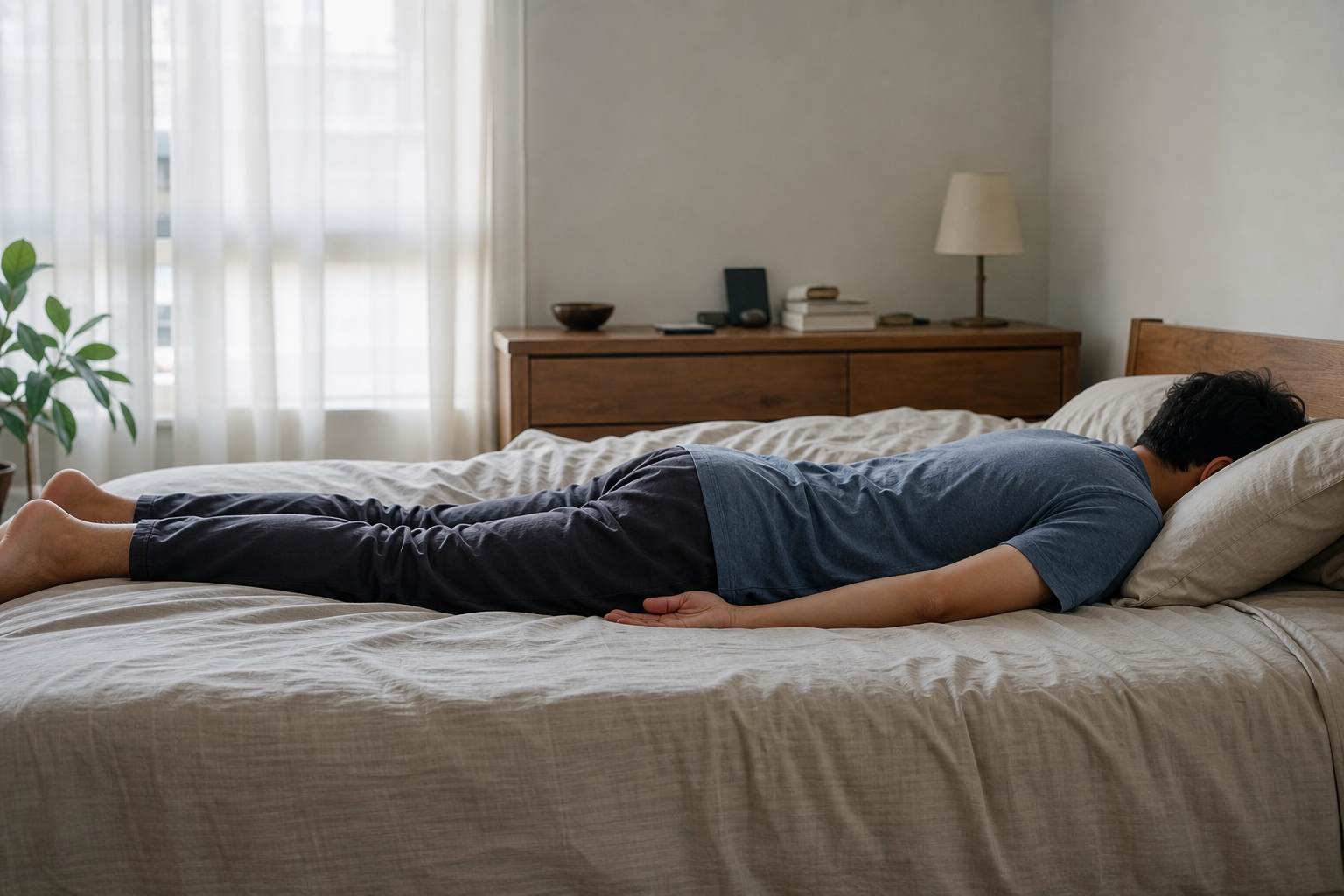
To nap without making nighttime sleep harder, keep the nap brief, take it in the early afternoon, and pay attention to what happens at bedtime. A 10- to 20-minute nap is a sensible starting point for many adults, but not everyone needs or responds well to daytime sleep. If you become less sleepy at bedtime or spend longer trying to fall asleep, shorten the nap, move it earlier, or skip it.
Quick answer: Nap for about 10 to 20 minutes, preferably in the early afternoon. Set an alarm, allow time for post-nap grogginess, and adjust or stop napping if your nighttime sleep becomes more difficult.
How Naps and Sleep Affect Each Other
Your readiness for sleep generally builds while you are awake. A nap can reduce some of that sleepiness, which may help you feel more alert during the day but leave you less ready for bed at night.
Timing and duration both matter. An early, short nap is less likely to compete with nighttime sleep than a long nap taken close to bedtime. Your usual schedule, recent sleep, age, medications, and individual response can also change how a nap affects you.
The goal is not to follow one supposedly perfect nap formula. It is to find the smallest nap that helps without creating a new nighttime problem.
1. Decide Whether You Actually Need a Nap
Do not add naps simply because they are often presented as a healthy habit. Some people feel refreshed after napping, while others wake up groggy or struggle to sleep later.
A nap may be useful when you have an occasional afternoon energy dip or know that one night will be shorter than usual. It should not become your automatic response to boredom, stress, or a consistently inadequate nighttime schedule.
Before lying down, ask:
- Am I genuinely sleepy?
- Did I get less sleep than usual?
- Has napping recently affected my bedtime?
- Could a quiet break without sleeping be enough?
If you are tired but not sleepy, resting, stretching, or briefly stepping outside may suit you better than a nap.
2. Choose the Early Afternoon
For someone who sleeps at night and stays awake during the day, early afternoon is usually the most practical nap period. Many people naturally experience a dip in alertness during this part of the day.
Try to finish your nap before 3 p.m. as a starting point. If your bedtime is unusually early, you may need to nap earlier. If you work nights, standard afternoon advice may not fit because your main sleep period occurs at a different time.
Avoid turning an evening doze into an accidental nap. Falling asleep on the sofa shortly before bed can reduce your sleepiness just when you want it to be increasing.
3. Start With a Short Nap
Set an alarm for about 20 minutes after you settle down. Short naps may provide a pause without taking you as far into sleep as a longer nap.
Longer naps are more likely to cause sleep inertia, the temporary groggy or disoriented feeling that can occur after waking. They also remove more of the sleepiness that has built during the day, potentially making bedtime more difficult.
Your response matters more than the number alone. If 20 minutes leaves you groggy, try 10 to 15 minutes. If you regularly silence the alarm and sleep much longer, nap somewhere comfortable but less associated with a full night of sleep, such as a supportive chair rather than your bed.
4. Make the Nap Easy to End
A quiet, dim, comfortably cool space can make a short rest more practical. Silence notifications and use an alarm that is noticeable without being startling.
Do not make the room so dark and elaborate that waking feels like the middle of the night. Once the alarm sounds, get up rather than repeatedly extending the nap.
Give yourself a short transition after waking. Open the curtains, drink some water, and move around gently. Avoid driving, operating equipment, or starting a safety-sensitive task until you feel fully alert.
5. Test the Nap Against Your Nighttime Sleep
Use your nighttime response as the deciding factor. For one week, record:
- when the nap began and ended
- how refreshed or groggy you felt afterward
- your usual bedtime
- roughly how long it took to fall asleep
- whether you woke more often than usual
- how rested you felt the next morning
If bedtime becomes harder after nap days, first shorten the nap. If that does not help, move it earlier or try several nap-free days for comparison.
Protecting a consistent nighttime schedule is usually more useful than forcing a daily nap.
When Napping May Signal a Larger Problem
An occasional nap is different from feeling unable to stay awake most days. Talk with a qualified healthcare professional if your need for naps suddenly increases, daytime sleepiness persists despite allowing enough time for nighttime sleep, or sleepiness affects driving, work, or daily activities.
Ongoing difficulty falling asleep, repeated nighttime waking, severe fatigue, or breathing concerns during sleep also deserve professional attention. A nap may temporarily cover sleepiness, but it should not replace evaluation of a persistent problem.
The simplest approach is to treat napping as optional. Keep it short, place it early, and let the quality of your nighttime sleep determine whether it belongs in your routine.