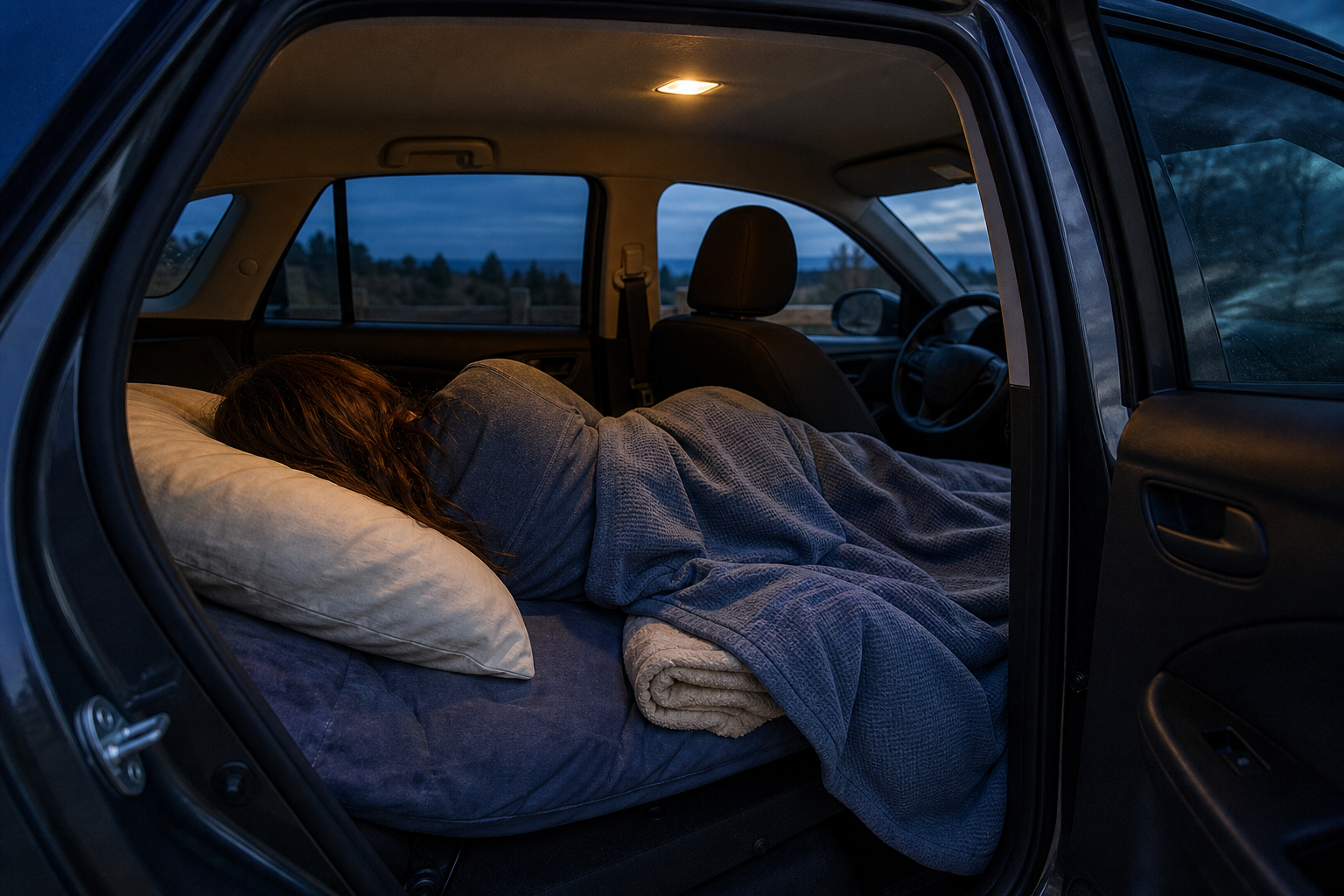
To sleep comfortably in a car, park somewhere safe and permitted, turn off the engine, create the flattest surface your vehicle allows, and use bedding that supports both your head and the gaps under your body. Add modest ventilation, block outside light without hiding the vehicle completely, and keep essential items within reach.
Quick answer: Choose a legal, level parking place; switch off the engine; flatten or fill the sleeping area; crack suitable windows slightly; and use layered bedding for cushioning and warmth.
Comfort matters, but safety and location come first. Weather, vehicle design, local rules, and whether you are sleeping alone all change what counts as a sensible setup.
Start With a Safe, Legal Place
Do not assume that an empty parking lot permits overnight stays. Check posted signs and local rules, or ask the property owner or campground host. Established campgrounds and other designated overnight areas are generally more predictable than isolated roadside pull-offs.
Before settling in:
- Park on level, stable ground away from moving traffic.
- Avoid low spots that could flood and areas exposed to falling branches.
- Lock the doors and keep your keys, phone, shoes, and light accessible.
- Tell a trusted person where you plan to stay.
- Preserve a clear path to the driver’s seat and an exit.
- Keep valuables out of sight without covering every window so completely that you lose awareness of your surroundings.
Never sleep in a vehicle parked inside a garage or other enclosed structure. Turn the engine off before sleeping. Carbon monoxide is colorless and odorless, and dangerous buildup can occur around running engines, blocked exhaust systems, enclosed spaces, or nearby fuel-burning equipment.
Build a Flatter Sleeping Surface
A reclining front seat is convenient, but it can leave your hips folded and your head tilted. If your vehicle allows it, folding the rear seats and lying lengthwise often provides a more bed-like position.
Use this sequence:
- Move unnecessary items. Store gear in the footwells or front seats without blocking an exit.
- Fold or adjust the seats. Follow the vehicle manufacturer’s instructions and confirm that each seat is secured in its intended position.
- Find the uneven areas. Lie down briefly and notice where hinges, slopes, or gaps press into you.
- Fill low spots. Folded blankets, firm towels, or packed clothing can support gaps beneath a sleeping pad.
- Add cushioning. Place a camping mat or other suitable pad over the leveled area.
Do not stack loose items so high that they can shift onto you. Keep bedding and equipment away from pedals, controls, vents, and any area identified by the manufacturer as an airbag zone.
Adjust Your Pillow and Position
Car seats, cargo floors, and sleeping pads compress differently from a mattress. Your usual pillow may therefore feel too tall or too low.
When lying on your side, fill the space between your head and the sleeping surface without forcing your head sharply toward either shoulder. On your back, use enough height to feel supported without pushing your chin strongly toward your chest. A folded sweatshirt can make a small height adjustment.
If the vehicle floor slopes, try parking in the opposite direction where permitted or sleep with your head at the slightly higher end. Stop and change the setup if a position produces new or worsening discomfort.
Manage Air, Light, and Temperature
Slightly opening two suitable windows may improve airflow and reduce condensation. Rain guards or fitted mesh screens can help keep out rain and insects, but use only accessories intended for your vehicle and follow their instructions.
Never use a fuel-burning heater, stove, lantern, or grill inside the car. Do not depend on leaving the engine running for heating or cooling while you sleep.
A parked vehicle can become dangerously hot, even when outdoor conditions seem moderate. Cold conditions can also exceed what ordinary blankets can safely handle. Check the overnight forecast and change plans if you cannot maintain a safe temperature without running the engine.
For a calmer sleep environment:
- Wear dry layers rather than relying on one bulky blanket.
- Use removable window shades that do not interfere with driving equipment.
- Bring earplugs only if using them would not reduce needed awareness.
- Silence nonessential notifications while allowing emergency contacts.
- Keep a small light and water where you can reach them.
Do a Two-Minute Test Before Bed
Lie in your full setup for two minutes before committing to the night. Check whether your heels, hips, shoulders, or head are resting on hard edges. Confirm that you can sit up, reach the door handle, and move to the driver’s seat without climbing over unstable gear.
Also check that the engine is off, the exhaust area is unobstructed, windows are adjusted for the conditions, and nothing covers your face or restricts airflow.
Car sleeping is best treated as a carefully planned, occasional arrangement rather than a normal substitute for safe housing or medical care. Leave immediately if you feel unsafe. Seek fresh air and urgent help if anyone develops headache, dizziness, nausea, confusion, weakness, chest discomfort, or breathing trouble where carbon monoxide could be present. Persistent pain, numbness, weakness, prolonged daytime sleepiness, breathing concerns, or ongoing sleep difficulty should be discussed with an appropriate qualified professional.