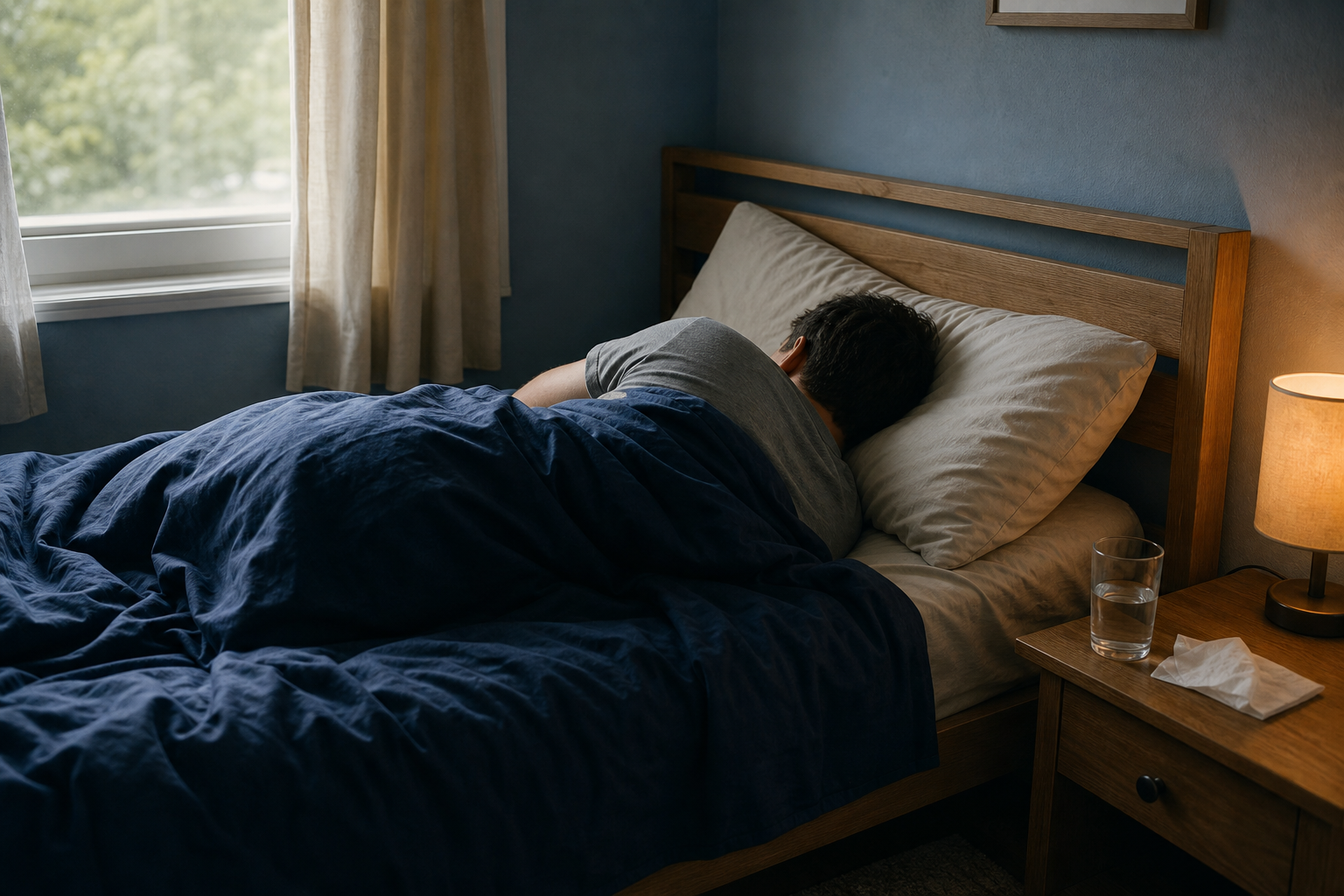
If you are wondering how to stop snoring, start by checking your sleep position, pillow fit, nasal airflow, and evening habits. Sleeping on your side and keeping your head comfortably supported may reduce ordinary position-related snoring for some people. However, loud or persistent snoring can also be associated with obstructive sleep apnea, so setup changes should not replace an appropriate medical evaluation.
Quick answer: Try side sleeping, avoid a pillow that pushes your chin sharply toward your chest, address obvious nasal stuffiness, and limit alcohol near bedtime. Track the result for several nights rather than judging one night.
A quick note: This article provides general information about sleep and related comfort habits, not medical advice. Individual needs and results vary. If you have ongoing pain, persistent snoring, serious sleep difficulties, or other health concerns, consider speaking with a qualified healthcare professional. Some visuals may be AI-generated and are for illustrative purposes only.
How to stop snoring by checking your position
Snoring happens when airflow makes relaxed tissues in the upper airway vibrate. Your anatomy, nasal congestion, alcohol use, medications, body weight, and sleep position can all influence it, so there is no single setup that works for everyone.
Back sleeping often allows the tongue and soft tissues to fall farther toward the airway. If your snoring is mainly positional, moving onto your side may help.
Try this sequence:
- Begin on your side. Arrange your bedding so you can settle without twisting your neck or shoulders.
- Use support behind your back. A body pillow or firmly placed regular pillow can make rolling onto your back less automatic.
- Support your upper arm and knees. This can make side sleeping feel more sustainable instead of forced.
- Compare several nights. Ask a partner what they notice or use a simple recording method, remembering that an app cannot diagnose a breathing disorder.
Do not use hard objects or restrictive devices that cause pressure, interfere with movement, or create another safety concern.
Check whether your pillow is helping or crowding you
A pillow cannot cure snoring or sleep apnea. Its height and compression can still affect how comfortably your head rests, particularly when you change positions.
On your side, the pillow generally needs to fill the space created by your shoulder. On your back, too much height can push the chin toward the chest. Too little support may leave the head tipped back or sideways.
Use these practical checks:
- Your head looks comfortably balanced rather than sharply tilted.
- Your chin is not being pressed noticeably toward your chest.
- You can breathe without the pillow or bedding crowding your nose and mouth.
- You are not waking with new or worsening neck or shoulder discomfort.
- The pillow maintains a useful height after your head settles into it.
The right height varies with shoulder width, body proportions, sleep position, pillow compression, and how deeply your mattress lets you sink. Follow the current manufacturer instructions for a shaped or adjustable pillow rather than assuming every contour has the same orientation.
Consider gentle upper-body elevation
Some sleepers find that modestly elevating the upper body changes their snoring. If you test elevation, support the torso rather than stacking several pillows only beneath the head. A steep pillow stack can bend the neck and may feel unstable.
A wedge or adjustable sleep surface should feel secure and should be used according to its manufacturer’s current directions. Stop if the position causes sliding, pressure, reflux discomfort, dizziness, or new pain.
Elevation is a comfort experiment, not a substitute for assessment when snoring comes with interrupted breathing or significant daytime symptoms.
Clear obvious barriers to nasal airflow
A blocked nose may encourage mouth breathing and make nighttime noise more noticeable. Before bed, check for temporary congestion, an overly dry room, smoke, strong fragrance, dust, or pet allergens near the bed.
Helpful environmental steps may include:
- washing bedding regularly
- keeping smoke and heavy fragrance out of the bedroom
- cleaning a humidifier according to its instructions
- using moderate humidity rather than making the room damp
- discussing persistent allergies or congestion with a pharmacist or healthcare professional
Nasal strips may help some people when narrow nasal passages are part of the problem, but they do not address an obstruction deeper in the airway and should not be treated as a sleep-apnea remedy.
Avoid taping your mouth shut. It can be unsafe when nasal breathing is restricted, and it does not resolve the underlying reason for snoring.
Review the hours before bed
Alcohol close to bedtime can relax airway tissues and make snoring more likely. Try moving drinks earlier or skipping them for several evenings, then compare the result.
Smoking can irritate the airway, while some sedating medicines can affect breathing and tissue relaxation. Do not stop a prescribed medicine on your own. Ask the prescriber or pharmacist whether snoring or nighttime breathing changes warrant a review.
Know when setup changes are not enough
Arrange a medical evaluation if snoring is loud, persistent, worsening, or disruptive, especially when it occurs with:
- witnessed pauses in breathing
- choking, gasping, or struggling for air
- pronounced daytime sleepiness
- morning headaches or difficulty concentrating
- high blood pressure
- drowsiness while driving or working
- concern from a bed partner about your breathing
Seek prompt help for serious breathing concerns. A qualified healthcare professional can assess whether ordinary snoring, sleep apnea, nasal obstruction, or another issue may be involved.
For tonight, change one factor rather than rebuilding the whole bed. Start with side sleeping and a comfortable pillow height, record what happens for several nights, and escalate persistent or concerning symptoms instead of relying on setup experiments alone.