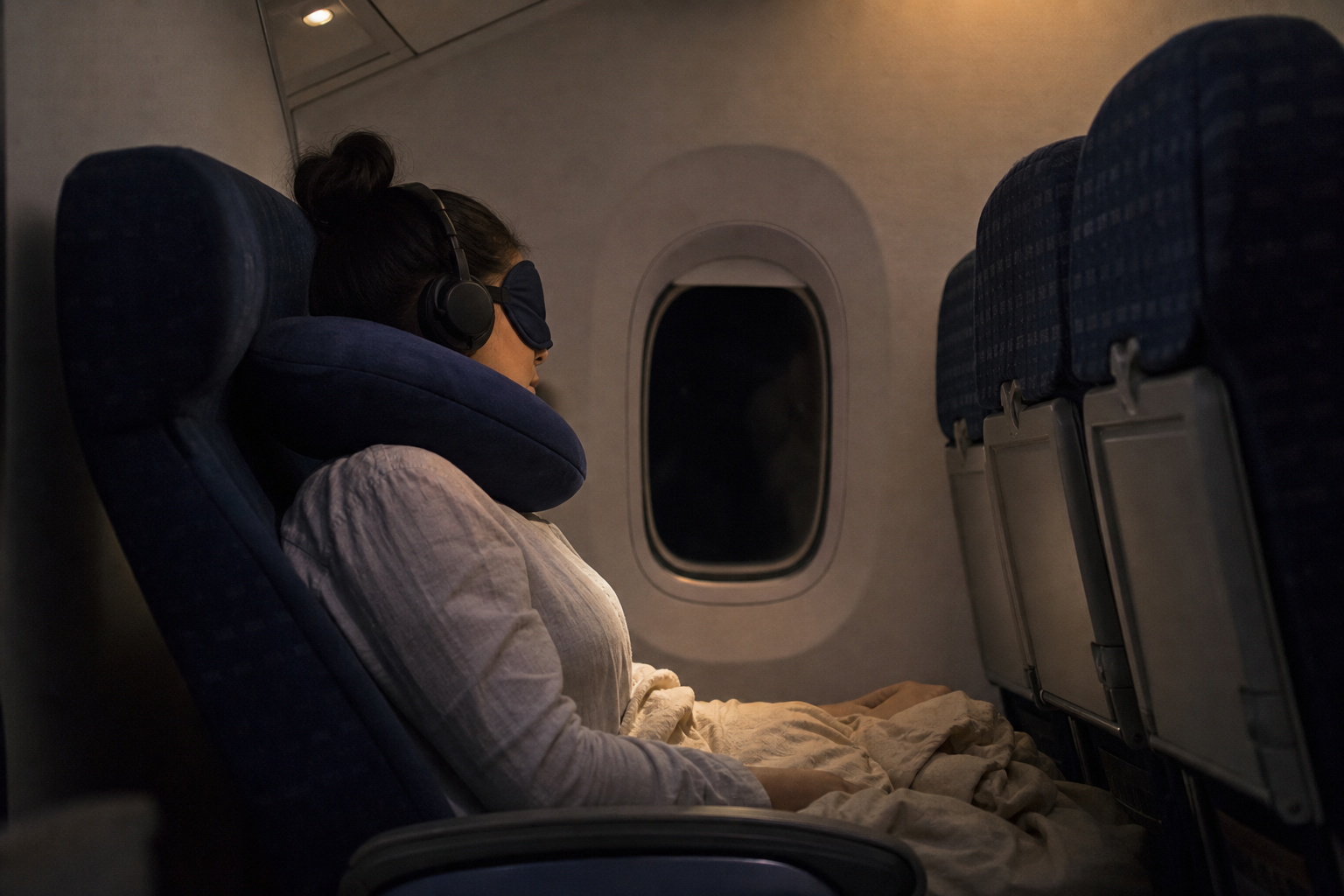
If you want to know how to sleep on a plane, start by matching your rest attempt to the destination’s nighttime, then reduce light and noise, support your head without pushing it forward, and keep essentials within reach. You may not sleep as soundly as you would in bed, but a deliberate setup can make rest more comfortable and reduce avoidable interruptions.
Quick answer: Recline when permitted, support your head and lower back, use an eye mask and earplugs, stay comfortably warm, and keep your fastened seat belt visible over your blanket.
Decide whether you should sleep
Sleeping is most useful when it fits the timing of your trip. Check the local time at your destination rather than automatically trying to sleep as soon as you board.
- Overnight flight: Begin winding down after the meal service and cabin activity settle.
- Destination nighttime: Treat the flight like a shortened night. Dim screens, reduce conversation, and prepare for rest.
- Destination daytime: Consider staying awake or taking only a brief nap so that you still have sleep pressure that evening.
- Short flight: Quiet rest may be more realistic than trying to complete a full sleep cycle.
You cannot control turbulence, announcements, meal service, or nearby passengers. Plan for rest rather than expecting uninterrupted sleep.
How to sleep on a plane more comfortably
1. Prepare before the cabin gets quiet
Use the restroom, organize your belongings, and set an alarm before settling in. Put anything you may need, such as water, an eye mask, or lip balm, somewhere accessible.
Secure loose items and keep valuables close. Avoid repeatedly opening the overhead bin once other passengers are resting.
2. Build support from the seat outward
Recline only when permitted, and check behind you before moving the seat. A small amount of recline may feel more comfortable than sitting completely upright, but seat design and personal preference differ.
Place a folded sweater or small cushion behind your lower back if the seat leaves an uncomfortable gap. Keep both feet supported when possible rather than letting your legs hang or twisting toward the aisle.
3. Check your head and neck position
A travel pillow should limit uncomfortable head dropping without forcing your chin sharply toward your chest. Because inflatable, wraparound, foam, and contour designs work differently, follow the current manufacturer’s instructions for orientation and inflation.
Before trying to sleep, perform a simple comfort check:
- Can your head rest without being pushed noticeably forward?
- Does your chin remain in a relaxed position?
- Can you breathe comfortably?
- Are the pillow seams, fasteners, or raised sections creating pressure?
- Can you change position without becoming trapped by the pillow?
Loosen, rotate, or remove the support if it causes new or worsening discomfort.
4. Reduce light and sound
An eye mask can block reading lights, screens, and changes in cabin lighting. It should sit securely without pressing uncomfortably on your eyes.
Earplugs or noise-reducing headphones can soften steady cabin noise. Keep the volume moderate and remain able to notice crew instructions. Download calm audio before boarding so that you do not have to rely on an in-flight connection.
5. Manage warmth without overheating
Cabin temperature can change during a flight. Wear loose, breathable layers that are easy to add or remove. Avoid tight waistbands, bulky accessories, and anything that restricts comfortable movement.
If you use a blanket, fasten your seat belt over it. This keeps the belt visible and may prevent the crew from waking you to confirm that it is secured. Always follow crew directions and keep the belt fastened whenever instructed.
6. Be deliberate with food and drinks
A very heavy meal immediately before trying to sleep may feel uncomfortable in a reclined seat. Choose a familiar, moderate meal when possible.
Drink enough water to stay comfortable, but avoid consuming so much just before resting that frequent restroom trips become likely. Caffeine can make sleep harder, especially when consumed close to your planned rest period. Alcohol may make you feel drowsy initially, but it can produce more fragmented sleep and adds to impairment during travel.
Keep moving during a long flight
Remaining still for many hours can become uncomfortable. When it is safe and permitted, periodically stand, walk briefly, or move your ankles and feet while seated. Do not ignore the seat-belt sign or crew instructions for the sake of movement.
People with a history of blood clots or other travel-related health risks should ask a qualified healthcare professional for individualized guidance before flying. Do not begin medication or compression wear solely from general travel advice.
Use arrival time to reset
After landing, follow the destination’s local schedule as closely as practical. Daylight, meals, and normal activity can provide useful time cues. If you need a nap, keeping it brief may make it easier to sleep at the local bedtime.
Persistent sleep difficulty, prolonged daytime sleepiness, breathing concerns, severe pain, weakness, or numbness deserves advice from an appropriate qualified professional.
The practical takeaway
Aim for a supported, quiet, dim, and adjustable setup rather than a perfect sleeping position. Time your rest thoughtfully, make one change at a time, and stop using any setup that creates discomfort.