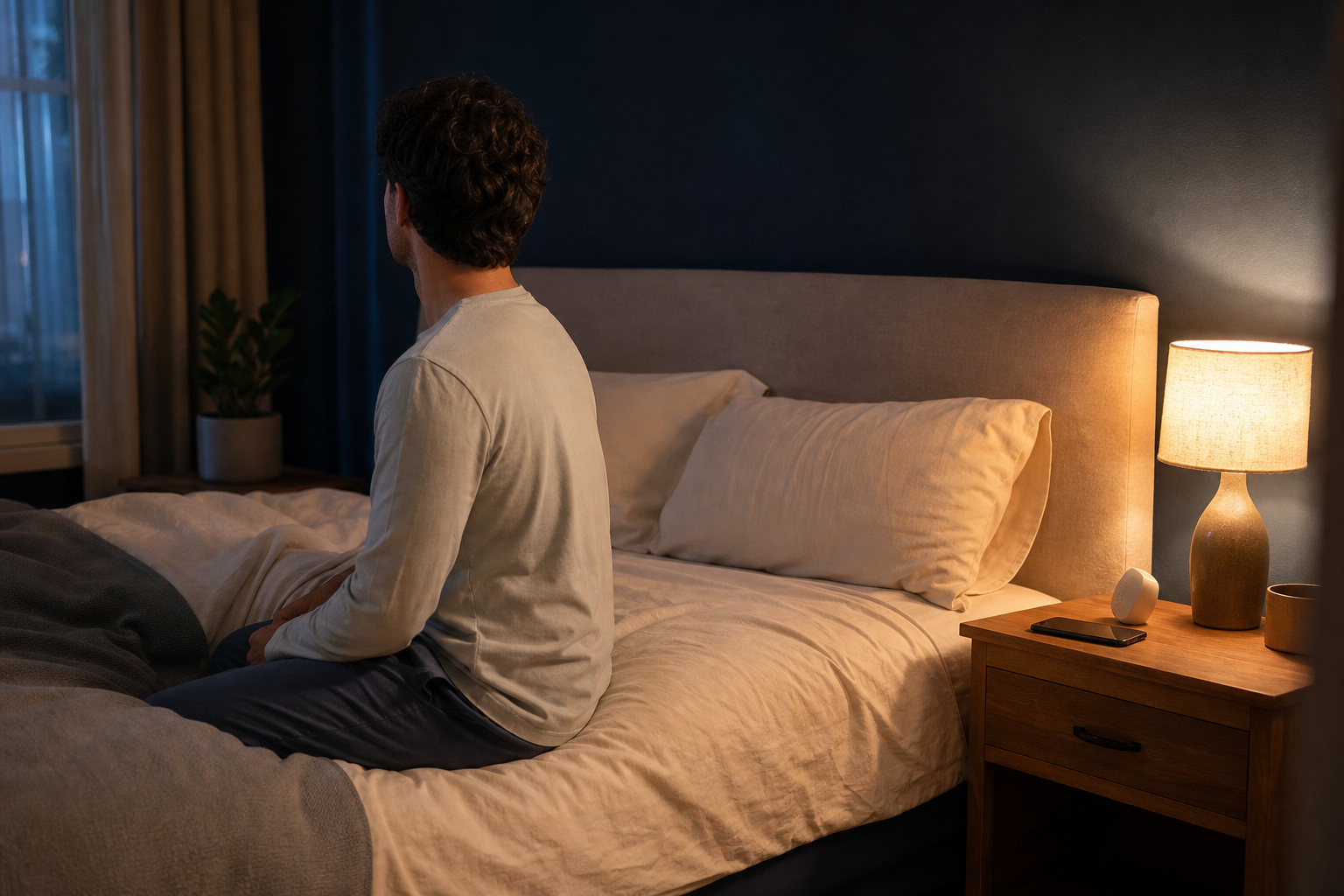
If you want to know how to sleep in 2 minutes, the honest answer is that no relaxation sequence can guarantee it. The widely shared method may help you release tension and quiet mental activity, but the two-minute deadline is not a dependable biological rule. Treat it as a brief wind-down exercise, not a test you must pass.
Quick answer: Relax your face and body, slow your breathing, and give your mind one neutral focus. Stop timing the result. The goal is to become less alert, even if sleep takes longer than two minutes.
Where the two-minute claim comes from
Most versions of this advice describe a so-called military sleep method. The usual sequence involves relaxing the face, dropping the shoulders, releasing tension through the limbs, and then using a calming image or repeated phrase.
The method is often paired with a precise success rate and the claim that almost anyone can master it after several weeks. Those figures are repeatedly shared online, but they are not backed by clear, accessible clinical evidence showing that this exact routine reliably produces sleep within two minutes.
That does not make every part of the routine useless. Slow breathing, progressive muscle relaxation, and calming imagery are established relaxation approaches. What is unsupported is the certainty of the deadline.
What “how to sleep in 2 minutes” advice gets wrong
It turns sleep into a performance
Checking whether two minutes have passed keeps your attention on the outcome. You may start monitoring your breathing, evaluating every muscle, or wondering why the method is not working yet.
That effort can maintain alertness. Sleep is not a task you complete by concentrating harder.
Relaxation and sleep are not identical
A quieter mind and a less tense body can make bedtime feel easier, but relaxation does not switch off wakefulness on command. Your sleep timing is also influenced by your internal body clock and the amount of sleep pressure you have built during the day.
If you slept late, took a long nap, used caffeine late, or went to bed much earlier than usual, a polished relaxation routine may not make you sleepy immediately.
One result cannot fit every night
Noise, light, room temperature, stress, medication, discomfort, alcohol, illness, and schedule changes can all affect how readily you fall asleep. A technique that feels effective one night may feel less useful the next.
The realistic target is a repeatable transition toward rest, not the same sleep-onset time every night.
Try this two-minute wind-down instead
Use the sequence without looking at a timer. The steps may take roughly two minutes, but there is no need to finish on schedule.
- Settle your surroundings. Put your phone out of reach, dim unnecessary light, and choose a comfortable position. Adjust bedding or pillow support if you notice obvious strain.
- Release visible tension. Soften your forehead, unclench your jaw, and let your tongue rest. Allow your shoulders and hands to feel heavy rather than forcing them downward.
- Slow the exhale. Breathe gently through your nose if comfortable. Let each exhale last slightly longer than the inhale, without taking unusually large breaths or holding your breath.
- Scan downward once. Notice your arms, torso, thighs, calves, and feet. At each area, reduce whatever tension you can detect. Do not keep rescanning in search of perfect relaxation.
- Choose one quiet focus. Picture a simple, still scene or repeat a neutral word with each exhale. When another thought appears, return to that focus without arguing with the thought.
Once the sequence ends, let it end. Repeating it aggressively until you “win” recreates the pressure the exercise is meant to reduce.
Check what may be keeping you awake
If the routine rarely helps, inspect the conditions around it:
- Timing: Are you going to bed because you feel sleepy, or only because the clock says you should?
- Caffeine: Could coffee, tea, energy drinks, or another stimulant still be affecting you?
- Napping: Was your nap late or long enough to reduce sleep pressure?
- Environment: Is the room bright, noisy, stuffy, or uncomfortably warm?
- Comfort: Are you repeatedly adjusting your pillow, bedding, or position?
- Clock watching: Are you calculating how little sleep remains?
When you have been awake long enough to become frustrated, consider leaving the bed briefly. Keep the light low and do something quiet, then return when sleepiness increases. This helps keep the bed from becoming a place for prolonged effort and worry.
Keep the goal realistic
A two-minute routine can be a useful cue that the day is over. Its value is in consistency and reduced effort, not in proving that you can fall asleep on command.
If sleep difficulty continues, regularly affects daytime functioning, or comes with prolonged daytime sleepiness or breathing concerns, speak with a qualified healthcare professional. For tonight, skip the stopwatch, complete one gentle relaxation sequence, and allow sleep to arrive on its own schedule.