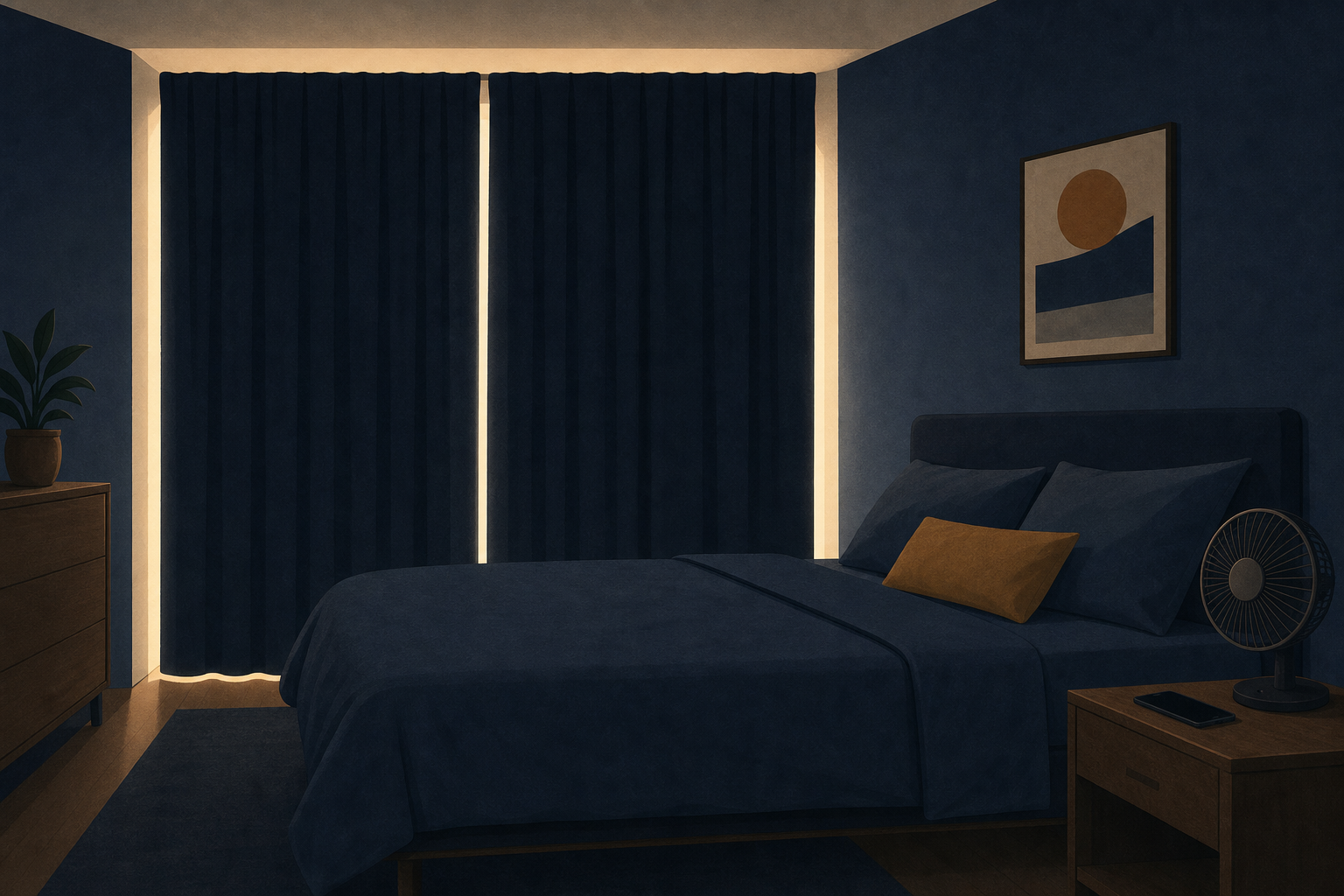
To set up your bedroom for daytime sleep, focus on five sources of disruption: daylight, changing noise, household interruptions, excess warmth, and unnecessary alerts. Block light at the window, reduce sound where it enters, tell other people when you are unavailable, keep the room comfortably cool, and allow only genuinely important notifications.
You do not need to rebuild the entire bedroom. A few well-placed changes can make it feel much more like nighttime, even while the rest of the household and neighborhood are active.
Quick answer: Make the room as dark, quiet, cool, and interruption-free as you reasonably can. Start with the window and door, then adjust your phone, bedding, and household expectations.
Set up your bedroom for daytime sleep in layers
Daytime sleep has more competition than nighttime sleep. Sunlight reaches the windows, delivery drivers approach the door, traffic changes, and other people may assume you are available.
Instead of relying on one product, build several layers of protection:
- Block direct and reflected light.
- Reduce sudden or recognizable noises.
- Prevent avoidable interruptions.
- Keep the room comfortably cool.
- Separate emergency alerts from routine notifications.
This layered approach also helps if you rent, share a home, or cannot make permanent changes.
1. Block daylight at the window
Ordinary curtains may soften sunlight without making the room dark. Begin by standing in the bedroom during your intended sleep hours and looking for bright edges around the window covering.
Use an opaque window layer. Blackout curtains, blackout shades, or a removable blackout panel can reduce the largest source of daylight. If you rent, consider tension rods, hook-and-loop fasteners, or removable materials rather than drilling into the wall.
Control light around the edges. Light often enters above the curtain rod, between curtain panels, and along the sides. A wraparound rod, overlapping panels, or simple curtain clips can close these gaps.
Cover small indoor lights. Check charging indicators, clock displays, power strips, air purifiers, and other electronics. Dim or cover lights that you do not need, but do not block ventilation openings or safety indicators that must remain visible.
Keep an eye mask nearby. An eye mask can provide a final layer when the room cannot be fully darkened. Choose one that feels comfortable rather than tightening it enough to create pressure.
Test the result after your eyes have adjusted for several minutes. If you can still see a bright outline around the window, improve that area before buying additional accessories.
2. Reduce disruptive daytime noise
A completely silent home may be unrealistic. The more useful goal is to reduce sharp changes in sound, such as voices in the hallway, a barking dog, a lawn mower starting, or dishes being placed in a cabinet.
Start with the room itself:
- Close the bedroom door and windows.
- Place the bed away from a shared wall when possible.
- Add a rug or soft furnishings if the room has many hard, reflective surfaces.
- Lubricate a squeaking door hinge and secure anything that rattles when trucks pass.
- Ask household members to avoid loud tasks near the bedroom during your sleep period.
A fan or sound machine may help make irregular noises less noticeable by creating a steady background sound. Keep the volume moderate. The goal is masking, not overpowering every sound in the building.
Soft earplugs are another option if they fit comfortably. Make sure you can still respond to any alarm or emergency signal you need to hear. Never disable smoke alarms, carbon monoxide alarms, or other required safety devices to make the room quieter.
3. Create a clear no-interruption plan
Curtains cannot prevent someone from knocking on the bedroom door. If you live with other people, a simple agreement is often as important as the physical setup.
Tell family members or roommates:
- when your sleep period begins and ends
- which situations justify waking you
- who should answer deliveries or household questions
- when noisy chores can resume
- whether the bedroom door should remain closed
A small sign on the door can reinforce the plan without requiring everyone to remember a changing work schedule. If appropriate, use a similar note near the doorbell or delivery area so visitors do not knock.
Plan for pets as well. Decide whether they will stay inside the room, sleep elsewhere, or need someone else to handle feeding, walks, or bathroom breaks. A pet that repeatedly scratches at the door can undo an otherwise effective setup.
If children or another person depend on you for supervision, arrange responsible care before going to sleep. Sound masking and earplugs should not be used to ignore a caregiving responsibility.
4. Keep the room comfortably cool
A sleep-friendly room should feel comfortably cool rather than cold. There is no single temperature that suits every person because bedding, clothing, humidity, airflow, and personal preference all change how a room feels.
Daytime heat can build quickly, especially in a sunny bedroom. To manage it:
- Close shades before direct sunlight reaches the window.
- Use breathable sleepwear and bedding if you tend to overheat.
- Run a fan for circulation if the room feels stuffy.
- Use air conditioning safely when available.
- Move heat-producing electronics away from the bed.
- Check whether a heavy mattress protector or comforter is trapping warmth.
If noise outside is a problem, opening a window may create a tradeoff between airflow and quiet. Compare both arrangements during your actual sleep hours rather than assuming one will be better.
Your self-check is simple: you should not be repeatedly throwing off the covers, waking sweaty, or tensing because the room feels too cold. Adjust one layer or setting at a time.
5. Control alerts without becoming unreachable
Phones, watches, doorbells, and work apps can produce a steady stream of avoidable interruptions. Use a Do Not Disturb or sleep mode that silences routine alerts while allowing selected people or repeated emergency calls.
Before lying down:
- Silence work email, group chats, social media, and promotional alerts.
- Allow calls only from essential contacts.
- Disable vibration if the phone rests on a hard surface.
- Place the phone where its screen will not light the room.
- Set any wake-up alarm and confirm its volume.
- Tell essential contacts what to do in a genuine emergency.
If possible, move the phone beyond arm’s reach. This reduces both noise and the temptation to check it when you briefly wake.
Smart doorbells and connected home devices may also need a sleep-hours setting. Silence convenience alerts, but preserve security, fire, carbon monoxide, and other critical warnings.
Do a daytime bedroom test
Evaluate the room under real conditions, not at night when the neighborhood is naturally darker and quieter.
During your planned sleep window, lie down for ten minutes and check:
- Can you see light around the curtains or door?
- Which sound catches your attention first?
- Does the room become warmer after the door is closed?
- Can someone reach you without entering the bedroom?
- Are routine notifications still appearing?
- Will your alarm remain audible with your noise setup?
- Is anything touching, flashing, rattling, or humming unexpectedly?
Fix the first obvious problem, then test again. For example, closing a curtain gap may matter more than adding another sound device, while silencing a doorbell may help more than replacing your bedding.
Make the setup easy to repeat
The best bedroom for daytime sleep is one you can prepare quickly after work. Keep curtain clips, an eye mask, earplugs, and any door sign in consistent places. Save your preferred phone settings as an automatic mode, and ask household members to follow the same interruption rules each time.
You are not trying to create perfect silence or total darkness. You are reducing the number of signals that tell your brain and household that daytime activity should continue.
If ongoing sleep difficulty, prolonged sleepiness, breathing concerns, or fatigue that affects driving or safety continues despite allowing enough time for sleep, speak with a qualified healthcare professional. Environmental changes can support sleep, but they are not a substitute for evaluating a persistent problem.