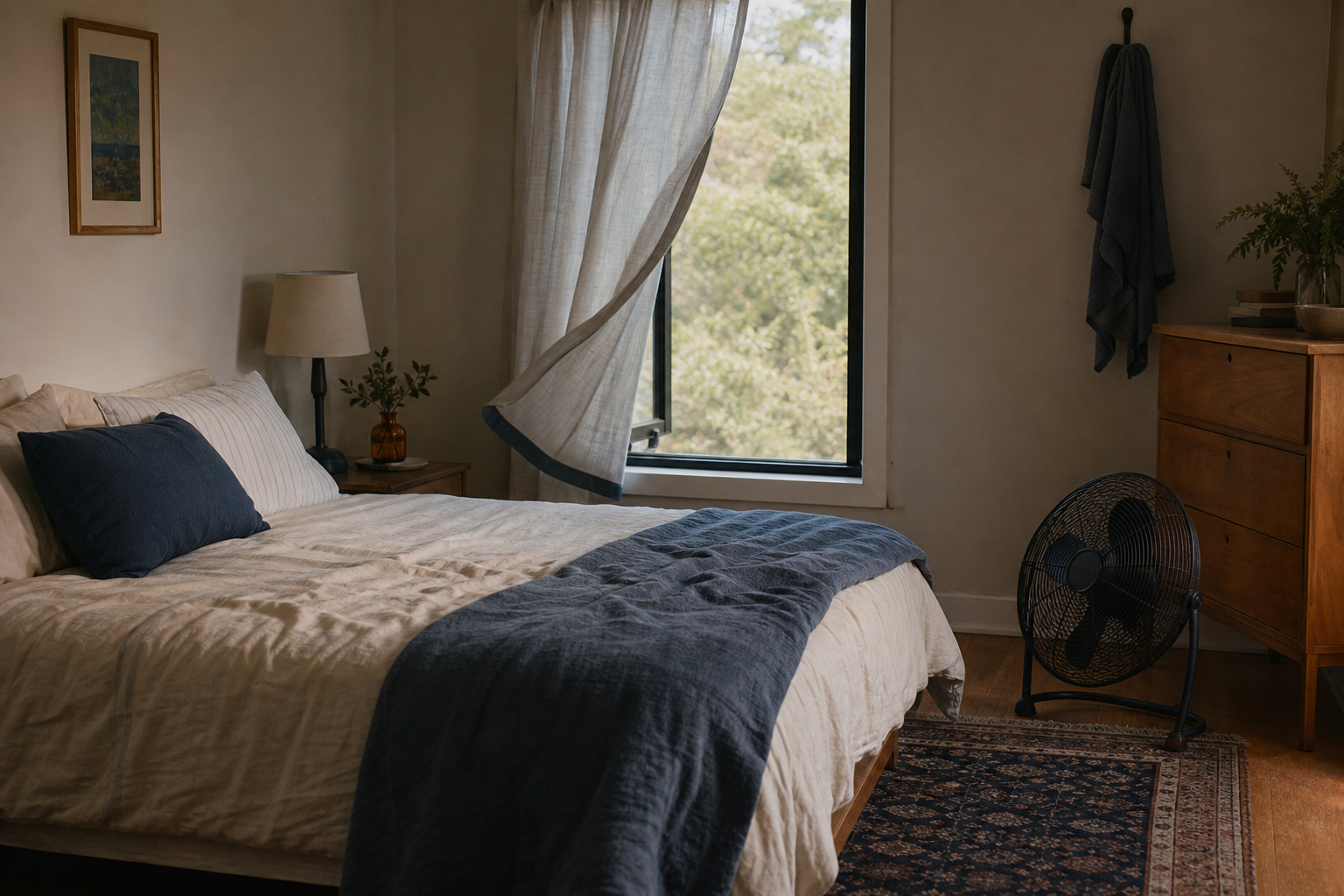
A comfortably cool room is generally a good starting point when choosing a bedroom temperature for sleep. Many adults can begin around 65°F to 68°F, but your best setting may be warmer or cooler depending on your bedding, sleepwear, mattress, airflow, humidity, and personal temperature preference.
Quick answer: Start with a comfortably cool room, then adjust the thermostat by 1°F to 2°F at a time. Keep your bedding consistent and judge the result by whether you wake up hot, cold, sweaty, or repeatedly rearranging the covers.
The thermostat provides only part of the answer. What matters in bed is the combination of room air and the small pocket of warmth created by your body, mattress, sleepwear, and covers.
Why a Cooler Bedroom Often Feels Better
Body temperature normally changes during the sleep-wake cycle, including a decline around the time you fall asleep. A cooler environment can work with that pattern, while an overly warm room may leave you sweaty, restless, or repeatedly pushing away the covers.
Cool does not mean uncomfortably cold.
If you are shivering, curling up tightly, or waking because your feet or shoulders feel cold, lowering the thermostat further is unlikely to make the setup more comfortable. The practical goal is a room that feels slightly cool when you enter but comfortable once you are under the covers.
How to Find Your Bedroom Temperature for Sleep
Rather than searching for one perfect number, run a small comfort test.
- Choose a starting setting. Try the mid-to-upper 60s Fahrenheit if that is practical for your home. If you already sleep near that range, begin with your current setting.
- Keep the other variables steady. Use the same pajamas, sheets, comforter, fan setting, and mattress setup during the test. Otherwise, you will not know whether the thermostat made the difference.
- Test for two or three nights. One unusual night can be affected by stress, late meals, illness, alcohol, or weather. Look for a repeated pattern rather than judging a single result.
- Adjust by 1°F to 2°F. Lower the temperature if you consistently wake hot or sweaty. Raise it if cold is waking you or making you pile on extra layers.
- Stop when the room feels neutral. You do not need to find the lowest temperature you can tolerate. You need a setting that requires little attention once you are in bed.
A simple note on your phone can help. Record the thermostat setting, bedding used, whether you woke hot or cold, and whether you changed the covers during the night.
Signs Your Setup May Be Too Warm or Too Cold
Your own nighttime behavior is often more useful than the thermostat display.
The setup may be too warm if you:
- wake sweaty or clammy
- repeatedly kick off the covers
- feel heat trapped around your torso or legs
- depend on direct airflow to remain comfortable
- wake when the room warms toward morning
The setup may be too cold if you:
- wake because of cold feet, hands, or shoulders
- pull the bedding tightly around you
- add several layers during the night
- feel tense or unable to settle comfortably
- avoid leaving the bed because the room feels sharply cold
These signs do not identify a sleep disorder or medical problem. They are practical clues for adjusting the room and bedding.
Check Bedding, Airflow, and Humidity Too
If thermostat changes are not helping, inspect the rest of the sleep environment.
A thick foam mattress, waterproof protector, heavy comforter, or non-breathable sleepwear can hold warmth close to your body. In that situation, lighter bedding may be more useful than making the entire room much colder.
Airflow also changes how a temperature feels. A ceiling or portable fan may make a mildly warm room more comfortable, although strong air directed at your face can feel drying or distracting. Position fans safely and follow the manufacturer’s instructions.
High humidity can make warm conditions feel stuffier, while very dry air may cause its own discomfort. Ventilation, air conditioning, or a properly maintained dehumidifier or humidifier may help you manage those conditions. Clean and operate any appliance according to its current care instructions.
When Two Sleepers Prefer Different Temperatures
Partners do not need identical bedding just because they share a thermostat. Try separate blankets, different sleepwear, or a fan aimed toward only the warmer sleeper.
The colder sleeper can add a light layer on their side while the warmer sleeper uses a thinner blanket. This is often easier than repeatedly changing the temperature for the whole room.
The Practical Takeaway
Treat the recommended range as a starting point, not a rule. Change one variable at a time, test it for several nights, and use repeated signs of overheating or feeling cold to guide your next adjustment.
If ongoing sleep difficulty, severe night sweating, breathing concerns, unusual daytime sleepiness, or other persistent symptoms continue regardless of room temperature, discuss them with a qualified healthcare professional.