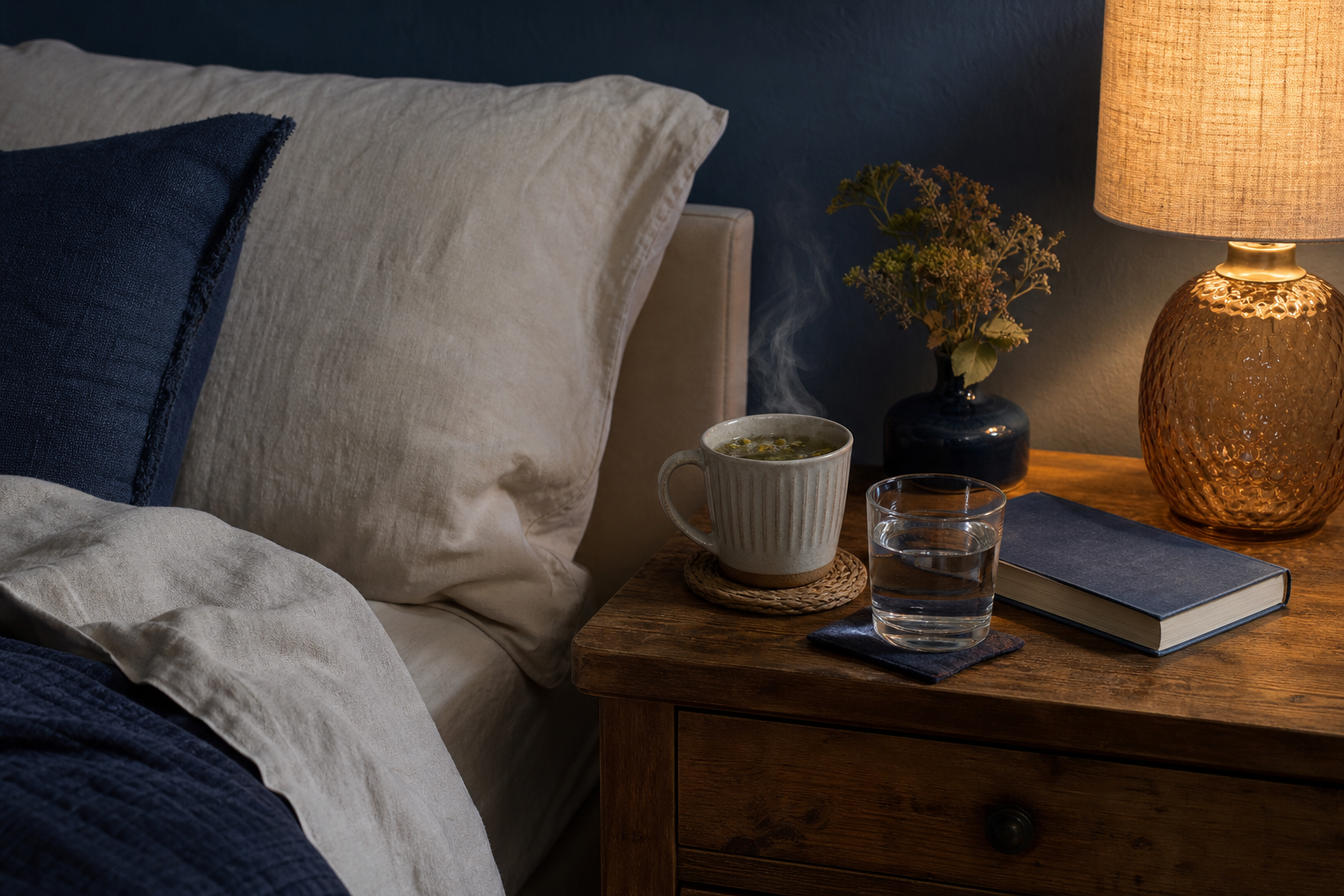
The most practical night time drinks for sleep routines are small, caffeine-free, not heavily sweetened, and comfortable for your stomach. No ordinary beverage reliably switches on sleep or treats insomnia. Its more useful role is to satisfy thirst and become a familiar cue that your evening is winding down.
Quick answer: Start with a small glass of water, warm unsweetened milk, or a simple caffeine-free herbal infusion. Finish larger drinks earlier if they lead to bathroom trips, and avoid caffeine for at least six to eight hours before bed.
If you are deciding what to drink before bed, ask which option is small, caffeine-free, low in added sugar, and comfortable for you instead of expecting a drink to force sleep. Your best choice depends on five details: caffeine, sweetness, serving size, personal reflux triggers, and how easily evening fluid wakes you overnight.
How to compare drinks before bed
Before choosing a drink because it has a relaxing reputation, check what is actually in your cup.
- Caffeine: Plain water and pure herbal infusions are naturally caffeine-free. Decaffeinated coffee and tea can still contain caffeine. Caffeine’s effects can last for hours, so the NHLBI recommends avoiding it in the afternoon or evening if it interferes with sleep.
- Sweetness: Honey, maple syrup, and flavored syrups count as added sugars. Packaged juice, plant milk, bottled tea, and drink mixes can also be sweeter than expected. Compare the labeled serving with the amount you pour.
- Volume: A small cup can support a routine without putting as much fluid into your bladder as an oversized mug or bottle.
- Reflux potential: Coffee, caffeine, alcohol, chocolate, mint, acidic drinks, and high-fat foods are commonly reported triggers, although your triggers may differ.
- Bathroom disruption: Large amounts of evening fluid can contribute to nighttime urination. Caffeine and alcohol can add to the problem, but frequent nighttime urination can also have medical or medication-related causes.
With those filters in mind, here are 11 realistic options, including several caffeine-free bedtime drinks that work best as routine cues rather than sleep treatments.
1. A small glass of plain water
Best for: Actual thirst and anyone who wants a drink without caffeine, calories, herbs, or sweetness.
Water is the simplest default because it does not rely on a special ingredient or sleep claim. The key is portion size. A small glass can relieve thirst, while finishing a large bottle immediately before lying down creates more potential for a bathroom trip.
If you regularly feel very thirsty at bedtime, look at your daytime hydration pattern rather than trying to catch up all at once. Do not deliberately dehydrate yourself to avoid waking.
2. Warm dairy milk
If you are comparing warm milk recipes for sleep, keep the add-ins simple and the serving modest. A moon milk recipe for sleep often adds spices or sweeteners for flavor, but those ingredients are optional and do not turn the drink into a sleep treatment.
Best for: People who tolerate dairy and find a warm, familiar drink comforting.
Research on dairy and sleep has produced mixed results. It does not prove that one warm glass causes drowsiness or treats a sleep problem. The value may simply come from warmth, familiarity, and repetition within your routine.
Choose a modest portion. Watch for lactose intolerance, milk allergy, sweetened flavorings, and rich milk if higher-fat foods aggravate your reflux. Chocolate milk adds both sweetness and a possible caffeine source.
3. Warm unsweetened plant milk
Best for: A dairy-free warm-mug ritual.
Almond, oat, soy, and other plant milks vary considerably in ingredients, allergens, fortification, and sweetness. Check the Nutrition Facts label rather than assuming every plant milk is light or unsweetened.
Coffee and chocolate flavors can introduce caffeine, while vanilla versions may contain added sugar. Pick a variety you tolerate and enjoy, not one promoted as a treatment. A smaller mug also reduces the chance that the drink itself will wake you later.
4. Chamomile tea
When comparing tea for sleep, check that the blend is herbal rather than assuming every tea is caffeine-free. Chamomile is commonly sold as an evening infusion, but it is a routine choice, not a sedative treatment.
Best for: A mild, naturally caffeine-free herbal tea before bed.
Chamomile is one of the most familiar bedtime drinks. Some studies have reported improvements in selected sleep measures, but results are inconsistent. The evidence does not establish chamomile as an insomnia treatment, according to the National Center for Complementary and Integrative Health.
Chamomile can cause allergic reactions, particularly in people sensitive to ragweed-related plants. It can also interact with warfarin, sedatives, and other medicines. Check with a healthcare professional or pharmacist if those concerns apply to you.
5. Rooibos tea
Best for: A tea-like flavor without relying on decaffeinated black or green tea.
Pure rooibos is naturally caffeine-free and works well plain or with a small amount of milk. It is a useful ritual option, but it should not be presented as a drink that induces sleep.
Inspect blends carefully. A rooibos product may also contain black tea, green tea, chocolate, or sweetened flavor pieces. Bottled versions can contain substantial added sugar, so a plain brewed cup is generally easier to evaluate.
6. Lemon balm tea
Best for: People who enjoy a light, citrus-like herbal flavor without drinking acidic citrus juice.
Lemon balm has a long history of traditional use for mild stress and sleep complaints. That reputation is based largely on traditional use rather than strong clinical evidence, as reflected in the European Medicines Agency’s assessment.
Choose a simple tea rather than an unfamiliar concentrated extract. Multi-herb blends deserve closer label inspection, especially if you take medicine, are pregnant or breastfeeding, or have been advised to avoid particular herbs.
7. Ginger tea
Best for: A caffeine-free drink with a warming, spicy flavor.
Ginger tea can add variety to a wind-down routine without requiring a caffeinated tea leaf. It is not a proven sleep aid, and stronger is not necessarily better.
Some people find concentrated ginger too stimulating in flavor or notice that it aggravates heartburn. Others tolerate it well. Start with a mild preparation, watch how your stomach responds, and remember that adding several spoonfuls of honey changes the sweetness profile.
8. Peppermint tea
Best for: People who enjoy mint and already know it does not trigger reflux.
Peppermint illustrates why there is no universal best tea before bed. It is naturally caffeine-free, but mint is a commonly reported reflux trigger. If peppermint leaves you with burning, regurgitation, coughing, or throat discomfort after lying down, choose a non-mint infusion instead.
A drink can taste soothing while still being a poor match for your digestion. Personal tolerance matters more than peppermint’s appearance on a generic relaxation list.
9. A caffeine-free fruit infusion
Best for: A stronger fruit flavor without caffeinated tea leaves.
The word “tea” on the package does not guarantee that a product is caffeine-free. Check whether the ingredient list contains black tea, green tea, matcha, yerba mate, guarana, or cocoa.
Also consider acidity. Hibiscus, citrus peel, and tart fruit blends can bother people with reflux even when they contain no caffeine. Packaged and bottled fruit teas may be heavily sweetened, while a plain brewed infusion lets you control both sweetness and serving size.
10. A small serving of diluted tart cherry juice
Best for: People who are curious about tart cherry and already tolerate juice well.
Some human studies have reported improvements in certain sleep measures, but the research uses varied products, doses, populations, and outcomes. A recent systematic review described the evidence as limited and heterogeneous. That does not justify treating tart cherry juice as an insomnia remedy.
Juice can also be acidic and high in sugar. Use a small serving, check for added sugar, and consider dilution for a less intense drink. Dilution is a portion and taste strategy, not a research-backed sleep formula.
11. Decaf coffee or decaf tea
Best for: People who want the flavor and familiarity of their usual evening drink.
Decaf means reduced caffeine, not caffeine-free. According to the FDA, an eight-ounce decaf coffee typically contains 2 to 15 milligrams of caffeine, although amounts vary by product and preparation.
That residual amount may be unimportant for some people and noticeable for highly sensitive drinkers. Coffee can also trigger reflux, while creamers, syrups, and chocolate flavorings add other considerations. If decaf still leaves you alert or uncomfortable, switch to a naturally caffeine-free option.
When to stop drinking before bed
There is no universal cutoff that every adult needs to follow. If you drink something in the evening and sleep comfortably without bathroom trips, a strict fluid deadline may be unnecessary.
If waking to urinate is a problem, try this adjustable framework:
- Move most hydration earlier. Drink regularly through the day instead of catching up late in the evening.
- Finish your last full drink about two hours before bed. Treat this as an experiment, not a medical rule.
- Use small sips for thirst afterward. You do not need to ignore genuine thirst.
- Track what wakes you for one week. Note the drink, approximate portion, finish time, bedtime, and overnight bathroom trips.
- Adjust one factor at a time. Move the drink earlier, make it smaller, or remove caffeine before changing your entire routine.
The answer to when to stop drinking water before bed depends on your response, health, activity, climate, medications, and clinician-directed fluid needs. Do not restrict fluids to the point of dehydration.
Caffeine needs a separate, much earlier cutoff. Start with a caffeine-free window of six to eight hours before bed. If afternoon coffee still leaves you alert at night, move the cutoff earlier.
For nighttime reflux, timing is also only part of the picture. The NIDDK advises people with nighttime GERD symptoms to leave at least three hours between meals and lying down. That does not create a universal three-hour rule for every sip, but it supports avoiding large, rich, or personally triggering drinks close to bed.
What not to use as a sleep strategy
Alcohol can make you feel sleepy initially, but it can contribute to lighter sleep and nighttime awakening. It can also worsen reflux and increase nighttime urination. It is not a dependable wind-down drink.
Treat magnesium powders, melatonin beverages, and concentrated herbal sleep mixes differently from ordinary food and tea. These are supplement products with dose, interaction, and side-effect considerations. Do not assume that a drink is low-risk simply because its packaging looks like tea or flavored water.
If you regularly wake several times to urinate, have pain or burning, notice extreme thirst, experience persistent reflux, or continue to have sleep difficulty, speak with a qualified healthcare professional. Those patterns should not automatically be blamed on one evening drink.
Choose the drink that creates the least friction
The most useful drinks that help you wind down are often ordinary ones. Choose a small, enjoyable, caffeine-free drink that does not upset your stomach or send you to the bathroom overnight.
Then repeat it as part of a calm routine. The consistent cue matters more than chasing a beverage that promises to make you sleepy.