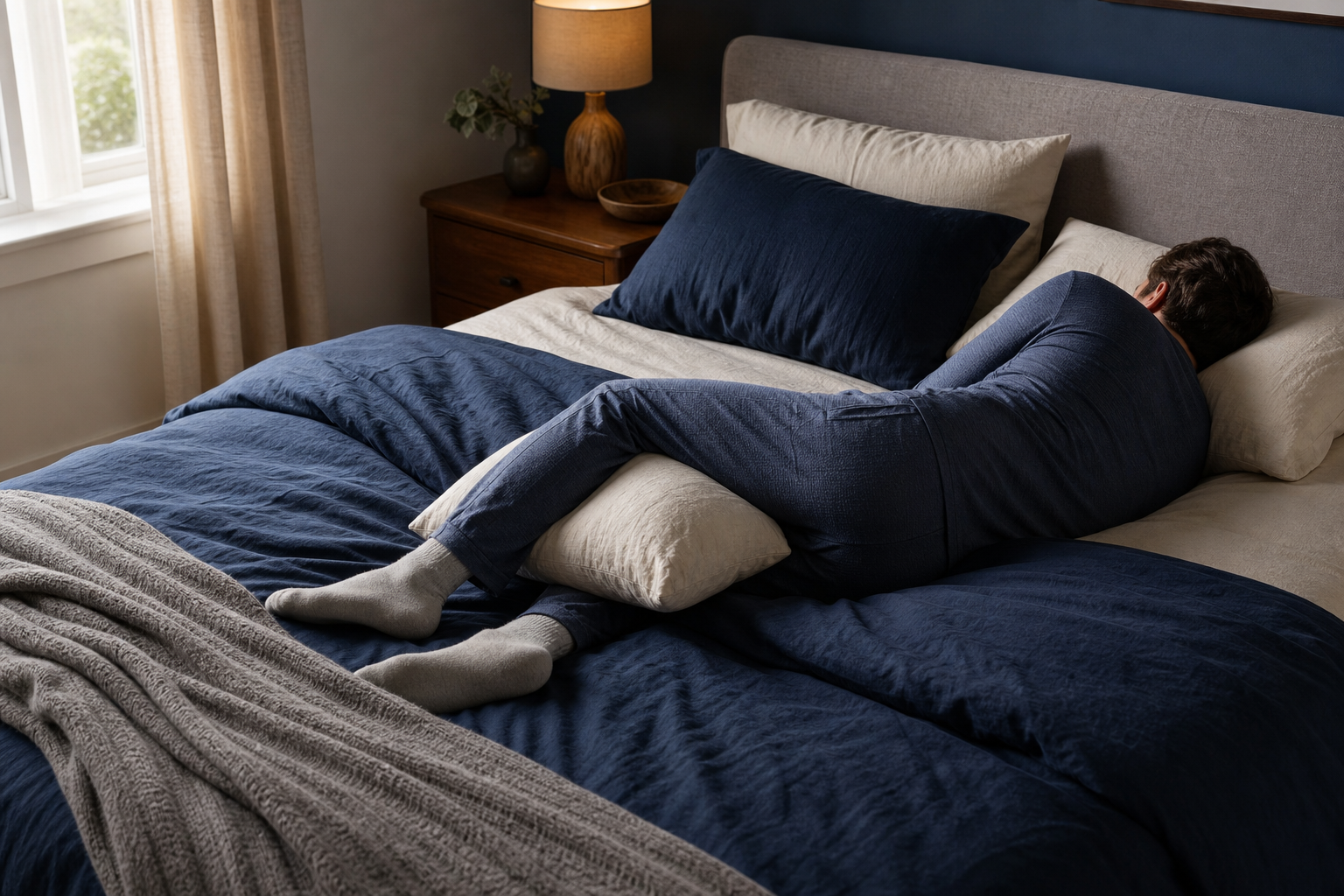
The best sleeping positions are the ones that feel comfortable, allow easy breathing, and keep your head, neck, and body naturally supported. Side sleeping works well for many adults, back sleeping distributes contact across a broad area, and stomach sleeping may require the most adjustment. There is no universally correct choice because pillow height, shoulder width, body proportions, mattress sink, and personal preference all affect the result.
Quick answer: Start with your preferred position, then adjust your pillow and leg support until your head looks comfortably centered and you can relax without pressure, strain, or restricted breathing.
Comparing the best sleeping positions
Each position has practical advantages and tradeoffs. Rather than forcing yourself into an unfamiliar pose, look at what your current position needs from the sleep surface.
Side sleeping
Side sleeping can feel stable and makes it easy to bend the hips and knees slightly. It also creates a sizeable space between the head and mattress, so pillow height matters.
A pillow that is too low may let your head dip toward the bed. One that is too high may push it toward the opposite shoulder. The right height depends on your shoulder-to-neck space, how much the pillow compresses, and how deeply your shoulder sinks into the mattress.
Try these adjustments:
- Place a pillow between your knees if your upper leg tends to roll forward.
- Hug a pillow if your upper shoulder feels unsupported.
- Keep your chin in a relaxed position rather than tightly tucked.
- Change sides occasionally if one shoulder or hip becomes uncomfortable.
Either side can be suitable for general comfort. Specific circumstances can change the advice. For example, healthcare guidance commonly recommends going to sleep on your side in later pregnancy. A maternity care professional can provide individual guidance.
Back sleeping
Back sleeping spreads your weight across the back of your body and avoids placing one shoulder directly against the mattress. It usually requires a pillow that fills the space behind your head and neck without pushing your head noticeably forward.
If your lower back feels tense, try a small pillow under your knees. This changes the resting position of your legs and may make the setup feel less strained. Avoid stacking several head pillows unless their combined height remains comfortable.
Back sleeping is not ideal for everyone. Snoring and obstructed breathing can be more noticeable in this position for some people. Repeated gasping, choking, witnessed breathing pauses, morning headaches, or substantial daytime sleepiness should be discussed with a qualified healthcare professional rather than managed only by changing position.
Stomach sleeping
Stomach sleeping turns the head to one side and can place the neck in a rotated position for a long period. It may also feel uncomfortable through the lower back if the midsection sinks deeply.
If this is the only position in which you settle comfortably, experiment carefully rather than forcing an immediate change. A thin, compressible head pillow, or no head pillow if comfortable, may limit how far the head is raised. A thin pillow under the hips may also make the setup feel more even.
Stop any adjustment that causes new or worsening discomfort. You can also try a partly side-lying position with a body pillow for support as a gradual alternative.
Run a simple position and pillow check
Use this check with the pillow and mattress you actually sleep on:
- Settle normally. Do not pose rigidly or pull your shoulders into an artificial position.
- Notice your head position. It should look comfortably centered rather than sharply tilted, lifted, or tucked.
- Check pressure points. Pay attention to the ear, shoulder, hip, knees, and lower back.
- Notice your breathing. Your position should not make breathing feel restricted.
- Stay there for several minutes. A setup that looks acceptable at first may become uncomfortable after the pillow compresses.
- Change one thing at a time. Adjust pillow height, add knee support, or alter your body angle separately so you can identify what helped.
A photo taken from the side or help from another person can make obvious head tilt easier to spot. This is a comfort check, not a medical assessment.
Account for your mattress and pillow
The same position can feel very different on two beds. A softer mattress may let your shoulder or hips sink farther, changing how much pillow height you need. A firmer surface may create more pressure and leave a larger gap beneath your neck when you lie on your side.
Pillow construction matters too. Loose fill may shift during the night, while solid foam or molded shapes may compress differently. If you use a contoured or specialized pillow, follow its current manufacturer instructions for orientation and intended sleeping positions. Do not assume every shaped pillow uses its higher and lower edges in the same way.
Choose comfort over a rigid rule
Start with the position in which you naturally settle, then refine the support around it. Give each small adjustment a few nights when it remains comfortable, since one unusual morning does not always identify the cause.
Persistent or severe pain, numbness, weakness, breathing concerns, prolonged daytime sleepiness, or ongoing sleep difficulty deserves guidance from an appropriate qualified professional. For ordinary comfort decisions, the most useful position is the one that lets you relax, breathe freely, and wake without new or worsening discomfort.