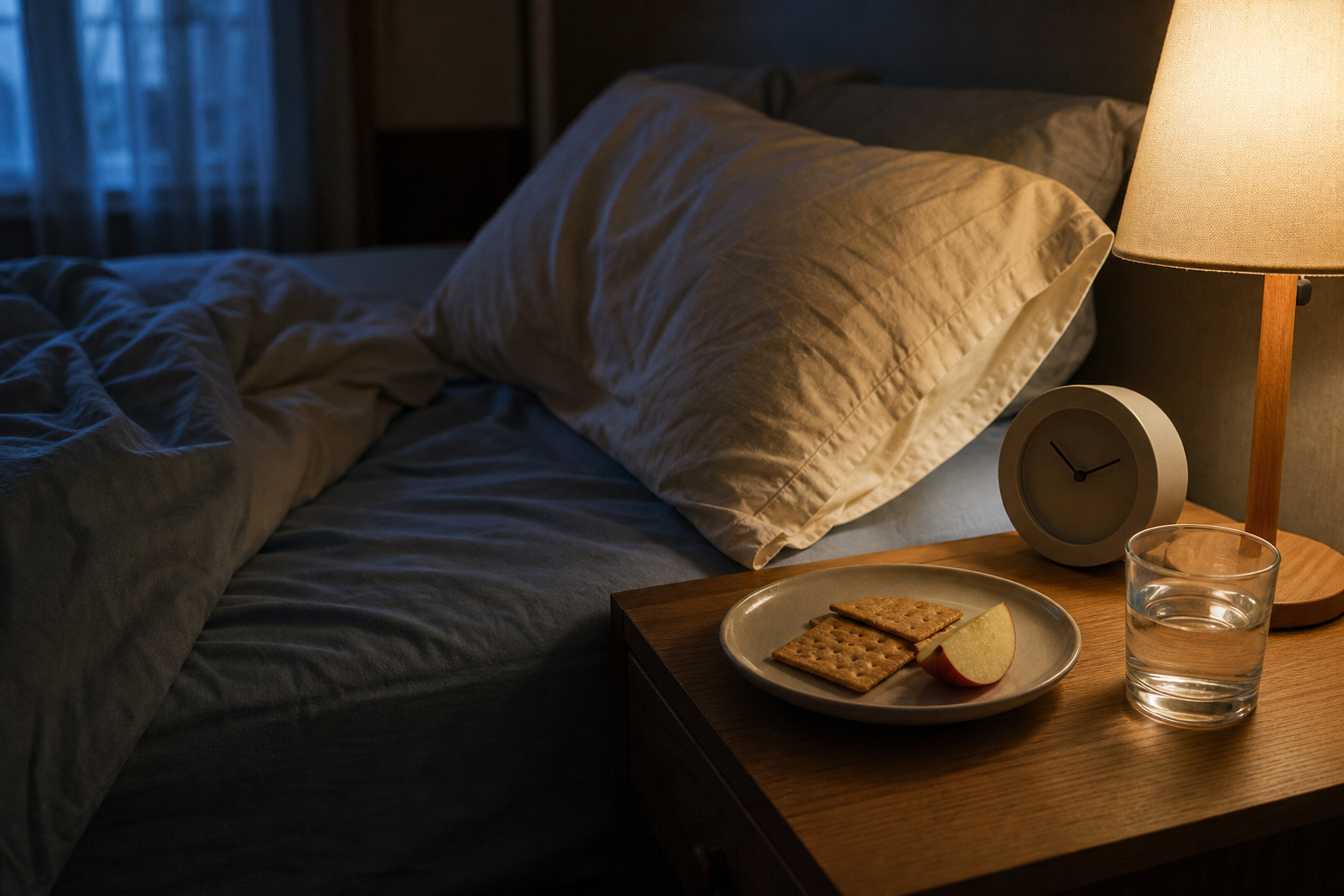
Eating before bed is not automatically a problem, but a large meal shortly before you lie down may leave you feeling overly full or uncomfortable. As a practical starting point, try finishing a full evening meal two to three hours before bed. If you are hungry later, a modest snack may feel better than either a second meal or going to bed distracted by hunger.
Quick answer: Allow two to three hours between a full meal and lying down, keep late snacks small, and adjust the timing according to fullness, reflux, and your normal bedtime.
Start With a Two-to-Three-Hour Window
A useful timing window is based on when you expect to lie down, not simply when dinner traditionally happens.
If bedtime is 10:30 p.m., for example, try finishing dinner between 7:30 and 8:30 p.m. You do not need to treat this as a strict daily deadline. It is a starting point for noticing how your body responds.
People who experience nighttime heartburn or regurgitation may be more comfortable allowing at least three hours between a meal and lying down. Someone who eats a smaller dinner and does not experience digestive discomfort may tolerate a shorter gap.
Your schedule matters too. A shift worker, a late exerciser, and someone who eats dinner with children may need different routines. The goal is not a perfect meal time. It is enough space to avoid regularly going to bed uncomfortably full.
Meal Size Matters as Much as Timing
Eating a large dinner three hours before bed may feel less comfortable than eating a moderate meal somewhat later. Pay attention to both the clock and the amount you eat.
If dinner must be close to bedtime, consider making it smaller rather than rushing through a usual large meal. Eat slowly enough to notice when you feel comfortably satisfied.
A late snack should generally remain a snack, not become another dinner. Choose something familiar that you already know sits well. There is no need to search for a special food that promises better sleep.
Be cautious about assuming that every commonly mentioned “trigger food” affects you. Spicy, acidic, rich, or high-fat foods can bother some people, particularly when reflux is involved, but individual responses vary. Your own repeatable pattern is more useful than a long list of unnecessary restrictions.
Test Your Eating-Before-Bed Routine
Change one part of your routine at a time so you can tell what makes a difference.
- Record your usual pattern. For three evenings, note when you finish eating, roughly how large the meal is, and when you lie down.
- Check your comfort. Notice fullness, bloating, heartburn, regurgitation, thirst, or waking to use the bathroom.
- Adjust one variable. Move dinner 30 to 60 minutes earlier, reduce the portion, or replace a late meal with a smaller snack.
- Repeat for several nights. One unusual evening may reflect stress, an unfamiliar food, or a disrupted schedule rather than meal timing alone.
You are looking for a routine that feels consistently manageable, not proof that one exact interval works every night.
If You Need to Eat Close to Bed
Sometimes an early dinner, long workday, medication schedule, or evening activity makes late eating practical. Instead of forcing yourself to ignore hunger, use a few comfort-focused adjustments:
- Keep the portion modest.
- Choose familiar foods instead of experimenting with a heavy or unusually rich meal.
- Eat sitting upright rather than reclining on a sofa or in bed.
- Remain upright after eating when possible.
- Avoid washing the meal down with a very large amount of fluid if nighttime bathroom trips are already a problem.
- Stop if the snack is becoming a full second dinner out of habit rather than hunger.
There is also no need to label late eating as a failure. Consistent comfort is more useful than following a rule that does not fit your schedule.
Know When It Is More Than a Timing Issue
Changing meal size and timing may improve ordinary nighttime comfort, but it is not a substitute for medical evaluation. Speak with a qualified healthcare professional if you regularly experience heartburn, food or sour liquid coming back up, persistent nausea, vomiting, difficulty swallowing, unexplained weight loss, or symptoms that repeatedly disturb your sleep.
Seek urgent medical help for severe chest pain or pressure, especially when it occurs with shortness of breath, sweating, or pain in the arm or jaw.
A Comfortable Starting Point
Begin with a moderate dinner completed two to three hours before you lie down. Use a small, familiar snack if genuine hunger appears later, then track how you feel rather than following an inflexible cutoff.
Meal size, timing, symptoms, and your schedule all matter. A few nights of careful observation can help you find the most comfortable balance.