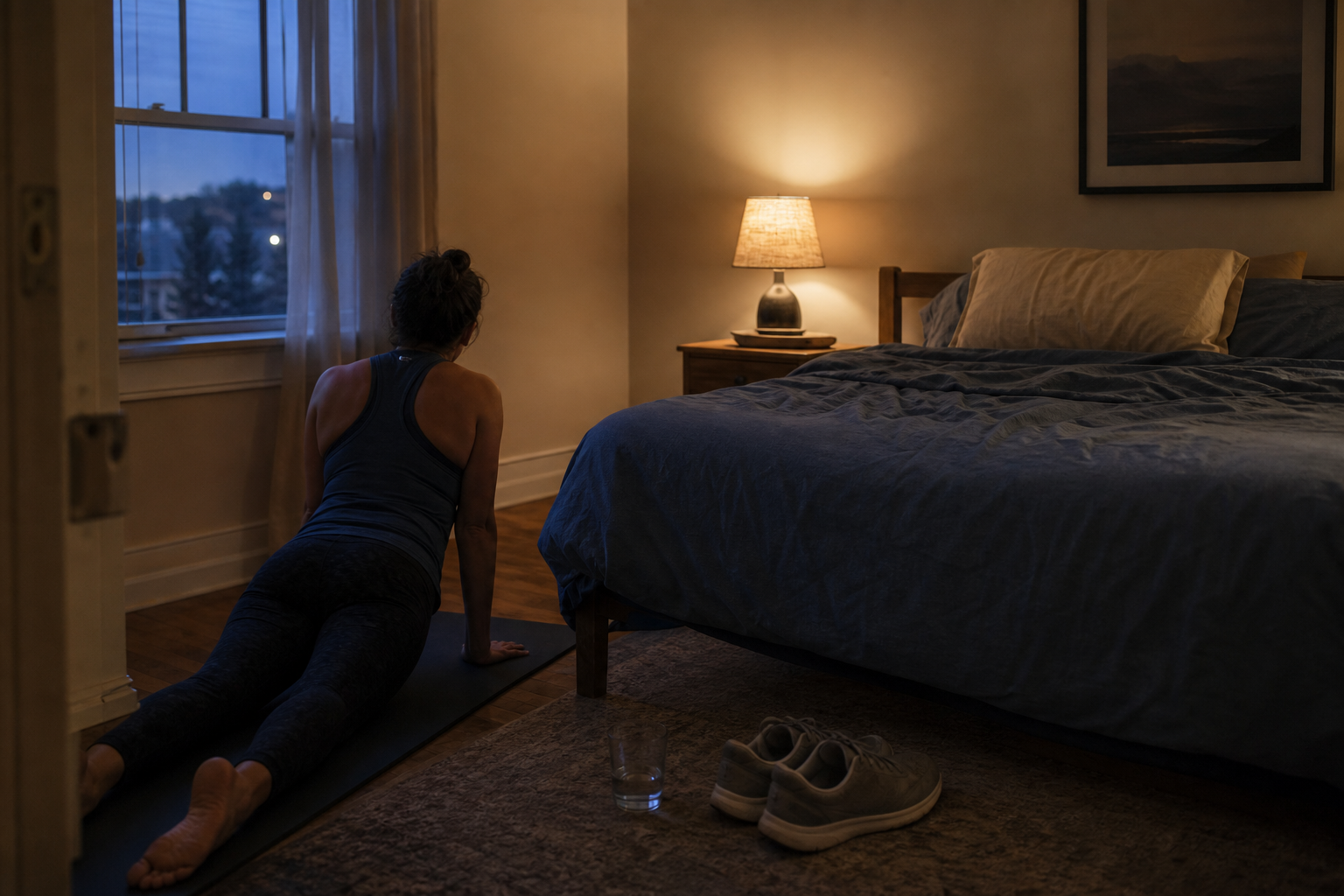
Evening exercise does not automatically interfere with sleep. Many people sleep normally after a late workout, while others feel alert, warm, or restless if they train too hard near bedtime. Intensity, finish time, fitness level, workout habits, and individual response all matter.
Instead of following one universal cutoff, compare a few carefully planned evenings and look for a repeatable pattern.
Quick answer: Keep easy movement if it feels calming. For demanding workouts, leave more time before bed and test different finish times. Judge the result by how easily you fall asleep, stay asleep, and feel the next morning.
Why There Is No Perfect Exercise Cutoff
Studies generally do not support banning all evening exercise. Moderate workouts completed before bedtime often cause no meaningful sleep disruption in healthy adults. However, vigorous exercise ending close to bedtime may affect some people, and large-scale wearable data suggest that later, higher-strain sessions are more likely to be followed by delayed or shorter sleep.
These findings do not produce one deadline that fits everyone. Research varies in workout type, intensity, participant fitness, and the meaning of “bedtime.” Observational wearable findings also show associations, not proof that the workout caused every sleep change.
Treat timing as a variable to test, not a rigid rule.
Start by Rating Workout Intensity
The clock matters, but so does what you do before it.
- Light: Gentle walking, relaxed cycling, mobility work, or easy stretching. You can talk comfortably.
- Moderate: Brisk walking, steady cardio, or ordinary resistance training. Your breathing increases, but you can speak in sentences.
- Hard: Fast intervals, demanding runs, competitive games, or high-effort lifting. Talking becomes difficult, and you remain hot or energized afterward.
A 20-minute easy walk an hour before bed is not equivalent to a long, strenuous session at the same time. Harder or longer exercise may require a wider recovery window.
Test Evening Exercise and Sleep for One Week
Choose a week without major travel, unusually late social plans, or a sudden change in work hours. Then run a simple comparison.
- Select one repeatable workout. Use approximately the same activity, duration, and intensity each time. Comparing gentle yoga with hard intervals would test two variables at once.
- Choose two finish times. For example, complete the workout three to four hours before bed on three nights and 60 to 90 minutes before bed on three other nights. Alternate the conditions when possible rather than testing each one in a single block.
- Keep the rest of the evening similar. Aim for comparable caffeine use, meal timing, alcohol intake, screen habits, room temperature, and bedtime. Perfect control is unrealistic, but large differences make the results harder to interpret.
- Record a few useful details. Each morning, note:
- workout finish time and perceived intensity
- bedtime and estimated time needed to fall asleep
- noticeable awakenings
- whether you felt unusually warm, alert, hungry, or uncomfortable
- morning energy on a simple 1-to-5 scale
- Compare the pattern, not one night. A stressful day, noisy room, heavy meal, or random poor night can outweigh workout timing. Look at the average response across the repeated sessions.
If both schedules feel similar, the later workout may be perfectly workable for you. If the earlier finish repeatedly produces easier sleep or better mornings, keep the larger gap.
Adjust the Variable That Seems Most Important
If late workouts appear disruptive, you do not necessarily have to move all exercise to the morning. Change one part at a time:
- Finish the same workout 30 to 60 minutes earlier.
- Keep the late time but reduce the intensity or duration.
- Move hard intervals earlier and reserve easy movement for late evening.
- Add a gradual cooldown instead of stopping immediately after maximum effort.
- Allow time to shower, rehydrate, and return to a comfortable temperature.
- Avoid letting a workout push your usual bedtime later.
Also notice indirect effects. A late session may alter dinner timing, encourage more screen use, or leave you rushing through bedtime. The surrounding routine may matter as much as the exercise itself.
Use Your Sleep, Not Just the Clock
The most useful evening exercise schedule is one you can maintain without repeatedly sacrificing sleep. A strict cutoff is less informative than a consistent personal pattern.
Keep evening activity if you fall asleep comfortably, sleep about as well as usual, and feel reasonably restored in the morning. Create more space before bed if hard sessions repeatedly leave you alert, overheated, or awake longer.
Stop exercising and seek appropriate care for chest pain, faintness, or unusual breathing difficulty. Ongoing sleep difficulty, prolonged daytime sleepiness, or other persistent concerns should be discussed with a qualified healthcare professional.