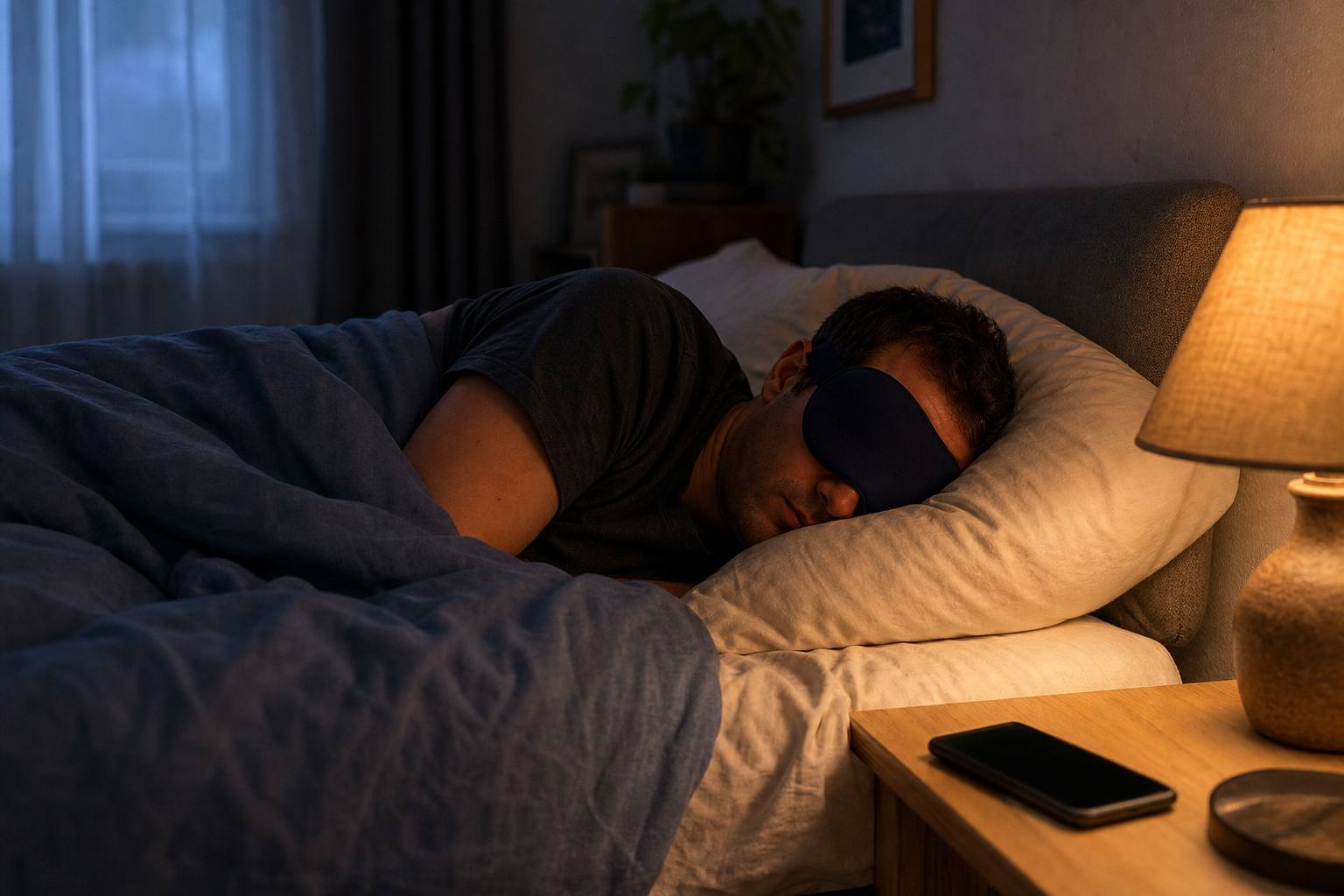
The best sleep mask for sleeping blocks unwanted light without pressing on your eyes, pinching your nose, or shifting when you turn over. Look for adjustable straps, smooth contact points, and a shape suited to your usual sleeping position. Washability matters too, since the mask sits against your skin every night.
A mask can support a darker sleep environment, but comfort determines whether you will keep wearing it.
Quick answer: Choose a mask that stays dark when you move, rests around rather than heavily on your eyes, has no hardware beneath your head, and can be cleaned according to its care instructions.
What a Sleep Mask for Sleeping Should Feel Like
A well-fitting mask should feel secure but not tight. You should be able to blink naturally, breathe comfortably through your nose, and move your head without the mask immediately sliding upward.
Check three common light-leak areas:
- Beside the nose: A flexible or shaped nose bridge may close the gap.
- Under the eyes: The lower edge should follow your cheeks without digging in.
- At the temples: The mask should be wide enough to cover the sides without needing excessive strap tension.
Test the mask in your normal sleeping position. A fit that works while sitting upright may change when your head sinks into a pillow.
Compare Flat and Contoured Eye Areas
Flat masks are usually thin and easy to pack. Their low profile may suit side sleepers, but the fabric can touch your eyelids or eyelashes.
Contoured masks have recessed eye cups designed to create eyelid space. They may feel better if you dislike fabric touching your eyes, although thick cups can push against a pillow when you sleep on your side.
Weighted masks intentionally add pressure. Some people enjoy that sensation, while others find it uncomfortable or restrictive. More pressure does not mean better light blocking.
Whichever style you choose, stop using it if it causes eye pain, persistent redness, blurred vision, skin irritation, or new discomfort. Ask an eye-care professional before use if you have recently had an eye procedure or have been advised to avoid pressure around your eyes.
Inspect the Strap and Its Hardware
The strap controls both stability and pressure. An adjustable strap gives you more room to respond when elastic stretches or your preferred fit changes.
Look closely at where the adjustment hardware will sit:
- Side sleepers may feel buckles, clips, or hook-and-loop closures beneath the temple or behind the ear.
- Back sleepers may dislike a bulky slider at the back of the head.
- Long or fine hair can cause smooth elastic straps to slide.
- Wide bands may distribute pressure but can feel warmer than narrow straps.
Set the strap only tight enough to hold the mask in place. If you need strong tension to stop light leaks, the mask shape may not match your face.
Consider Heat, Fabric, and Washability
A soft surface does not automatically mean the mask will stay comfortable all night. Thick foam and wide fabric panels may retain more warmth, while thin masks can become damp from skin oils or perspiration.
Check the care label before buying. Sleep masks vary considerably: some are machine washable, some require hand washing, and others can only be spot cleaned. Masks with electronics, foam inserts, cooling components, or weighted sections may have separate cleaning instructions.
A removable, washable liner can simplify regular care. Whatever the design, follow the current manufacturer instructions and let every part dry completely before wearing or storing it. Replace a mask if the padding becomes lumpy, the strap no longer holds its setting, or rough closures begin touching your skin or hair.
Keep Alarms and Nighttime Safety in Mind
A plain eye mask does not block sound, but it can hide visual information. Confirm that you can hear your morning alarm, smoke alarms, carbon monoxide alarms, a baby monitor, or other alerts from bed.
If you depend on light-based alerts, do not assume a flashing alarm will wake you through a blackout mask. Use an appropriate audible or vibration-based alert as well, such as a bed or pillow shaker designed for that purpose. Test the complete setup from your actual sleeping position.
Keep a clear path from the bed to the bathroom and exit. Place glasses, a phone, or other essential items where you can reach them after removing the mask. The mask should also come off easily with one hand.
Run a Short Fit Test Before Committing
Try this check while the mask is still eligible for return:
- Wear it in a darkened room for 10 minutes.
- Blink, open your eyes, and notice any pressure on your eyelids.
- Lie on your usual pillow in your normal position.
- Turn from side to side and check for slipping or hardware pressure.
- Loosen the strap slightly. If the mask still blocks light, use the looser setting.
- Test your alarms while wearing it.
Minor light near the nose may be less disruptive than a painfully tight strap. Choose the most comfortable balance rather than chasing perfect blackout at any cost.
The Practical Takeaway
A comfortable sleep mask should disappear into your bedtime setup rather than demand constant adjustment. Prioritize gentle eye clearance, well-placed strap hardware, position-friendly padding, realistic care requirements, and alarms you can still detect. If no mask feels comfortable, room-darkening curtains or covering small light sources may be a better way to create a darker bedroom.