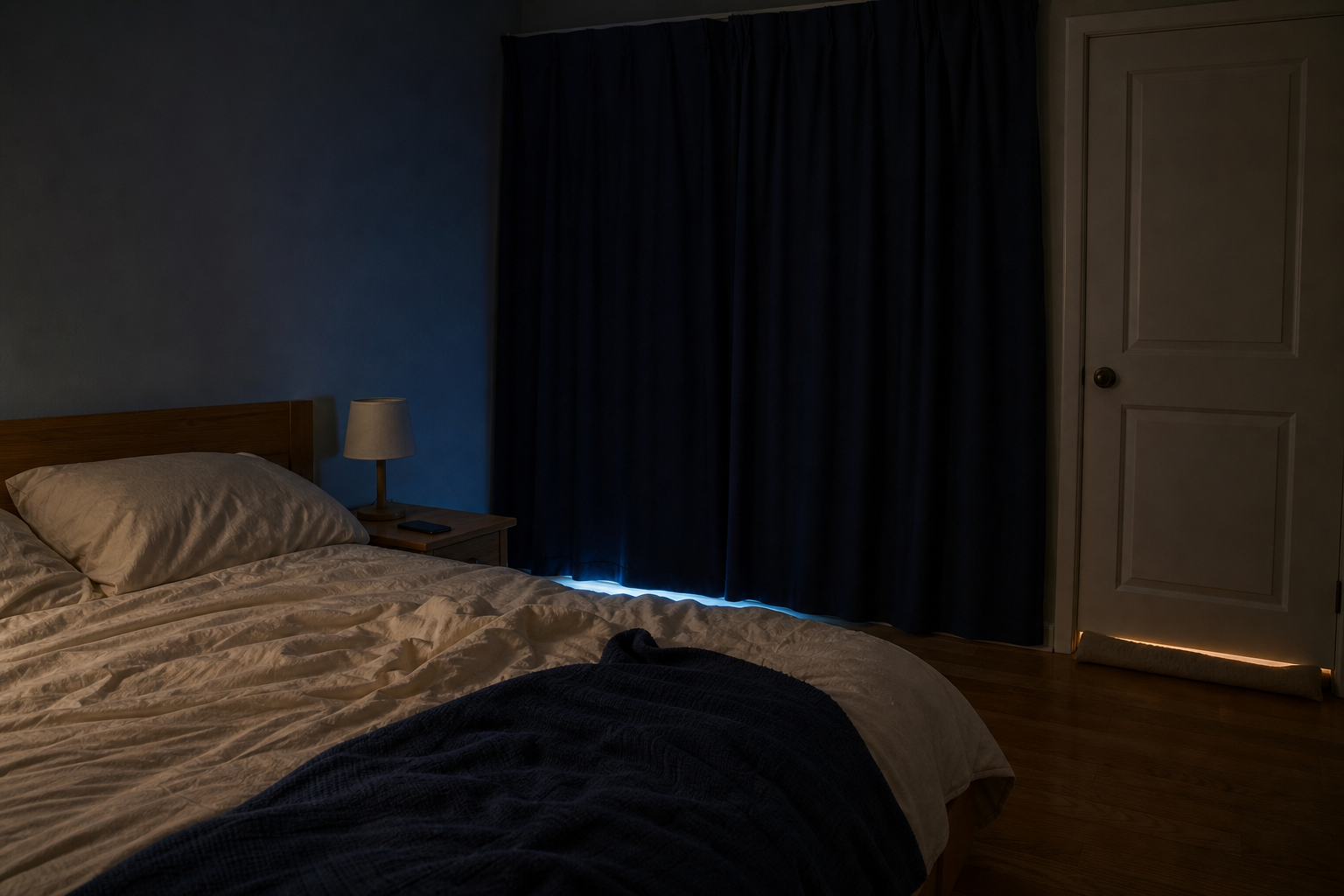
To make your bedroom darker for sleep, start by blocking window light, then address door gaps, electronics, chargers, clocks, and reflected light. Blackout curtains can help, but their edges often need attention. If changing the room is difficult, a comfortable sleep mask is the fastest reversible option.
Quick answer: Inspect the room from your pillow after your eyes adjust. Block the brightest source first, seal light around curtains and doors, hide nonessential LEDs, and use a sleep mask for any light you cannot control.
A room does not have to be perfectly black to feel more sleep-friendly. The useful goal is to keep direct or distracting light out of your line of sight without creating a nighttime safety problem.
Start With a Five-Minute Light Audit
Turn off the bedroom lights, close your usual window coverings, and sit or lie in your normal sleeping position. Wait a few minutes for your eyes to adjust before deciding where the room leaks light.
Check for:
- Streetlights around the top and sides of curtains
- Sunrise light below blinds or between curtain panels
- Hallway light around the bedroom door
- Alarm clocks, televisions, routers, chargers, and power strips
- Phone screens that wake for notifications
- Light reflected by mirrors or glossy furniture
Look from the pillow rather than the doorway. A small LED across the room may be much more noticeable when it is directly in your field of view.
Block Window Light at the Edges
Blackout fabric is only part of the setup. Light often enters above the curtain rod, around the sides, or through the center where two panels meet.
For better coverage:
- Extend curtains beyond the window frame. Position the rod above the frame and make the panels wide enough to cover several inches on both sides.
- Create overlap at the center. Fuller panels are easier to overlap than curtains that barely meet.
- Close the side gaps. A wraparound rod, curtain returns, or removable side fasteners can hold the fabric closer to the wall.
- Add a second layer. A blackout liner, shade, or removable fabric panel behind an existing curtain can reduce light without changing the room’s appearance.
For a rental, a tension rod inside the window recess may hold a lightweight blackout panel behind your regular curtains. Test removable adhesives in an inconspicuous area, follow the product instructions, and check your lease before attaching anything to painted walls or window frames.
Do not drape fabric over heaters, radiators, air-conditioning units, or ventilation openings.
Close Light Leaks Around the Door
If the hallway is brighter than the bedroom, begin by turning off unnecessary lights or closing another door farther down the hall.
A fabric draft stopper can block the bright strip beneath the bedroom door. Removable weather stripping may help around the sides and top, but confirm that the door still opens, closes, and latches normally.
If you share the home, agree on which lights can be dimmed overnight. Changing the source is usually simpler than trying to seal every tiny gap.
Deal With Electronics and Indicator Lights
You may not notice device lights until the windows are covered. Once the room is darker, a clock display or charging indicator can become the brightest object in it.
Try these changes:
- Turn a digital clock away from the bed or dim its display
- Place your phone face down and silence nonessential notifications
- Move chargers and power strips behind furniture
- Turn off or unplug devices that are not needed overnight
- Use purpose-made light-blocking stickers on small, nonessential LEDs
Do not cover smoke alarms, carbon monoxide alarms, emergency equipment, ventilation slots, or indicators that warn of a fault. Avoid placing fabric or paper over electronics that produce heat.
If a device must remain visible, reposition it so the light does not shine toward your face.
Use a Sleep Mask When the Room Cannot Change
A sleep mask can be useful when you rent, travel, share a room, sleep during daylight hours, or cannot control outdoor lighting.
Choose one that feels secure without pressing uncomfortably on your eyes or temples. Check for gaps around the nose, and adjust the strap so the mask stays in place without feeling tight. Clean it according to its care instructions, especially if it contacts skin every night.
A mask can also help you test whether reducing light is worthwhile before buying new window coverings.
Keep the Room Safe After Dark
Complete darkness is not appropriate if it makes getting out of bed unsafe. Keep the path to the bathroom clear of cords, shoes, rugs, and low furniture.
If you need nighttime visibility, consider a dim, warm-colored nightlight placed low to the floor and directed away from the bed. A motion-activated light can provide illumination only when you stand up. Keep a lamp or flashlight within easy reach if falls, poor vision, or limited mobility are concerns.
Open the curtains after waking when possible. A dark sleeping period works best as part of a clear contrast between nighttime darkness and daytime light.
Test One Change at a Time
Fix the most obvious source first, then reassess the room from your pillow. This prevents you from buying several items when one curtain gap or bright display was the main problem.
Use this quick check:
- Is any light shining directly toward your face?
- Does outdoor light increase before your planned wake time?
- Do the curtains stay closed through the night?
- Can you move safely if you need to get up?
- Is your sleep mask comfortable after more than a few minutes?
Darkening the bedroom supports a sleep-friendly environment, but it does not address every reason for difficult or disrupted sleep. If sleep problems continue despite enough time for rest and sensible routine changes, discuss them with a qualified healthcare professional.
The practical priority is simple: block the brightest source, seal the obvious gaps, and preserve a safe path through the room.