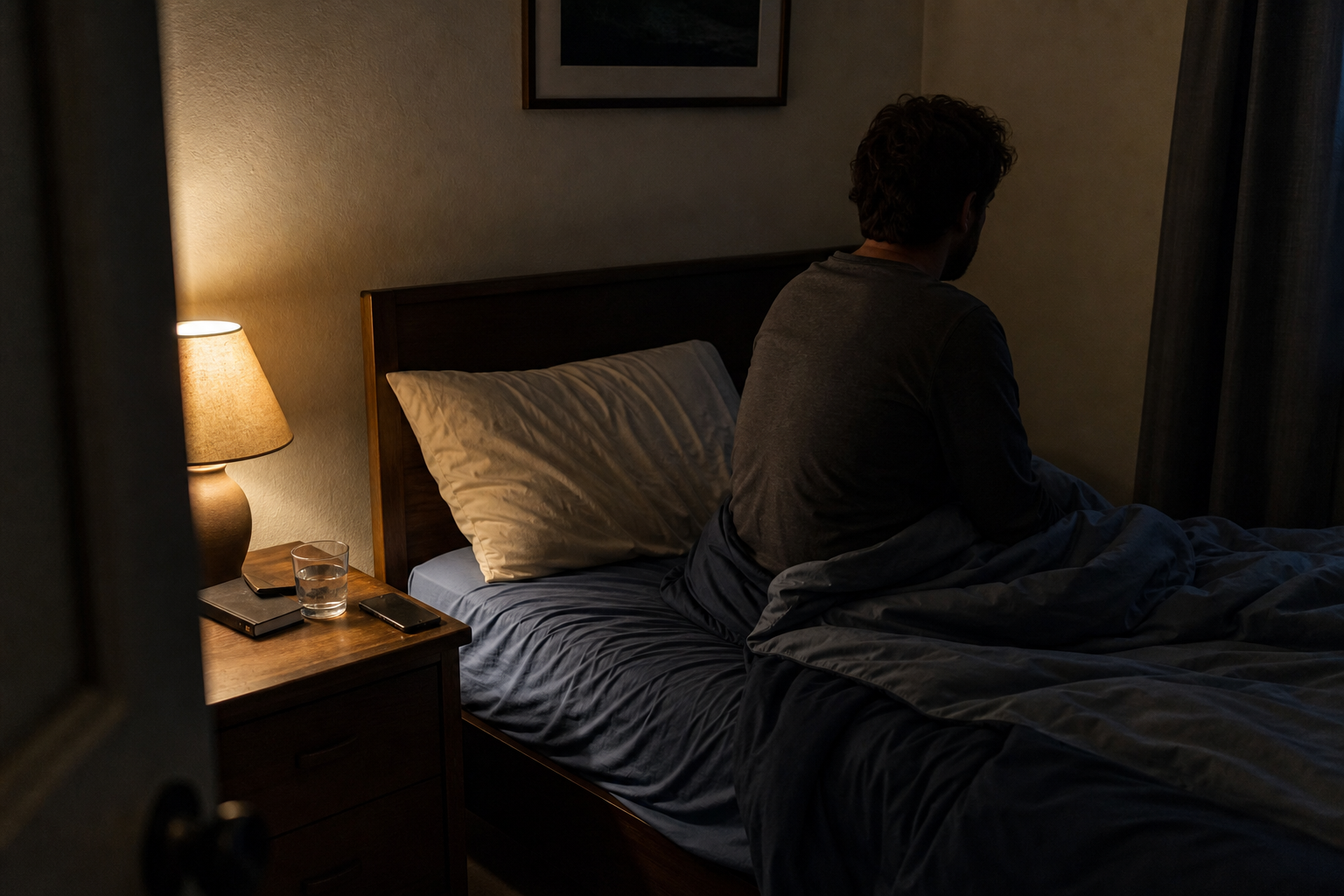
When you wake up at night, keep the room dark, avoid checking the time, and give yourself a quiet chance to drift back to sleep. If you become fully alert or frustrated, leave the bed for a calm activity in dim light, then return when you feel sleepy again.
Brief awakenings can happen as you move through sleep cycles. The useful question is not whether you woke up, but whether your response makes you calmer or more alert.
Quick answer: Stay still for a moment, relax your body, and avoid your phone or clock. If you remain awake and start struggling to sleep, get out of bed briefly and do something quiet until drowsiness returns.
First, keep the awakening small
Your first few choices can determine whether a short awakening passes quietly or becomes an extended period of wakefulness.
Resist the urge to calculate how many hours remain before morning. Clock-checking often turns a neutral moment into a deadline: “I have to fall asleep now.” Turn the clock face away or keep it out of easy view.
Leave overhead lights off. If you need to use the bathroom, choose the lowest light that lets you move safely. Keep the route clear of cords, rugs, shoes, and other tripping hazards.
Before doing anything else, notice what woke you:
- A clear physical need: Use the bathroom, adjust a twisted blanket, or take a small sip of water.
- An environmental disturbance: Reduce a repetitive noise, close a curtain, or adjust the bedding if you are uncomfortable.
- A busy mind: Make a brief note if you are worried about forgetting something, then set it aside for morning.
- No obvious cause: Stay comfortable and allow the awakening to pass without investigating it.
Try not to solve tomorrow’s problems from bed. Nighttime is rarely the best setting for planning, messaging, shopping, or making decisions.
What to do when you wake up at night, step by step
1. Check whether you are still drowsy
If your eyes feel heavy and your body remains relaxed, stay in bed. A short awakening does not require a full routine.
Settle into a comfortable position and let your attention rest on something simple, such as the feeling of the mattress supporting you or the steady sound of a fan.
2. Release unnecessary tension
Unclench your jaw, lower your shoulders, and loosen your hands. You can take several slow, comfortable breaths without trying to force a particular result.
Another option is to gently notice each area of your body from your feet upward. The goal is not to make sleep happen on command. It is simply to stop adding effort and tension to the moment.
3. Leave the bed if you start struggling
If you feel clearly awake, restless, or frustrated for what seems like roughly 20 minutes, get out of bed instead of repeatedly trying harder. You do not need to watch the clock to measure this precisely.
Move to a safe, comfortable place and keep the light dim. If getting up could create a fall risk, or if you need help with mobility, prioritize safety and use a nearby chair or remain comfortably in bed.
4. Choose a low-stimulation activity
Pick something quiet that will be easy to stop when drowsiness returns. Suitable options include:
- reading a calm, familiar book
- listening to quiet audio with the screen off
- doing gentle breathing or relaxation
- writing down a persistent reminder
- sitting quietly with soft lighting
Avoid work, upsetting news, social media, bright screens, intense television, and anything so entertaining that you want to stay awake for it.
5. Return only when you feel sleepy
Go back to bed when your eyelids feel heavy, your thoughts begin to wander, or remaining seated takes effort. If you become alert and frustrated again, repeat the quiet reset.
This approach keeps the bed connected with resting rather than with clock-watching, scrolling, and struggling.
What not to reach for
Try not to use alcohol as a way to return to sleep. Although it can feel sedating, alcohol may contribute to more disrupted sleep later. Caffeine and nicotine can also increase alertness.
A large meal can make it harder to settle comfortably. If genuine hunger is keeping you awake, choose a small, familiar snack rather than turning on bright kitchen lights and preparing a full meal.
Be cautious about taking an extra dose of any sleep aid or medication. Follow the current label and your healthcare professional’s instructions rather than improvising during the night.
Reset gently the next morning
After a difficult night, get up close to your usual time when practical. Sleeping much later than normal may shift the next night’s schedule.
Seek morning light, move through a regular routine, and avoid judging the entire day before it begins. If you feel dangerously sleepy, do not drive or operate equipment. Safety matters more than maintaining a perfect schedule.
When nighttime waking needs more attention
Keep a simple sleep diary if waking becomes frequent. Record bedtime, estimated awakenings, wake time, daytime sleepiness, caffeine or alcohol use, and any obvious disturbances.
Speak with a qualified healthcare professional if sleep difficulty continues, regularly affects your daytime functioning, or comes with persistent pain. Breathing pauses, loud snoring with gasping or choking, waking short of breath, or prolonged daytime sleepiness also deserve professional evaluation.
For an occasional awakening, keep your response dark, quiet, safe, and unhurried. Give drowsiness room to return instead of trying to force it.